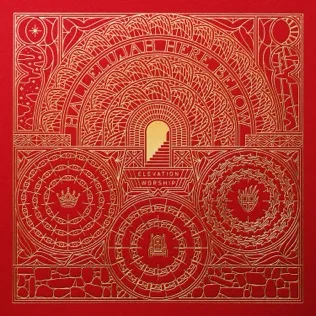
Elevation Worship - Still God Lyrics
Lyrics
Until the storm has ceased
Your voice will rise above the seas
We will not fear
You are still God
Here in the waters deep
Your hand will always be beneath
We will not fear
You are still God
We lift our eyes to you Most High
Forever be exalted
Forever you will be exalted
Our help will come
From you Most High
Forever be exalted
Forever you will be exalted
Beyond eternity
You reign with all authority
And now you’re near
You are with us
Impossibility
Remains no longer when you speak
And now you're near
You are with us
Before the world began
It wasn’t spoken yet
You were still God
And you are still God
After your final breath
It wasn’t over yet
You were still God
And you are still God
Before the world began
It wasn’t spoken yet
You were still God
And you are still God
No weapon formed against
Has stopped your promises
You were still God
And you are still God
Video
Still God | Live | Elevation Worship
Meaning & Inspiration
Elevation Worship has built their entire identity on the "big room" anthem—the kind of music that fills arenas with a wall of reverb and driving, stadium-ready drums. Still God fits neatly into this CCM architecture, yet there’s a specific linguistic friction here that strikes me as both tactical and raw.
Consider the line, "After your final breath / It wasn’t over yet."
When you hear that live, the crowd is usually mid-climax, hands up, caught in the momentum of the percussion. But if you stop to chew on those words, it’s a jarring theological claim. It’s an explicit reference to the Crucifixion—the moment the historical Jesus exhaled his spirit. For the listener in a crowded room, this isn't just a chorus; it’s an attempt to force the mind out of the immediate panic of a "storm" and into the reality of a dead man walking. It’s heavy, almost uncomfortable to sing while the synthesizers are washing over you.
Does the "vibe" eat the message? Often, these tracks lean so heavily into that mid-tempo rock groove—borrowing from the urgency of 90s alternative but sanitized for Sunday morning—that the lyrics can slide past us like background noise. The music pushes you to feel something expansive and cinematic, while the lyrics are trying to anchor you in a very specific, historical fact. There’s a disconnect there. We’re being prompted to sway and lift our hands to a song about the death of God, yet the production feels designed to make us feel invincible.
"Impossibility remains no longer when you speak." It’s a bold declaration, pulling from the classic Gospel trope of the "speaking God"—the one who calls light into the void. It mirrors Psalm 33:9, "For he spoke, and it came to be; he commanded, and it stood firm."
But I find myself lingering on the tension between the "storm" mentioned in the first verse and the "final breath" in the bridge. We go from seeking comfort in a chaotic moment to staring at a grave. Most of us, when we sing this, are looking for a fix to our current trouble—a literal storm in our lives. The song wants to pull us toward an ancient, immutable version of the Divine that exists before and after our personal crises.
I’m left wondering: can we actually sit with the terror of "after the final breath" while the arena lights are flashing? Or are we just looking for the adrenaline hit that comes when the lead singer hits the high note? Maybe the song works best when you’re standing in a quiet kitchen, hearing the melody stripped of the arena-rock gloss, trying to decide if you actually believe that God is in the room when the promises feel like they’ve stopped. It’s an open question. The music says we’ve won, but the theology says we have to walk through a death to get there.