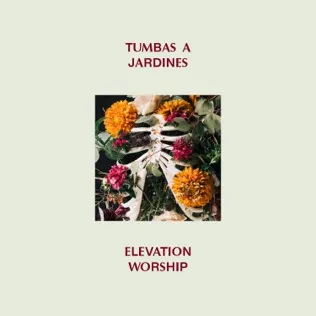
Elevation Worship + Brandon Lake - Tumbas A Jardines (Graves Into Gardens) Lyrics

Album: Tumbas A Jardines
Released: 10 Jul 2020
iTunes Amazon Music

Lyrics

El mundo busqué

Y no pudo llenarme 

Ningún tesoro que pueda ganar

Me saciará


Mas llegaste tú 

Me diste vida nueva 

Y cada deseo se cumplirá

Aquí en tu amor


Oh no hay nada, nada mejor 

No hay nada, nada mejor 

No hay nada, nada mejor que mi Dios


Vengo a ti

Sin miedo y sin reservas

Cada fracaso has visto Señor

Y aún tu amigo soy 


Porque el Dios de los montes

Es el Dios de los valles

No hay lugar que me pueda alejar

De tu gracia y amo


Cambias lamento en danza

De cenizas traes vida

Cambias culpa por gloria

Sé que solo tú lo harás


De las ruinas y tumbas

Nacen nuevos jardines

Resucitas los huesos

Sé que solo tú lo harás

Sé que solo tú lo harás 

Video

Graves Into Gardens ft. Brandon Lake | Live | Elevation Worship

Thumbnail for Tumbas A Jardines (Graves Into Gardens) video

Meaning & Inspiration

There is a specific kind of fatigue that sets in when you’ve spent years trying to build your own life—brick by brick, achievement by achievement—only to realize the floor plan was flawed from the start. That is where Elevation Worship and Brandon Lake land us in "Tumbas a Jardines."

As an editor, I look for the line that anchors the entire piece. Here, it is: “Cada fracaso has visto Señor / Y aún tu amigo soy.”

Most worship songs are built on a pedestal of victory. We like the big, sweeping declarations about mountains moving and seas parting. But this line is different. It’s quiet. It acknowledges that God isn't just a spectator to our successes; He is an observer of our most private failures. The weight here is in the word "aún"—still. It implies that my shortcomings were not enough to disqualify me from His company. It reframes God not as a distant architect, but as someone who sits with us in the rubble.

When we sing about the "God of the mountains" being the same "God of the valleys," we’re touching on a reality that hits harder when the lights are off and the room is empty. Scripture tells us in Psalm 139 that even the darkness is not dark to Him. We often treat our "valleys"—our depression, our unemployment, our broken relationships—as places where we’ve somehow outpaced God’s reach. This song pushes back. It insists that grace doesn't have a GPS; it’s already there, waiting in the lowest geography of our lives.

However, I find myself lingering on the bridge: “Cambias lamento en danza / De cenizas traes vida.” It’s a classic image, borrowed from the prophetic promise in Isaiah 61:3—beauty for ashes. But let’s be honest: the transition from ashes to a garden is rarely immediate. It is a slow, often painful process of decomposition and regrowth. When I listen, I’m not always sure I’m ready for the "garden" part. I’m still holding onto the ashes.

Maybe that’s the point. The song isn't necessarily a finished testimony of arrival; it’s a confession of trajectory. You admit that you’ve looked for fulfillment everywhere else and it didn't take. You admit that your failures are out in the open.

There is a danger in songs like this becoming too comfortable, too rhythmic. The repetition of "no hay nada mejor" threatens to become background noise if you aren’t careful. But if you strip away the production, you’re left with a stark admission: the world is empty, the failures are real, and the only thing standing between the tomb and the garden is the presence of a God who refuses to leave you in the dirt. It’s not a polished sentiment. It’s a gritty one. And perhaps that’s why it works.

Loading...
In Queue
View Lyrics