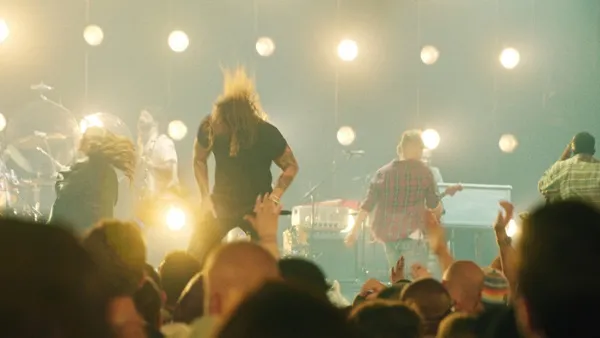
Elevation Worship + Brandon Lake - Might Get Loud Lyrics

Album: Might Get Loud (feat. Chris Brown, Brandon Lake & Tiffany Hudson) - Single
Released: 20 Aug 2021
iTunes Amazon Music

Lyrics

Excuse me for a minute

But I have got a song to sing

It might not be on key

But it’s from my heart


No one else can tell it

What the Lord has done for me

This might take all day

So I better start right now


And it might get loud

It might get loud

Heaven’s coming down down down

And it might get loud


I don’t have a halo

No I’m not a perfect man

I’m just glad to be a child of God


When I think of where I coulda been

Shoulda been woulda been

if he hadn’t stepped in

I got a praise on the inside that can’t be denied

and I gotta get it out right now


Why can’t I praise him as loud as I want

Video

Might Get Loud (feat. Chris Brown, Brandon Lake, & Tiffany Hudson) | Elevation Worship

Thumbnail for Might Get Loud video

Meaning & Inspiration

"I don’t have a halo / No I’m not a perfect man."

In our current evangelical climate, we often find ourselves drifting toward a kind of performative sanctity. We treat worship spaces like showrooms for our own spiritual hygiene. When Elevation Worship and Brandon Lake lean into the admission that they aren't perfect, it’s not just a humble brag or a clever hook—it’s an essential recalibration of the Imago Dei.

We are fallen creatures, yet we are creatures made for communion. If we wait for a halo—for a state of sinless perfection—before we open our mouths to sing, we will remain silent until the eschaton. To sing despite one’s lack of a halo is to acknowledge the doctrine of justification. We don't come to the Father because we have scrubbed the soot of the world off our faces; we come because the propitiation for our sins has already been settled. The "perfect man" is already sitting at the right hand of the Father; our participation in worship is entirely dependent on His finished work, not our own internal consistency.

Then there is the line: "When I think of where I coulda been / Shoulda been woulda been / if he hadn’t stepped in."

This is the theology of sovereign intervention. It’s messy, it’s subjective, and it’s undeniably grounded in the reality of human depravity. When we sing this, we are confessing that our current state—standing in grace—is not the result of our own decision-making prowess or a moral trajectory we mapped out for ourselves. It is a collision. God "stepped in." It implies that without that divine interruption, the current trajectory of the individual would have terminated in something far darker.

Yet, there is a tension here that troubles me. The song suggests that this realization leads directly to a need for volume: "It might get loud." Is the loudness an act of authentic overflow, or is it a psychological safety valve? There is a thin line between a robust, honest articulation of gratitude and using volume as a substitute for the quiet, heavy work of repentance.

If our praise becomes loud, does it actually carry the weight of the gravity of our salvation? Or are we just filling the room with kinetic energy because we’re uncomfortable with the stillness required to actually examine our own hearts?

I find myself lingering on the uncertainty of the lyric, "It might get loud." It’s an anticipation of a breakthrough, but it doesn't define what that breakthrough actually looks like beyond decibels. I wonder if we are more afraid of the silence where God actually speaks than we are of the loud spaces where we can effectively drown out our own doubts. There is a place for a shout, certainly—the Psalms are full of them—but the shout must be an echo of the truth, not a way to avoid it. I want to believe this song is the former, but I suspect we all use volume to hide things, even from ourselves.

Loading...
In Queue
View Lyrics