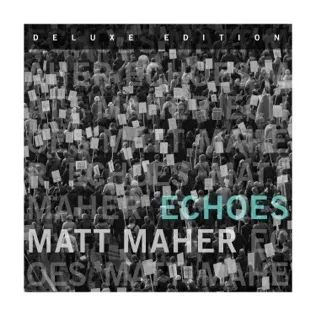
Matt Maher - Picket Sign Lyrics

Album: Echoes (Deluxe Edition)
Released: 29 Sep 2017
iTunes Amazon Music

Lyrics

Verse 1
This is Your protest, this is Your stand
Your blood poured out for the blood on our hands
For the accused and all the oppressed
For every heart hanging on by a thread

Chorus 1
The cross leapt in like a picket sign
You carried the weight for all mankind
You gave Your life just to give me mine
Your love leapt in like a picket sign

Verse 2
You are the voice for those who can't speak
You march for love, You walk with the weak
You call for justice, Your kingdom come
In Jesus name, our chains are undone

Chorus 1
The cross leapt in like a picket sign
You carried the weight for all mankind
You gave Your life just to give me mine
Your love leapt in like a picket sign

Bridge
Aaa-a-a-amen, aaa-a-a-amen

Chorus 2
The cross leapt in like a picket sign
You carried the weight for all mankind
You gave Your life just to give me mine
Your love leapt in like a picket sign
Both arms reaching for the other side
Your love leapt in like a picket sign

Outro
Aaa-a-a-amen, aaa-a-a-amen

Video

Matt Maher - Picket Sign (Official Audio)

Thumbnail for Picket Sign video

Meaning & Inspiration

Matt Maher's "Picket Sign," officially released on September 29, 2017, emerges as a profound exploration of Christ's sacrifice through a compelling and accessible metaphor. This song doesn't just offer another worship anthem; it provides a fresh lens through which to view the central tenets of Christian faith, framing the crucifixion not merely as an act of suffering but as a definitive, revolutionary stand for humanity. Maher masterfully translates complex theological concepts into language that resonates with the everyday struggle for justice and advocacy, inviting reflection on the active, protesting nature of divine love.

The foundational concept of "Picket Sign" centers on the cross as an ultimate act of protest and advocacy. In a world where picket signs symbolize a public declaration against injustice, a vocal stand for the oppressed, or a demand for change, Maher posits the cross of Christ in the same powerful light. It represents God's emphatic declaration against sin, death, and human brokenness, a visible and undeniable statement of love and redemption that challenged the prevailing order. This imagery invites us to consider Christ's sacrifice not as a passive event, but as an active, disruptive intervention into the human condition, an ultimate act of solidarity with the marginalized and the guilty.

The first verse immediately sets this powerful tone: "This is Your protest, this is Your stand / Your blood poured out for the blood on our hands." This speaks directly to the doctrine of atonement, where Christ’s innocent blood was shed to cleanse humanity of its guilt. It’s a powerful acknowledgment of our fallen state, yet it simultaneously points to the divine remedy. The sacrifice on the cross was a protest against the injustice of sin, a stand taken on behalf of "the accused and all the oppressed," and for "every heart hanging on by a thread." This echoes prophetic words from Isaiah 53, which describes the suffering servant bearing our infirmities and transgressions, and the comforting promise in Psalm 34:18 that the Lord is close to the brokenhearted. Christ's protest is one of boundless compassion, offering hope and healing to those at their breaking point, just as Matthew 11:28 invites the weary and burdened to find rest in Him.

The chorus then crystallizes this central metaphor: "The cross leapt in like a picket sign / You carried the weight for all mankind / You gave Your life just to give me mine." Here, "leapt in" conveys an urgent, decisive action, not a reluctant obligation. The cross became the very symbol of God's direct intervention, a banner waved in the face of human suffering and separation from Him. Carrying "the weight for all mankind" powerfully evokes the substitutionary nature of Christ's sacrifice, where He bore the burden of sin and its consequences that we could never carry ourselves, as 2 Corinthians 5:21 states, "God made him who had no sin to be sin for us, so that in him we might become the righteousness of God." The profound truth that He "gave Your life just to give me mine" underscores the resurrection life offered through His death, a new spiritual existence free from the bondage of sin, as Romans 6:4 describes our newness of life in Christ. It's an exchange of ultimate significance: His life for ours, leading to true freedom.

Verse two extends this theme of active advocacy, portraying Christ as a tireless champion for justice and the vulnerable. "You are the voice for those who can't speak" aligns perfectly with the biblical call to defend the defenseless, exemplified in Proverbs 31:8-9. Jesus consistently identified with the outcast and marginalized, His ministry a continuous "march for love," walking "with the weak." This is reflected in His teachings about serving "the least of these" (Matthew 25:40) and His mission, as proclaimed in Luke 4:18-19, to preach good news to the poor and set the oppressed free. When the song declares, "You call for justice, Your kingdom come / In Jesus name, our chains are undone," it invokes the heart of the Lord's Prayer (Matthew 6:10) and the transformative power of Christ to break spiritual strongholds, bringing true liberation. John 8:36 assures us that if the Son sets us free, we are truly free, not just from sin but from its lingering shame and power.

The repeated "Aaa-a-a-amen" bridge acts as a collective affirmation, a universal "so be it" to the profound truths being declared. It builds a sense of unity and shared conviction. The second chorus adds a crucial line: "Both arms reaching for the other side." This visually expands the metaphor of the cross from a protest sign to an embracing gesture, a bridge spanning the chasm between humanity and divinity, and between divided people. It speaks to the reconciliation that Christ achieved (2 Corinthians 5:18) and His universal invitation to all humanity, drawing all people to Himself when lifted up (John 12:32). This outstretched embrace encapsulates the all-encompassing nature of divine love, beckoning everyone into relationship. The final "Amen" outro serves as a powerful, resonant benediction, cementing the song's message of faith, liberation, and the unwavering, protesting love of God revealed on the cross. "Picket Sign" thus emerges as a vital worship song, challenging believers to embrace the revolutionary implications of Christ's sacrifice and to embody His active, justice-seeking love in their own lives.

Loading...
In Queue
View Lyrics