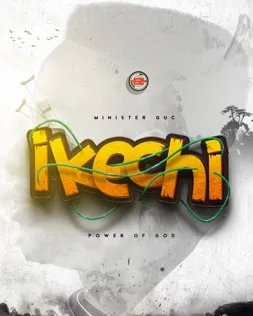
Minister GUC - Ikechi Lyrics
Lyrics
Ah ah ah ah ah ah Ah ah ah ah ah ah
Ike ike oh Ike oh, ike Ike ikechi Ike oh, ike Ike ike oh Ike oh, ike Ike ikechi Ike oh, ike
We will sing We will shout God’s power is here to deliver We proclaim in your name Your power is here to sustain us
Ike ike oh Ike oh, ike Ike ikechi Ike oh, ike Ike ike oh Ike oh, ike Ike ikechi Ike oh, ike
When my strength has failed me And I can’t carry on (ikechi shows up) When my gaze is weary And I can’t stand on my own (ikechi shows up) Gwanum onyé dika chim onyé mwéndu O nweghi onye ozor Gwanum onyé dika chim aka giuwa O nweghi onye ozor
Ike ike oh Ike oh, ike Ike ikechi Ike oh, ike
It can lift a man that is down and out Oh what a might, mind blowing treasure The power of God, the power of God Ikechi neko mo
The power of God Power of God
Video
Minister GUC - Ikechi (Power of God) [Official Video]
Meaning & Inspiration
Minister GUC's "Ikechi," released on April 29, 2022, as part of the "Trending Best of EeZee Global Gospel Groove" album, immediately establishes itself as a powerful declaration of God's might. The title itself, "Ikechi," which translates from Igbo as "God's Power" or "The Power of God," sets the stage for a profound exploration of divine strength. This composition isn't merely a song; it’s an urgent, worshipful call to acknowledge and lean into the boundless omnipotence of the Almighty, serving as a reminder that every circumstance bows before the one true source of all strength.
The core message resounds through the recurring chant: "Ike ike oh, Ike oh, ike, Ike ikechi." This insistent repetition isn't just a catchy refrain; it’s a spiritual anchor, embedding the truth of God’s power deep within the spirit. The lyrics soon expand this foundational truth, stating, "We will sing, we will shout, God’s power is here to deliver; We proclaim in your name, Your power is here to sustain us." This isn't a passive observation but an active, joyous proclamation. It highlights a dual aspect of God's power: its ability to set us free from bondage and its unwavering capacity to uphold us through life's journey. This aligns perfectly with scriptural promises found in Psalm 34:17, which assures us that "The righteous cry out, and the LORD hears them; he delivers them from all their troubles," and Philippians 4:13, declaring, "I can do all things through Christ who strengthens me," underscoring God's constant presence for both rescue and ongoing support.
The song then thoughtfully addresses the human condition of weakness and despair, painting a relatable picture of vulnerability: "When my strength has failed me and I can’t carry on (ikechi shows up); When my gaze is weary and I can’t stand on my own (ikechi shows up)." These lines beautifully articulate the profound comfort that God's power intervenes precisely when human capacity falters. It mirrors the powerful truth in 2 Corinthians 12:9, where the Lord tells Paul, "My grace is sufficient for you, for my power is made perfect in weakness." In those moments when the weight of life threatens to overwhelm, "Ikechi" assures us that divine strength is not just available, but actively manifests, lifting the burdened soul and steadying the faltering steps. Psalm 73:26 further echoes this sentiment: "My flesh and my heart may fail, but God is the strength of my heart and my portion forever."
A pivotal moment arrives with the Igbo lines: "Gwanum onyé dika chim onyé mwéndu, O nweghi onye ozor; Gwanum onyé dika chim aka giuwa, O nweghi onye ozor." Translated, this powerful declaration asks, "Who is like my God, the one who gives life? There is no one else. Who is like my God, the creator of the universe? There is no one else." This firmly establishes the incomparable nature of God, positioning His power as unique and unrivaled. It aligns with Isaiah 40:25, which asks, "To whom then will you compare me, that I should be his equal? says the Holy One," and Psalm 86:8, stating, "Among the gods there is none like you, Lord; no deeds can compare with yours." This segment is a resolute affirmation of God’s sovereignty and singularity, reminding us that His power is not just mighty, but utterly distinct and supreme.
Finally, "Ikechi" culminates in a declaration of transformative power: "It can lift a man that is down and out, oh what a might, mind blowing treasure." This reinforces the redemptive and restorative aspect of God’s strength, emphasizing its ability to radically change circumstances and elevate those who are at their lowest point. This echoes Psalm 145:14: "The LORD upholds all who fall and lifts up all who are bowed down." The song is more than an ode to power; it’s an invitation to experience that power personally, to find in God a "mind blowing treasure" that offers deliverance, sustenance, and ultimately, triumphant restoration. Through its fervent repetition and profound lyrical depth, Minister GUC’s "Ikechi" stands as an unshakeable anthem of faith, inspiring all who engage with it to trust in the unwavering, incomparable strength of God.