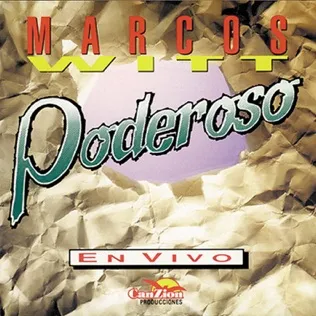
Marcos Witt - Tu Nombre Oh Dios Lyrics

Album: Poderoso (En Vivo)
Released: 01 Aug 1993
iTunes Amazon Music

Lyrics

Tu nombre oh Dios exaltar?
Tu majestad levantar?
Por siempre te proclamar?
Mi alabanza elevar?.

Coro
Porque digno digno eres tu
A ti sea honor y poder
Digno digno eres tu
Recibe adoracion Se?or.

Tu nombre oh Dios exaltar?
Tu majestad levantar?
Por siempre te proclamar?
Mi alabanza elevar?.

Coro
///Porque digno digno eres tu
A ti sea honor y poder
Digno digno eres tu
Recibe adoracion/// Se?or.

Tu nombre oh Dios exaltar?
Tu majestad levantar?
Por siempre te proclamar?
Mi alabanza elevar?.

Coro
//Porque digno digno eres tu
A ti sea honor y poder
Digno digno eres tu
Recibe adoracion// Se?or.

Video

Tu nombre oh Dios - Marcos Witt

Thumbnail for Tu Nombre Oh Dios video

Meaning & Inspiration

Released on August 1st, 1993, as a defining track from his live album *Poderoso (En Vivo)*, Marcos Witt’s "Tu Nombre Oh Dios" immediately establishes itself as more than just a song; it is a profound declaration of worship. This powerful anthem encapsulates a believer’s heartfelt commitment to God, setting the tone for a life centered on adoration and reverence. The song’s essence lies in its simple yet profound affirmation of God's supreme worthiness, making it a staple in worship spaces across the Spanish-speaking world and beyond. It’s not about intricate melodies, but about the timeless truth it conveys, guiding individuals into a deeper understanding of what it means to acknowledge divine majesty.

The lyrical journey begins with an unwavering personal resolve: "Tu nombre oh Dios exaltar? / Tu majestad levantar? / Por siempre te proclamar? / Mi alabanza elevar?" (I will exalt Your name, O God; I will lift up Your majesty; Forever I will proclaim You; My praise I will raise). These opening lines reflect a foundational call to worship echoed throughout Scripture. To "exalt" God’s name resonates with passages like Psalm 34:3, which encourages us to "magnify the Lord with me, and let us exalt His name together." It speaks to an active, intentional choice to elevate God above all else in our lives and in our words. Similarly, "lifting up His majesty" acknowledges God's inherent greatness and sovereign rule, a theme recurrent in texts such as Psalm 93:1, where "The Lord reigns; He is clothed with majesty." The commitment to "proclaim" God forever aligns with the Great Commission and the consistent biblical mandate to declare His glory among the nations (Psalm 96:3) and share His truth. Finally, "raising my praise" signifies the offering of our very lives and lips as a sacrifice of worship, a concept beautifully articulated in Hebrews 13:15, "Therefore by Him let us continually offer the sacrifice of praise to God, that is, the fruit of our lips, giving thanks to His name."

The core message of the song, however, truly shines in its powerful chorus: "Porque digno digno eres tu / A ti sea honor y poder / Digno digno eres tu / Recibe adoracion Se?or." (Because worthy, worthy are You; To You be honor and power; Worthy, worthy are You; Receive adoration, Lord). The repetition of "digno, digno" (worthy, worthy) is not merely a poetic device; it is a profound echo of the heavenly worship described in the book of Revelation. Revelation 4:11 proclaims, "You are worthy, O Lord, to receive glory and honor and power; for You created all things, and by Your will they exist and were created." This divine worthiness is the ultimate reason for all worship, praise, and adoration. It's not because God needs it, but because He intrinsically deserves it, as the Alpha and Omega, the Creator and Sustainer of all existence. The declaration "A ti sea honor y poder" (To You be honor and power) further reinforces this biblical truth, drawing parallels with 1 Chronicles 29:11, where David blesses God, saying, "Yours, O Lord, is the greatness, the power and the glory, the victory and the majesty." This song makes it clear that all authority and might belong to Him alone. The final plea, "Recibe adoracion Se?or" (Receive adoration, Lord), is a humble invitation for God to accept the worship offered, acknowledging that worship is not for our benefit but for His glory, as Matthew 4:10 instructs, "You shall worship the Lord your God, and Him only you shall serve."

Through its cyclical structure and impactful repetition, "Tu Nombre Oh Dios" creates an immersive experience of worship. It moves from a personal commitment to a universal truth, allowing those who sing it to internalize and declare God's worthiness with increasing conviction. The song serves as a powerful reminder that our worship is a response to who God is—a God who is intrinsically worthy of all honor, power, and adoration. It’s a call to abandon self-focus and direct all glory to the One who deserves it absolutely, drawing worshippers into a profound, biblically-grounded encounter with the divine. Its enduring legacy is a testament to its clarity, its truth, and its ability to inspire genuine devotion, making God's name, indeed, exalted.

Loading...
In Queue
View Lyrics