Marcos Witt - Poema de Salvacion Lyrics

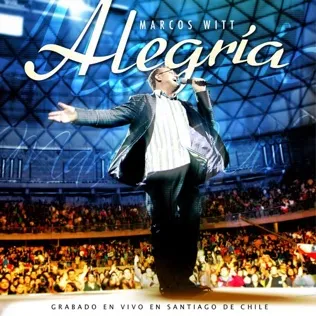
Album: Alegría (Grabado en Vivo en Santiago de Chile)
Released: 30 Oct 2006
iTunes Amazon Music

Lyrics

Cristo moriste en una cruz,
resucitaste con poder,
perdona mis pecados hoy,
se mi Se?or y Salvador.

Cambiame y hazme otra vez,
ayudame a serte fiel
cambiame y hazme otra vez,
ayudame a serte fiel
Video

Marcos Witt - Poema de Salvación

Thumbnail for Poema de Salvacion video

Meaning & Inspiration

Marcos Witt has a knack for strip-mining the complexities of the human condition down to their barest, most utilitarian parts. In the live recording of Alegría, captured in the humidity and heat of Santiago, he strips away the high-production sheen of American CCM. There is no pretense here; it sounds like a movement finding its footing.

When he sings, "Cambiame y hazme otra vez," there is an urgency that feels raw. It isn’t the kind of lyrical abstraction we see in radio-friendly pop; it’s a plea for a total structural overhaul. "Change me and make me again." It’s an admission of brokenness that refuses to be cute. In an era where music often feels designed to make the listener feel better about who they already are, Witt taps into the uncomfortable reality of the Metanoia—the radical, often painful, change of mind and direction. It hits the listener like an unwanted draft in a quiet room. We aren't being invited to celebrate our potential; we are being invited to be dismantled.

This language is rooted in the bedrock of Latin American Pentecostalism, a tradition that prioritizes the visceral act of conversion over the slow, intellectual ascent often found in Western evangelicalism. It’s meant to be sung by thousands of people at once—a collective shudder of surrender.

Consider the line, "Ayudame a serte fiel." It is a confession of fragility. Most songs about faithfulness are declarations of our own resolve—I will be true, I will walk the line. But here, Witt flips the script. He’s asking for help to be faithful. It acknowledges that the human will is a fickle, shifting sand. In Scripture, the disciples are often found asking for similar interventions, like the father who cries out to Jesus in Mark 9, "I believe; help my unbelief!"

There is an unavoidable tension in the "vibe" of the song. The crowd is rapturous, singing in harmony, creating a swell of sound that feels triumphant, yet the lyrics are intensely lonely. They describe a private, messy transaction between a human and the Divine. Does the scale of the live arena threaten to swallow that intimacy? Maybe. Sometimes, I worry that when you put this kind of desperate prayer to a rhythm that compels people to clap and sway, you risk smoothing out the rough edges of the repentance itself. You turn a cry for mercy into an anthem of confidence.

But then, you watch the footage. You see the faces in the crowd in Santiago, and it isn't an performance. It’s a group of people who are exhausted by the struggle of their own nature. They aren't clapping because they feel good; they are clapping because they have finally surrendered the effort to fix themselves.

It leaves me wondering: what happens when the music stops? When the stadium clears and the lights dim, are we actually willing to be "made again"? Or do we just like the way it feels to sing about it in a room full of people who are doing the same thing? Witt doesn't give us the answer. He just provides the soundtrack to the uncertainty.

Loading...
In Queue
View Lyrics