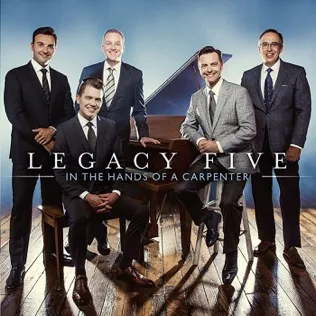
Legacy Five - When I Survey The Wondrous Cross Lyrics
Lyrics
When I survey the wondrous cross,
When I survey the wondrous cross.
When I survey the wondrous cross,
On which the Prince of glory died,
My richest gain I count but loss,
And pour contempt on all my pride.
Forbid it, Lord, that I should boast,
Save in the death of Christ, my God!
All the vain things that charm me most,
I sacrifice them to His blood.
See, from His head, His hands, His feet,
Sorrow and love flow mingled down!
Did e'er such love and sorrow meet,
Or thorns compose so rich a crown?
Were the whole realm of nature mine,
That were a present far too small;
Love so amazing, so divine,
Demands my soul, my life, my all.
Love so amazing, so divine,
Demands my soul, my life, my all.
My all!
Video
When I Survey the Wondrous Cross
Meaning & Inspiration
Legacy Five's rendition of "When I Survey the Wondrous Cross," found on their 2016 album *In the Hands of the Carpenter*, offers a profound and deeply spiritual reflection on the sacrifice of Jesus Christ. This iconic hymn, penned by Isaac Watts, finds renewed resonance in Legacy Five's capable delivery, focusing not on instrumental embellishments but on the unvarnished power of its message. The song's narrative begins with a personal, almost breathtaking contemplation of the cross – "When I survey the wondrous cross." This isn't a casual glance, but a deliberate, awe-struck gaze upon the instrument of our redemption, the very place "on which the Prince of glory died." This central image immediately evokes the paradox of divinity and suffering, the King of kings bearing the ultimate ignominy for love of humanity.
The core of the hymn's theological depth lies in its radical re-evaluation of worldly values in light of Christ's sacrifice. The singer declares, "My richest gain I count but loss, And pour contempt on all my pride." This is a powerful echo of Paul’s sentiment in Philippians 3:7-8, where he counts all his prior achievements and religious credentials as worthless compared to knowing Christ. True wealth, the song asserts, is not found in earthly possessions or personal accolades, but in the spiritual riches gained through Christ’s finished work. The plea, "Forbid it, Lord, that I should boast, Save in the death of Christ, my God!" underscores a singular focus on the cross as the sole source of true boasting, a concept further elaborated in Galatians 6:14, where Paul similarly emphasizes boasting only in the cross of Christ. The lyrics then move to a conscious renunciation of worldly desires: "All the vain things that charm me most, I sacrifice them to His blood." This speaks to a deliberate surrender of those affections and pursuits that distract from or diminish the importance of Christ's atoning sacrifice. It’s a call to recognize that true freedom comes not from indulging in fleeting pleasures, but from offering them up as a testament to the supreme value of Christ's shed blood, which cleanses and redeems (1 John 1:7).
The hymn then vividly paints a picture of the crucifixion, urging the listener to "See, from His head, His hands, His feet, Sorrow and love flow mingled down!" This imagery is both stark and beautiful, revealing the profound depth of divine love interwoven with the agony of Christ’s suffering. It prompts the rhetorical question, "Did e'er such love and sorrow meet, Or thorns compose so rich a crown?" This question resonates with the prophetic words of Isaiah 53:3-5, which describe Christ as a "man of sorrows" acquainted with grief, bearing our transgressions and healing us with His wounds. The crown of thorns, far from being a symbol of defeat, becomes paradoxically a symbol of His glorious victory and the immense cost of our salvation. The final stanza encapsulates the utter inadequacy of any earthly offering in comparison to God's amazing grace. "Were the whole realm of nature mine, That were a present far too small." This sentiment aligns with the understanding presented in Romans 5:8, that God demonstrated His love for us in this: while we were still sinners, Christ died for us. The overwhelming conclusion is a total consecration: "Love so amazing, so divine, Demands my soul, my life, my all." This is not merely an emotional response, but a theological imperative born from an understanding of the immensity of God's love and the completeness of Christ's sacrifice. It is a reciprocal offering, where the boundless love of God necessitates the surrender of everything we are and have, a commitment echoed in Jesus’ own teaching to deny oneself and take up one's cross (Matthew 16:24), and the apostle Paul’s exhortation to present our bodies as a living sacrifice, holy and acceptable to God (Romans 12:1). Legacy Five's performance, by faithfully adhering to the lyrical weight of this timeless text, invites listeners into a profound spiritual encounter, prompting a heartfelt reflection on the life-altering power of the cross.