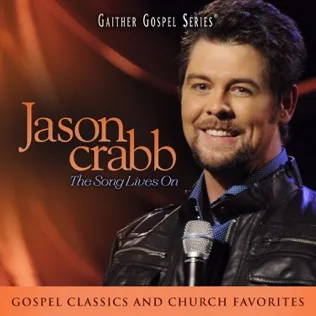
Jason Crabb - God On The Mountain Lyrics

Album: The Song Lives On
Released: 01 Jan 2011
iTunes Amazon Music

Lyrics

Life is easy
When your up on the mountain
And you've got peace of mind
Like you've never known
But then things change
And your down in the valley
Don't loose faith for you're never alone

For the God on the mountain
Is still God in the valley
When things go wrong
He'll make them right and
The God of the good times
Is still God in the bad times
The God of the day
Is still God in the night

You talk of faith
When you're up on that mountain
Oh but talk comes so easy
When life's at its best
Oh but it's down in the valley
Of trials and temptations
Cause that's when faith is
Really put to the test

Ohh the God of the mountain
Is still God in the valley
When things go wrong
He'll make them right
The God of the good times
Is still God in the bad times
The God of the day
Is still God in the night

The God of the day
The God of the day
The God of the day
Is still God in the night

Ohhhhh
The God of the day
Is still God in the night

Video

Jason Crabb - God On the Mountain [Live] ft. Jason Crabb

Thumbnail for God On The Mountain video

Meaning & Inspiration

Jason Crabb has a way of taking the well-worn tropes of Southern Gospel and pressing them right against the nerves of someone who’s had a rough week. In "God on the Mountain," the writing leans heavily into that traditional mountain-versus-valley motif—a spatial metaphor that’s been part of the church’s vocabulary since the Psalms.

When Crabb sings, "Talk comes so easy / When life's at its best," he’s calling out the performative nature of Sunday morning optimism. It’s a sharp observation. We spend so much energy projecting a sense of equilibrium that it becomes a social currency. But the song hits a different register when he pivots to the valley being a place where "faith is really put to the test." This isn’t a high-concept theological treatise; it’s the kind of blunt, plain-spoken truth that makes Southern Gospel so enduring. It doesn't rely on the slick, repetitive loops of modern CCM; instead, it uses the call-and-response cadence common in older rural churches, where the congregation needs to feel the weight of the lyrics as much as the melody.

The tension here is in the "valley." In Scripture, valleys—like the one in Psalm 23—are not places you visit because you’ve sinned or because your faith is small. They are simply part of the geography of a life lived on this earth. Crabb’s delivery brings that reality into the room. He isn’t trying to climb out of the valley with some upbeat, frantic tempo. He’s sitting in it. The insistence that the "God of the day / Is still God in the night" feels less like a shout of victory and more like an anchor being dropped into a dark, moving current.

I find myself wondering if the "vibe" of the arrangement—that sturdy, slightly nostalgic Southern country-pop sound—actually softens the blow of the lyrics too much. Sometimes, when a song is this catchy and familiar, we treat the words like comfortable furniture instead of the disruptive, counter-cultural claims they actually are. It’s easy to hum along while your internal life is actually in shambles, letting the chorus act as a sedative rather than a provocation.

Is the message lost in the ease of the melody? Maybe. Or maybe the melody is the only thing keeping the truth from being too heavy to hold. There’s a quiet ache in the way he repeats, "The God of the day / Is still God in the night." It’s an unfinished thought, really. Even with the song over, the night is still there, and the valley hasn't necessarily moved. It’s an invitation to stop talking, stop performing, and just exist in that uncomfortable space where the only thing left is the claim that God is present in the dark, even when you can't see the edges of the valley walls.

Loading...
In Queue
View Lyrics