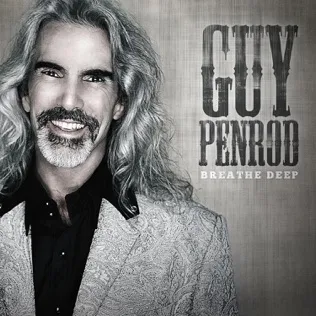
Guy Penrod - Knowing What I Know About Heaven Lyrics
Released: 30 May 2025
Lyrics
I bet the trumpets play and the angels sing
Every sweet refrain of amazing grace
And the Heaven's hands opened up the gate
And the children dance when they saw Your face
As happy as they were to see You coming
I was just as sad to have to watch You go, go but
Knowing what I know about Heaven
Believing that you're all the way home
Knowing that you're somewhere better
Is all I need to let you go
I could hope that I could pray you're back
But why on earth would I do that
When you're somewhere, life and love never ends
Oh, knowing what I know about heaven
Where every single voice makes a joyful noise
How sweet the sound when the saints rejoice
To every broken heart and every wounded soul
New life begins on streets of gold
But every tear that's raining here from my eyes
I know the sun is shining where you are
Oh, knowing what I know about Heaven
Believing that you're all the way home
Knowing that you're somewhere better
Is all I need to let you go
I could hope that I could pray you're back
But why on earth would I do that
When you're somewhere, life and love never ends
Oh, knowing what I know about Heaven
I could hope that I could pray you're back
But why on earth would I do that
When you're somewhere, life and love never ends
Oh, knowing what I know about Heaven
Video
Guy Penrod & Sarah Darling - Knowing What I Know About Heaven
Meaning & Inspiration
Guy Penrod has spent a career singing about the afterlife with a voice that sounds like it’s made of gravel and gospel sunshine. In his latest release, Knowing What I Know About Heaven, he tackles the hardest part of loss: the letting go.
But I’m stuck on the line, "I could hope that I could pray you're back / But why on earth would I do that."
That’s a bold claim. Is it honest, or is it just the kind of thing we say to keep from screaming? When a kid gets sick or a spouse walks out the door for the last time, the instinct isn't to look up and say, "Well, they’re better off, so I guess I’m good." The instinct is to claw at the dirt. The psalms aren't all polite little hymns about pearly gates; they’re full of people shouting, "Why have you forsaken me?" or "How long, O Lord?" (Psalm 13:1).
If you tell a grieving mother that she shouldn't pray for her child to be back because they’re in a "better" place, you aren't giving her comfort. You’re giving her a sedative. That’s Cheap Grace. It dismisses the tragedy of death—the separation, the silence in the kitchen, the empty chair—by papering over it with a promise of streets of gold. Death is an enemy. The Bible calls it the last one to be destroyed (1 Corinthians 15:26). We aren't supposed to be fine with it.
Penrod sings about the sun shining where the departed are, while the rain falls from his eyes here. That split between the internal reality of grief and the external promise of scripture is where the real fight happens. Maybe the "knowing" isn't a cure for the pain. Maybe it’s just the friction that keeps you from falling apart completely.
I’ve sat in those silent houses. I’ve stared at the floor after a funeral, and none of the theological "betters" made the silence any less deafening. Does knowing someone is in Heaven stop the chest-crushing weight of missing them? No.
If this song is just a greeting card to help us avoid the messiness of mourning, then it’s useless. But if we take that line about not praying them back as a confession—a struggle to align what we believe with what we feel—then it’s worth a listen. I don't know that I agree with Penrod that "knowing" is all it takes to let go. Most days, it feels like letting go is a daily, bloody, reluctant surrender.
Maybe the faith isn't in the certainty of the song's hook. Maybe the faith is in the fact that we sing it anyway, even when our hands are shaking and we’re angry at the gate being locked. We keep the hope, but we don't have to pretend the loss doesn't leave a hole you could drive a truck through.