Deitrick Haddon - Because He Lives Lyrics
Lyrics
God sent His son, They called Him Jesus. He came to love, heal and forgive. He lived and died, to buy my pardon. An empty grave is there to prove my Savior lives.
Because He lives, I can face tomorrow.
Because He lives, all fear is gone.
Because I know, I know, I know He holds the future.
And life is worth the living just because He lives.
How sweet to hold a new born baby, and feel the pride and joy he gives. But greater still is that assurance the child can face uncertain days because He lives.
Because He lives, I can face tomorrow.
Because He lives, all fear is gone.
Because I know, I know, I know He hold the future.
And life is worth the living just because He lives.
And then one day, I'll cross that river. I'll fight life's final war with pain. And then as death gives way to victory. I'll see the light of glory and I'll know that He lives.
Because He lives, I can face tomorrow.
Because He lives, all fear is gone.
Because I know, I know, I know He hold the future.
And life is worth the living just because He lives.
Video
Because He Lives
Meaning & Inspiration
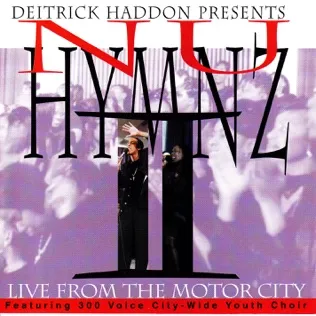
Deitrick Haddon’s take on the Gaither classic during his Nu Hymnz set pulls the song out of the parlor and into the rafters. When you strip away the familiar organ swell of the original, you’re left with the sheer grit of the lyrics. Haddon’s delivery reminds us that this isn’t a soft lullaby; it’s a combat manual for the anxious.
The song has a habit of repeating its chorus, which is usually where a track dies under the weight of its own inertia. But here, the repetition functions like a rhythmic anchor. You aren’t being lectured; you are being braced.
The 'Power Line' is: “Because I know, I know, I know He holds the future.”
It works because the repetition of "I know" isn't about theological certainty; it’s about shouting down the doubt. We live in a culture that treats the future like a volatile stock market. We check the news, we look at our bank accounts, and we get sick. To say you know who holds the future isn't just a nod to sovereignty—it’s an act of defiance against the panic that tries to claim your headspace before you even get out of bed.
James 4:14 reminds us that our life is a mist. It’s here, then it vanishes. That’s a terrifying prospect if you’re the one holding the compass. Haddon’s version makes it clear that the "uncertain days" aren't bugs in the system; they’re features of the human condition. The lyrics about holding a newborn and feeling that fragile pride—then immediately pivoting to the child facing a brutal world—is a sharp sting of reality. It’s the parent’s greatest fear: I cannot protect this life forever.
The song doesn't pretend that the "final war with pain" is going to be easy or clean. It acknowledges the river, the fight, and the reality of death. But it anchors the whole thing to an empty grave.
There’s a tension here I find myself sitting with: if the future is held by Him, why does the present feel so frantic? We cling to the chorus because we are terrified of the silence between the verses. Haddon doesn’t resolve that tension. He doesn't offer a tidy exit ramp from the struggle. He just keeps singing the line until the fear loses its oxygen.
Maybe that’s the point. Faith isn’t the absence of a shaking hand. It’s the ability to keep moving even while it shakes, because you’ve decided, against all visible evidence, that the grave actually stayed empty. It’s not elegant, but it’s enough to get through the night.