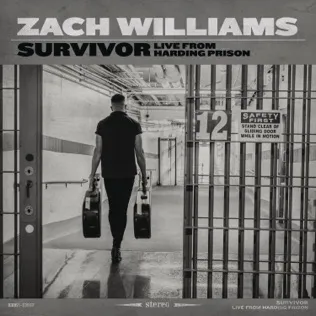
Zach Williams - To The Table Lyrics
Lyrics
Zach Williams - To the Table Live from Harding Prison
Lyrics
Hear the voice of love that's calling
There's a chair that waits for you
And a Friend who understands
Everything you're going through
But you keep standing at a distance
In the shadow of your shame
There's a light of hope that's shining
Won't you come and take your place
[Chorus]
And bring it all to the table
There's nothing He ain't seen before
For all your fear all your sorrow and your sadness
There's a Savior and He calls
Bring it all to the table
He can see the weight you carry
The fears that hold your heart
But through the cross you've been forgiven
You're accepted as you are
So bring it all to the table
There's nothing He ain't seen before
For all your trials all your worries and your burdens
There's a Savior and He calls
Bring it all to the table
Bring it all
You can bring it all
And come on in take your place
There's no one who's turned away
All you sinners all you saints
Come right in and find your grace
Come on in take your place
There's no one who's turned away
All you sinners all you saints
Come on in and find your grace
And bring it all to the table
There's nothing he ain't seen before
For all your sin all your sorrow and your sadness
There's a Savior and he calls
Bring it all to the table
Video
Zach Williams - To the Table (Live from Harding Prison)
Meaning & Inspiration
The invitation to "bring it all to the table" is a common trope in modern hymnody, often bordering on the therapeutic—a suggestion that if we just empty our pockets of guilt, we might feel a bit lighter. But when Zach Williams sings this, specifically in the setting of a prison, the weight of the lyrics shifts. It moves away from mere emotional relief and pushes toward the doctrine of propitiation.
The line, "You're accepted as you are," is where I usually find myself hitting the brakes. If we aren’t careful, this sentiment devolves into a soft universalism—the idea that God’s love is a neutral background hum that validates our current state. If left unanchored, "accepted as you are" is a dangerous half-truth. However, in the context of the preceding line—"But through the cross you've been forgiven"—the theology gains its necessary teeth. We are not accepted because of who we are; we are accepted because of the finished work of the Cross. Our standing before the Father is not a result of our transparency at the table, but because the debt of our transgression was already settled in blood.
The "table" here functions as an altar. In the Old Covenant, you didn’t go to the altar to share your feelings; you went to deal with your sin. When Williams sings, "There’s nothing He ain’t seen before," it strips away the prideful pretense that our specific brand of brokenness is somehow beyond the reach of divine intervention. There is a brutal honesty in that. It suggests that our hidden corners are not hidden to the One who knows the end from the beginning.
Yet, I struggle with the invitation to "all you sinners all you saints." Theologically, we remain simul iustus et peccator—simultaneously justified and sinner. The distinction between the saint and the sinner is not a moral divide but a positional one. By conflating the two in the invitation, Williams risks flattening the gravity of the conversion. Are we coming to the table to find grace, or are we coming because grace has already been applied to us? The song feels like it’s describing the application of grace, but it leaves me wondering if the listener understands that the table is only accessible because the veil was torn, not because we finally worked up the courage to sit down.
There is a tension here that doesn’t quite resolve. If I am truly "accepted," the shame that keeps me "standing at a distance" is not just an emotional hurdle; it is a denial of the power of the Atonement. If the cross has done its work, the distance is gone. We are either clothed in His righteousness or we are not. And yet, there is a haunting reality in the persistent human tendency to hover near the door, clutching our sorrows as if they are our identity. Williams captures that paralysis well. We offer our burdens, but the harder task is letting go of the guilt that we treat like a security blanket.