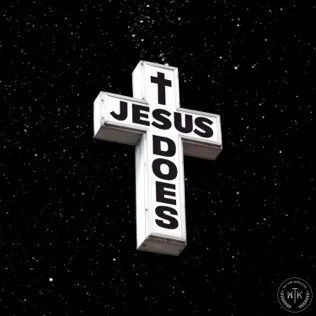
We The Kingdom - Jesus Does Lyrics
Lyrics
Who tells the sun to rise every morning
Colors the sky with the shades of His glory
Wakes us with mercy and love
Jesus does
Who holds the orphan, comforts the widow
Cries for injustice, feels every sorrow
Carries the pain of His children
Jesus Does
So we sing
Praise to the Father
Who gave us the Son
Praise to the Spirit
Who’s living in us
When I was a sinner
He saved me
From who I was
Yeah that’s what Jesus does
Who understands the heart of the sinner
Showers His grace over all our mistakes
Washes us clean with His blood
Jesus does
Who sings the song of sweet forgiveness
Who stole the keys to hell and the grave
Who has the power to save
Jesus does
Oh what a Friend
Oh what a Savior
He’s always been good
He’s always been faithful
He came to my rescue
When I needed him most
And saved my soul
Video
We The Kingdom - Jesus Does (Official Music Video)
Meaning & Inspiration
The line "Who stole the keys to hell and the grave" from We The Kingdom’s recent work functions as a bold, if slightly provocative, shorthanding of the Descensus Christi ad Inferos—the descent of Christ into the depths. When we sing this, we are engaging in more than a casual lyrical exercise; we are staking a claim on the nature of the Resurrection.
To say He "stole" the keys is a sharp, jagged way to describe the triumphant violence of the atonement. It evokes the Harrowing of Hell, where the victory of Christ over death wasn't a passive event but a forceful reclamation of authority. If the sting of death is sin, and the power of sin is the law, then stripping the grave of its keys means the law no longer holds a prisoner’s warrant over the redeemed. It is a sturdy image because it rejects the idea that Jesus simply "escaped" the grave. Instead, He dismantled the prison.
However, theology often demands we hold tension. While the lyrics lean into the victory, the human experience of the believer remains tethered to a fallen world. We still see the widow and the orphan—mentioned earlier in the song—struggling against the grinding machinery of injustice. If Jesus has already stolen the keys, why does the sorrow still feel so heavy in the present?
There is a potential danger here in allowing the triumph to overshadow the reality of our current sanctification. If we equate "Jesus does" with a sort of cosmic problem-solver who magically erases the consequences of a broken world, we risk minimizing the doctrine of the Imago Dei. We are not just beneficiaries of His rescue; we are called to be the hands that comfort those widows, precisely because He has already secured the victory.
The lyric "Washes us clean with His blood" is the anchor that prevents the rest of the song from floating away into sentimentalism. Without the weight of propitiation—the actual, objective satisfaction of divine justice—the talk of mercy is just empty cheerleading. But when we connect the "blood" to the "keys," we are forced to reconcile the cost with the conquest.
I find myself lingering on the phrase "from who I was." It is a quiet, almost understated admission of the radical change wrought by regeneration. It acknowledges that the old self wasn't just slightly improved; it was fundamentally unfit for the presence of a Holy God.
These lyrics operate best when they function as a creed. They aren't just expressing a feeling; they are asserting a history. Whether or not these lines provide comfort depends entirely on whether we believe the keys were truly taken, or if we are merely singing about a possibility. When I hear them, I am forced to ask: If the grave is unlocked, why do I still live as if I am trapped inside?