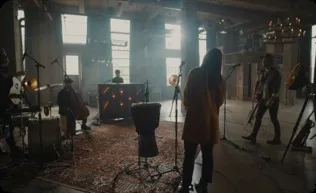
We The Kingdom - God So Loved Lyrics
Lyrics
Come all you weary
Come all you thirsty
Come to the well
That never runs dry
Drink of the Water
Come and thirst no more
Come all you sinners
Come find His mercy
Come to the table
He will satisfy
Taste of His goodness
Find what you’re looking for
For God so loved
The world that He gave us
His one and only
Son to save us
Whoever believes in Him
Will live forever
Bring all your failures
Bring your addictions
Come lay them down
At the foot of the cross
Jesus is waiting there
With open arms
The power of Hell
Forever defeated
Now it is well
I’m walking in freedom
For God so loved
God so loved the world
Praise God
Praise God
From whom all blessings flow
Praise Him
Praise Him
For the wonders of His love
Bring all your failures
Bring your addictions
Come lay them down
At the foot of the cross
Jesus is waiting
God so loved the world
Video
We The Kingdom - God So Loved (Acoustic)
Meaning & Inspiration
We The Kingdom offers a invitation here that feels deceptively simple. "Come all you weary," they sing, echoing the cadence of Matthew 11:28. It’s an easy line to hum along to on a Tuesday morning, but when you stop to consider the weight of "The well that never runs dry," the theology begins to push back against the typical lightness of modern radio fodder.
Too often, we treat the gospel as a self-help tonic, a bit of spiritual caffeine to get us through the morning. But the lyrics here—specifically the demand to "bring all your failures, bring your addictions" and "lay them down at the foot of the cross"—shift the focus from our own emotional replenishment to the harsh, necessary reality of substitutionary atonement.
This isn't just about feeling better; it’s about the exchange of our brokenness for His righteousness. If we treat "the cross" as merely a place to leave our bad habits, we’ve missed the point of propitiation. That cross was a site of execution, a place where the wrath of a holy God met the perfect obedience of the Son. When the lyrics insist we bring our addictions there, they are implying that these things are not just unfortunate life choices; they are symptoms of a rebellion that required a death to reconcile. Are we truly willing to leave our "failures" at a place of judgment? Or do we keep reaching back to claim them as our own identities?
There’s a tension in the phrase "the power of Hell / Forever defeated." We live in a world that screams the opposite. We see the decay, the systemic brokenness, and the persistence of individual sin. To sing about a defeated enemy while standing in the middle of a conflict zone is either naive or it is a radical act of faith. If the cross was, as the Apostle Paul suggests in Colossians 2, a triumphal procession where the authorities were disarmed, then "freedom" is not just a psychological state of relief. It is a legal, objective reality that currently chafes against our lived experience.
I find myself lingering on the line, "Jesus is waiting there with open arms." It borders on the sentimental, certainly. Yet, if we ground that image in the Imago Dei—the reality that we are image-bearers who have wandered far from the Source—then those arms are not just welcoming; they are gathering. It suggests a restoration of the relationship broken in the Garden.
Does this song hold up under scrutiny? It’s lean, perhaps a bit repetitive, but it refuses to stay in the shallow end of "blessings flow." It keeps dragging the listener back to the cross. And that is where the theology must remain. We are not just invited to a table; we are invited to a death that makes life possible. The song doesn't solve our addictions or failures in the span of four minutes, but it does correctly point to the only place where they can be resolved. That is enough of a beginning.