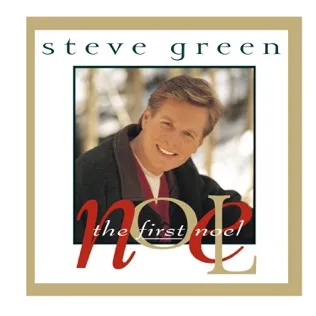
Steve Green - The First Noel Lyrics
Lyrics
The First Noel, the angels did say,
Was to certain poor shepherds in fields as they lay.
In fields where they, lay keeping their sheep,
On a cold winter's night, that was so deep.
Noel, Noel, Noel, Noel,
Born is the King of Israel.
They looked, they looked up,
And saw a star,
Shining in the east, beyond them far.
And to the Earth, it gave great light.
And so it continued, both day and night.
Noel, Noel, Noel, Noel,
Born is the King of Israel.
They led a song, with one accord,
Sing praises to our Heavenly Lord.
Who hath made Heaven and Earth of naught,
And with His blood, mankind He bought.
Noel, Noel, Noel, Noel,
Born is the King of Israel.
Noel, Noel, Noel, Noel,
Born is the King, (The King is born)
Born is the King, (He's born)
Born is the King, of Israel.
Noel, Noel,
Born is the King.
Born is the King.
Noel, Noel.
Video
The First Noel
Meaning & Inspiration
Steve Green’s rendition of “The First Noel,” released on January 1, 1996, as the title track of his album *The First Noel*, stands as a powerful testament to the enduring message of Christ's birth. This classic carol, presented through Green's distinctive vocal purity and reverence, bypasses mere seasonal festivity to deliver a profound contemplation of the Nativity story and its eternal implications. The song serves not just as a retelling of an ancient event, but as an invitation to reflect on the divine intervention that reshaped human history, focusing intently on the theological truths embedded within its seemingly simple narrative.
The song begins by immediately transporting us to the humble fields where shepherds lay, faithfully tending their flocks on a "cold winter's night, that was so deep." This scene directly echoes the biblical account in Luke 2:8, where angels first announced the good news to those often overlooked by society. The revelation of "The First Noel" to these "certain poor shepherds" underscores God's preference for the lowly and his desire to make known the most significant event in salvation history to ordinary people. The repeated refrain, "Noel, Noel, Noel, Noel, Born is the King of Israel," acts as a joyful, insistent proclamation, centering the entire narrative on the identity and sovereignty of the newborn child. It’s a declarative statement, reminding all who engage with the song that this birth is not just a historical moment, but the advent of royalty, the long-awaited Messiah promised to Abraham and David, a truth underscored in prophecies like Isaiah 9:6-7.
The narrative then shifts to the celestial wonder witnessed by the shepherds: "They looked, they looked up, And saw a star, Shining in the east, beyond them far." While the Star of Bethlehem is primarily associated with the Magi's journey in Matthew 2, the carol, in a broader sense, integrates the divine illumination that heralded Christ’s arrival, symbolizing God's grand announcement to the world. This great light, shining "both day and night," represents the inescapable truth of Christ's presence and God’s glory breaking through the darkness of human experience. This light is not just a guide; it is a manifestation of divine power and purpose, illuminating the path to salvation and echoing the words of John 1:9, "The true light that gives light to everyone was coming into the world."
The song reaches its theological zenith in the third stanza, moving beyond the narrative details to the very core of Christian doctrine. "They led a song, with one accord, Sing praises to our Heavenly Lord," invites all to join in worship. The profound declaration follows: "Who hath made Heaven and Earth of naught, And with His blood, mankind He bought." This powerful statement seamlessly connects creation and redemption. It asserts the divinity of Christ as the orchestrator of all existence, reminding us that the infant born in Bethlehem is the same Word through whom all things were made (John 1:3, Colossians 1:16). Furthermore, the phrase "And with His blood, mankind He bought" provides the ultimate purpose for this incarnation—the atoning sacrifice. It clearly articulates the Gospel message: Christ’s birth leads directly to his sacrificial death, a payment for human sin, as described in Ephesians 1:7 and 1 Peter 1:18-19. This line transforms the carol from a simple birth narrative into a complete encapsulation of God’s plan for salvation, revealing the profound depth of divine love.
Steve Green's vocal delivery, even without focusing on melodic specifics, is known for its ability to convey a sense of gravitas and humble adoration that elevates the familiar text. His voice becomes a conduit for the message, ensuring the spiritual weight of each phrase resonates deeply. The repeated "Noel, Noel, Born is the King of Israel" in the song’s conclusion reinforces the central identity of Jesus—not just a baby, but a sovereign King whose arrival signifies a new covenant and eternal hope. This song, when approached with reflection, is more than a traditional Christmas carol; it is a declaration of faith, a reminder of God's meticulous plan from creation to redemption, all culminating in the birth of the Messiah. It encourages believers to look beyond the manger scene to the cross and the empty tomb, understanding that the First Noel initiated a journey of profound grace for all humanity.