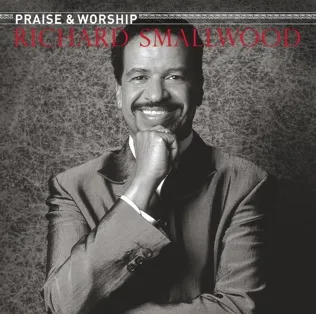
Richard Smallwood - My Everything (Praise Waiteth) Lyrics

Album: Richard Smallwood With Vision - The Praise & Worship Songs of Richard Smallwood
Released: 21 Oct 2003
iTunes Amazon Music

Lyrics

Oh Lord, Your My Everyhing Praise Wait-Eth For Thee My King Oh-Oh, Thou Who Hear-Eth Everthing Oh Lord, Your My Ev-Ry-Thing Repeat As Directed

You-Are My Light That Shines-In The Midst Of Darkness You-Are My Help Your're There-In Times Of Trouble- [Modulaton] Where-Would-I Be If Not But For Your Mercy Oh Lord, Your're My Ev-Erything [Repeat As Directed]

Praise Wait-Eth For Thee My Everything [Repeat As Directed]

Video

Richard Smallwood & Vision - My Everything [Praise Waiteth] (Part 1)

Thumbnail for My Everything (Praise Waiteth) video

Meaning & Inspiration

Richard Smallwood has a way of stripping away the ornamental clutter that often plagues modern congregational music. When you look at "My Everything," you aren't dealing with a convoluted metaphor or a clever hook. You’re dealing with a declaration that is almost jarringly simple. As someone tasked with guiding a room full of people through a liturgy, I find that simplicity terrifying. It’s hard to hide behind simple words.

Consider the line: "Praise waiteth for Thee, my King."

We often treat praise as a reactive force—something we offer up once God has checked a box on our list of requests. But Smallwood pulls this from the psalmist’s posture in Psalm 65:1 ("Praise waiteth for thee, O God, in Sion"). It suggests that praise is a state of readiness, a quiet, expectant tension that exists before the blessing even arrives. When we sing this, we aren't just reciting a fact; we are trying to inhabit a space where our worship is poised, vibrating with the expectation of His presence, regardless of the circumstances we walked in with. It forces a congregation to stop looking for a 'high' and start looking for the object of their devotion.

Then there’s the question: "Where would I be, if not but for Your mercy?"

In the context of the arrangement, this isn't a rhetorical flourish. It’s a moment of necessary gravity. It functions as the liturgical landing strip. If we aren’t careful, our worship becomes a self-congratulatory celebration of our own devotion. This lyric drags us back to the reality of the Cross. It reminds the room that our ability to even stand and sing is a grace-sustained miracle. It’s a sobering pivot. In a room of five hundred people, if everyone is actually honest with that question, the room changes. The sound thins out. The bravado vanishes. It’s no longer about how well the choir hits the modulation; it’s about the vulnerability of realizing how fragile our existence is apart from the sustaining hand of the Father.

From a practical standpoint, this song is a challenge to lead because it resists the urge to build into a frenzy. It requires a certain restraint. If you treat it like a mountain-top anthem, you miss the point. It is a slow, methodical confession. The tension here lies in the repetition—"Repeat as directed." It’s an exercise in discipline. Can we keep saying "You are my everything" when the melody shifts, when the air in the room gets thin, and when we are forced to move past the initial comfort of the chorus?

We are left with a lingering, slightly uncomfortable question: Is He actually everything, or is He just the primary consultant in our lives? When the instruments cut out and the final note hangs there, the congregation is left with nowhere to go except back into their own interior silence. That’s the true test of a song—what remains once the music stops? With Smallwood, you’re left with that quiet, waiting praise. It feels unfinished, like we’ve only just started to understand the weight of the words we’re speaking. And maybe that’s exactly where we need to be.

Loading...
In Queue
View Lyrics