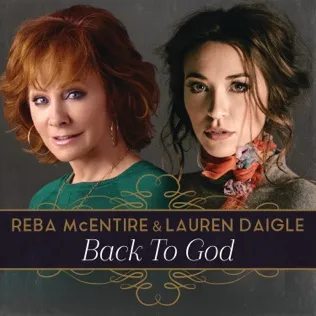
Reba McEntire + Lauren Daigle - Back To God Lyrics
Lyrics
Oh have you looked around
Have you heard the sound
Of Mama's cryin'
Or do you turn away
When you see the face
Of the innocent dyin'
In these darkest days
Are you not afraid
That it's too late
You gotta get down on your knees, believe
Fold your hands and beg and plead
Gotta keep on praying
You gotta cry, rain tears of pain
Pound the floor and scream His name
Cause we're still worth saving
Can't go on like this and live like this
We can't love like this
We gotta give this world back to God
Have you lost a love?
Do you feel like givin' up?
Has your heart been broken?
Are your kids okay?
Will they come home safe?
Do you lie there hoping?
You can make a wish, you knock on wood
Oh it won't do no good
You gotta get down on your knees, believe
Fold your hands and beg and plead
You gotta keep on praying
You gotta cry, rain tears of pain
Pound the floor and scream His name
Cause we're still worth saving
We can't go on like this and live like this
We can't love like this
We gotta give this world back to God
You gotta get down on your knees, believe
Fold your hands and beg and plead
Keep on praying
You gotta cry, rain tears of pain
Pound the floor and scream His name
Cause we're still worth saving
Can't go on like this and live like this
We can't love like this
You can hope the best
Make a wish
The only answer is
We give this world back to God
Oh, give it back
Video
Reba McEntire - Back To God (Official Music Video)
Meaning & Inspiration
In the track "Back to God," Reba McEntire and Lauren Daigle pivot away from the common habit of treating faith as a self-help tonic. They strip away the superstition of "making a wish" or "knocking on wood," correctly identifying those as spiritual dead ends that offer no real ballast in the face of tragedy.
The lyric that arrests me is: "Cause we’re still worth saving."
As a student of the Fall, I have to pause here. From a strictly doctrinal vantage point, the assertion that humans are "worth saving" is, on its face, a staggering contradiction to the doctrine of Total Depravity. If we look at the standard of God’s holiness, we are not worth saving; we are under the righteous judgment of a Creator whose laws we have systematically dismantled. And yet, the song lands on something that feels remarkably like the Imago Dei. We are "worth" saving not because of any innate goodness left in our bruised, fallen state, but because we bear the image of the One who crafted us. The value isn't intrinsic to the creature; it is reflective of the Creator. To argue we are worth saving is to affirm that the Incarnation was a necessary act of mercy. It implies that God saw something in the wreckage of humanity—His own likeness—that moved Him to intervene.
However, the song’s call to action—"Get down on your knees, believe / Fold your hands and beg and plead"—introduces a tension I am still wrestling with. There is a distinct, visceral posture here: pounding the floor, screaming His name, crying tears of pain. It is an act of desperation. It moves prayer out of the realm of polite, ordered liturgy and into the messy, desperate work of lament.
But does this posture secure the outcome? Does "begging and pleading" move the hand of God, or does it merely realign the heart of the pleader?
The lyrics suggest that if we scream loud enough, if we "give this world back to God," we might find an exit from the darkness. As a theologian, I find this slightly precarious. We often treat prayer like a lever we pull to force God to fix the broken machinery of our lives. If we pray hard enough, the innocent stop dying; if we plead enough, our kids come home safe. But if God is sovereign, His refusal to answer our "wish" isn't a failure of our technique. It is the silence of a God who is working toward a telos we cannot yet see.
I appreciate the honesty in the admission: "We can’t go on like this and live like this." It acknowledges that the present order is unsustainable. We are a people living in the "already and not yet." We are desperate for the renewal of all things, yet we are still tethered to a world groaning under the weight of its own rebellion. This song doesn't provide a tidy answer to why the tragedy occurs, but it correctly identifies that our only posture in the middle of it is a radical, kneeling surrender. We aren't just asking for help; we are relinquishing control of the world back to the One who actually owns it. It is an unfinished plea, and perhaps that is exactly where we ought to sit.