Raze - Intro Lyrics
Lyrics
(Thank you for your patience)
(First message)
(Message ?)
(Message is as follows)
Video
Raze // The Color of the Town - VALORANT
Meaning & Inspiration
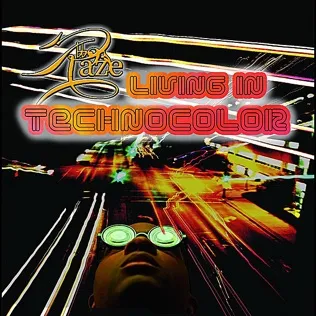
The voicemail intro—a staple of the early 2000s R&B aesthetic—hits different when you realize Raze is using it not for a breakup track, but to simulate the arrival of a divine transmission. It’s a clever bit of staging. By framing the lyrics within the mundanity of a blinking notification light, Living in Technocolor attempts to bridge the gap between the chaotic, hyper-connected rhythm of urban life and the static, ancient frequency of God’s voice.
There’s a tension here that feels specific to the era: the desire to keep up with the fast-paced, secular output of commercial radio while maintaining a grip on a vertical relationship. You hear it in the way the production leans into that crisp, synthesized bounce—very much a product of its time—trying to mimic the "vibe" of the charts.
But then there’s the lyric: "Thank you for your patience."
It’s such a strange, clipped way to open a record. It feels borrowed from a customer service queue or a corporate waiting room, yet it lands with a weirdly tender theological weight. We spend our lives waiting for "the next message," constantly refreshing our feeds or checking our pockets for a vibration that never comes. In Scripture, waiting is rarely passive; it’s an active posture. Psalm 27:14 tells us to "Wait for the Lord; be strong and take heart." Raze flips the script—usually, we are the ones waiting on God, but here, there’s an acknowledgment that the Creator is the one extending grace to our own distracted, stuttering attention spans.
Is the message lost in the vibe? Maybe. When you dress up a sermon in the clothes of a dance track, you run the risk of the listener prioritizing the rhythm over the revelation. You’re moving, you’re nodding your head, and suddenly the "Message" mentioned in the intro feels like a rhythmic element rather than a directive. It becomes ambient spiritualism. You start to wonder if the medium is so loud that the clarity of the call is obscured.
Yet, there is something honest about that ambiguity. Life in "Technocolor"—a term that implies a saturation of brightness that can sometimes hurt the eyes—isn't a monochrome, easy-to-follow map. It’s messy. It’s cluttered. If you’re trying to hear from God while the bass is rattling your car door, you aren't getting a perfectly curated theological treatise. You’re getting a fragments, a signal cutting through the static.
I find myself lingering on that idea of the "first message." It implies there are more to come, or perhaps that we’ve missed a long string of them while we were busy scrolling. It’s a reminder that we are constantly being spoken to, even when we’ve set our souls to silent mode. Raze might be leaning into the trends of his day, but there’s an undercurrent of humility in the waiting—an admission that we aren't as in control of our connection as we’d like to pretend. We’re just standing there, phone in hand, hoping we haven't missed the call.