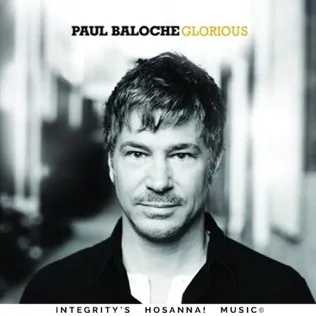
Paul Baloche - A New Hallelujah Lyrics
Lyrics
Can you hear?
There's a new song breaking out
From the children of freedom
Every race and every nation
Sing it out, sing a new hallelujah
Let us sing
Love to the nations bringing hope
Of the grace that has freed us
Make Him known and make Him famous
Sing it out, sing a new hallelujah
Arise, let the church arise
Let love reach to the other side
Alive, come alive
Let the song arise
All the world sings a new song
Reaching out with a new hallelujah
Every son and every daughter
Everyone sing a new hallelujah
Let the song arise
Let the song arise
Let the song arise
Video
Paul Baloche - A New Hallelujah
Meaning & Inspiration
"A New Hallelujah" by Paul Baloche, released on 2010-02-02 08:00:00 as part of the "Worship Tools 22 - Glorious (Resource Edition)" album, stands as a powerful anthem of global awakening and unified praise. This song is not merely a collection of verses and choruses; it is a prophetic declaration, calling the people of God to a renewed sense of purpose and a fresh expression of worship that transcends every earthly boundary. Its profound message emphasizes the vibrant, ongoing work of the Holy Spirit, stirring hearts to acknowledge God's saving grace and proclaim His renown across the earth.
The core of the song's message resonates immediately with the phrase, "a new song breaking out." This idea of a "new song" is deeply rooted in scripture, echoing passages like Psalm 33:3, which encourages us to "sing to Him a new song; play skillfully, with a loud noise," and Psalm 96:1, "Oh, sing to the LORD a new song; sing to the LORD, all the earth!" It signifies more than just a previously unheard melody; it speaks to a fresh revelation of God's character, a deeper experience of His redemption, and a spontaneous eruption of praise that springs from a heart set free. When the lyrics declare this song is "from the children of freedom," it immediately connects to the liberating truth found in John 8:36, where Christ promises, "if the Son sets you free, you are truly free." This freedom is not an end in itself but an impetus for worship, inviting "every race and every nation" to join in this universal chorus, beautifully reflecting the vision of Revelation 7:9, where a great multitude from every tongue and tribe stands before the throne, offering adoration.
The song further develops its call to action, urging believers to "sing Love to the nations bringing hope." This compelling mandate aligns perfectly with the Great Commission given in Matthew 28:19, to "go therefore and make disciples of all nations," and is fueled by the boundless "grace that has freed us." This grace, as illuminated in Ephesians 2:8-9, reminds us that salvation is a gift, "not of works, lest anyone should boast," and it is this transformative grace that empowers us to "make Him known and make Him famous." The song beautifully encapsulates the urgency and joy of spreading the good news, positioning our collective worship not just as an inward act of devotion, but as an outward expression of mission, extending the hope of Christ to a world desperately in need, a hope articulated in Romans 15:13 which states, "May the God of hope fill you with all joy and peace as you trust in him, so that you may overflow with hope by the power of the Holy Spirit."
Perhaps one of the most stirring components of "A New Hallelujah" is its direct challenge to the Church itself: "Arise, let the church arise." This is a spiritual clarion call, reminiscent of Isaiah 60:1, "Arise, shine, for your light has come, and the glory of the LORD rises upon you," and Ephesians 5:14, "Wake up, sleeper, rise from the dead, and Christ will shine on you." It’s an invitation to awaken from spiritual slumber, to shake off apathy, and step into its God-given identity and purpose. The accompanying exhortation to "let love reach to the other side" broadens this awakening beyond mere internal vitality, pushing the Church to extend its compassion and gospel message beyond familiar boundaries, embodying the love Jesus commanded in John 13:35, "By this everyone will know that you are my disciples, if you love one another." This outward movement is to be accompanied by an internal resurgence, captured by the declaration "Alive, come alive," reflecting the spiritual transformation described in Romans 6:11, where believers are considered "dead to sin but alive to God in Christ Jesus." This vitality then naturally finds its expression as "the song arise," a continuous, living worship.
The anthem culminates in a sweeping vision of inclusivity and global participation, asserting that "All the world sings a new song... Every son and every daughter Everyone sing a new hallelujah." This vision underscores the universal invitation to salvation and worship, fulfilling prophecies such as Joel 2:28, which declares, "I will pour out my Spirit on all people; your sons and daughters will prophesy." It speaks to the breaking down of all societal, cultural, and gender barriers in the body of Christ, echoing Galatians 3:28, "There is neither Jew nor Gentile, neither slave nor free, nor is there male and female, for you are all one in Christ Jesus." The repeated phrase, "Let the song arise," serves as a powerful encouragement, reminding us that this wave of worship and mission is not fleeting but is an enduring, persistent movement of God's people, sustained by His Spirit. "A New Hallelujah" is ultimately an inspiring call to active, unified, and outward-focused worship, an anthem for believers worldwide to embrace their freedom, proclaim their hope, and participate wholeheartedly in God’s grand narrative of redemption, making His fame known from generation to generation.