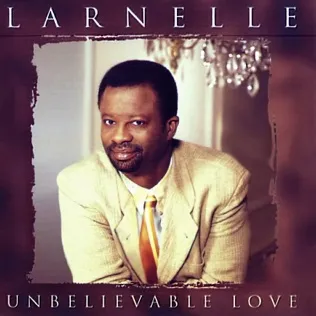
Larnelle Harris - He Loved Me With A Cross Lyrics
Lyrics
He left a throne in heaven to come to Bethlehem
And I will not forget the way
He loved me even then
And everywhere He traveled
He spoke with words of love
That said He'd go to any distance
To show what I was worthy of
And when at last the dusty road
Had turned to Calvary
He picked up a rugged burden
So that one day I would see
Chorus
He loved me with a cross
In answer to the call of love
He loved me with a cross
And I could not imagine what
Loving me would cost
My Jesus went to Calvary
And loved me with a cross
He knew from the beginning
The price He'd have to pay
For my heart had gone so far beyond
What other loves forgave
I wasn't on that hillside
To see Him on the tree
But as my guilt was placed upon Him
I know that somehow He saw me
Chorus
And I would be a sinner still
Enslaved by all my sin
If it hadn't been for Jesus
And the way He loved me still
Chorus
Video
He Loved Me With a Cross
Meaning & Inspiration
Larnelle Harris’s "He Loved Me With A Cross," released on November 8, 1988, as part of the *Larnelle Collector's Series, Vol. 2*, stands as a powerful testament to the unwavering and sacrificial love of God. This profound song distills the entire narrative of redemption into a deeply personal confession, inviting the listener to reflect on the immense cost of salvation. It doesn't merely recount a historical event but makes the crucifixion an intimate encounter between the divine Lover and the redeemed soul, emphasizing that the cross was the ultimate expression of a love that transcends human comprehension.
The song immediately traces the miraculous journey of Christ, beginning with His descent from celestial glory. "He left a throne in heaven to come to Bethlehem" echoes the profound truth of the Incarnation, where the eternal Word, God Himself, took on human flesh (John 1:14). This act of humility and self-emptying, as described in Philippians 2:6-7, was not a reluctant concession but the first deliberate step in a divine rescue mission, demonstrating an ancient love predetermined before the foundations of the world (Ephesians 1:4). Throughout His earthly ministry, every word spoken and every action performed by Jesus was imbued with this same boundless affection. The lyrics remind us that He "spoke with words of love" and would go "to any distance to show what I was worthy of." This isn't about inherent human worthiness, but about God’s grace making us worthy through His unfathomable love, as Romans 5:8 proclaims: "But God demonstrates his own love for us in this: While we were still sinners, Christ died for us."
The narrative then converges on the pivotal moment of Calvary, the destination of that "dusty road." Here, the lyrics highlight Jesus' active choice to embrace suffering for humanity's sake: "He picked up a rugged burden." This isn't just about carrying the physical cross; it signifies His willingness to bear the crushing weight of the world’s sin, fulfilling the prophecy of Isaiah 53:4-6, which states He "surely took up our pain and bore our suffering." This act was purposefully executed "so that one day I would see," revealing the divine intent behind the suffering—to open spiritual eyes to the path of salvation (2 Corinthians 4:6). The cross, therefore, becomes not merely an instrument of torture, but the very embodiment of God's redemptive power and self-giving love.
The recurring chorus, "He loved me with a cross," serves as the song's heartbeat, a powerful and personal declaration that grounds the theological truth in individual experience. It answers "the call of love," emphasizing that God’s very nature is love (1 John 4:8), and His decision to send His Son was the ultimate demonstration of this love (1 John 4:10). The refrain acknowledges the immeasurable cost: "And I could not imagine what loving me would cost." Indeed, the price of redemption was nothing less than the precious blood of Christ, far exceeding any earthly ransom (1 Peter 1:18-19). This profound sacrifice, where "My Jesus went to Calvary and loved me with a cross," underscores the substitutionary atonement, where Christ bore the penalty for our transgressions.
The song further delves into the profound foresight of Christ, noting that "He knew from the beginning the price He'd have to pay." Jesus, being God, possessed full awareness of His destiny and the agony awaiting Him (John 6:64). This knowledge magnifies His obedience and love. The lyrics then powerfully articulate the depth of human sinfulness: "For my heart had gone so far beyond what other loves forgave." This acknowledges our innate inability to meet God’s perfect standard (Romans 3:23), and the unique, boundless nature of divine forgiveness, which completely removes our transgressions (Psalm 103:12). Even though we weren't physically present on that "hillside to see Him on the tree," the song offers a stunning revelation: "But as my guilt was placed upon Him, I know that somehow He saw me." This poignant line captures the essence of imputation and Christ’s personal focus; He died for *each* individual, enduring the cross "for the joy set before him" (Hebrews 12:2), knowing the faces of those He was saving. Our sin was transferred to Him, and His righteousness is transferred to us (2 Corinthians 5:21).
Ultimately, "He Loved Me With A Cross" brings the message full circle to its transformative effect on the human condition. Without this divine intervention, the lyrics confess, "I would be a sinner still, enslaved by all my sin." This speaks to the bondage of sin and its ultimate consequence (Romans 6:23). Yet, through the liberating power of Jesus' sacrifice, we are set free. "If it hadn't been for Jesus and the way He loved me still" encapsulates the enduring grace that breaks the chains of sin and ushers in a new life of freedom and righteousness (Romans 8:1-2). Larnelle Harris, through this song, masterfully delivers a message of hope, redemption, and a love so vast it encompasses the journey from heaven's throne to a rugged cross, all for the sake of individual souls. It serves as a stirring reminder of the central truth of the Gospel, beckoning all to embrace the love demonstrated at Calvary.