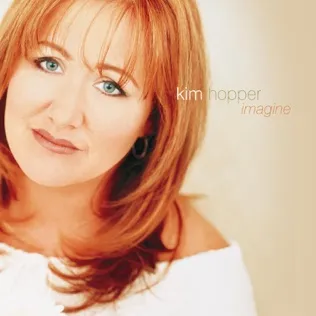
Kim Hopper - While I Wait Lyrics
Lyrics
One day, I'm gonna sail away
I can hardly wait 'til then
Longing for the city
Where rejoicing never ends
Maybe I'm impatient
But I want it all right now
I'll start the celebration
All that heaven will allow
While I wait, I'll keep on tryin'
To imagine like I'm already home
When He calls, you'll see me flyin'
To a land beyond the river
Where we'll spend the sweet forever
I'll start to celebrate while I wait
Some people think His coming
Is just our moment to fly
But I've found it's a revelation
I can feel it inside
I'll start the praises flowin'
On my last mile below
It's my special way of showin' Him
I'm ready to go
While I wait, I'll keep on tryin'
To imagine like I'm already home
When He calls, you'll see me flyin'
To a land beyond the river
Where we'll spend the sweet forever
I'll start to celebrate while I wait
While I wait, I'll keep on tryin'
To imagine like I'm already home
When He calls, you'll see me flyin'
To a land beyond the river
Where we'll spend the sweet forever
I'll start to celebrate while I wait
Video
While I Wait
Meaning & Inspiration
Released on January 1, 2003, as part of her album *Imagine*, Kim Hopper's "While I Wait" offers a profound and uplifting reflection on the Christian anticipation of eternity. The song immediately dives into the believer's fervent longing for heaven, a "city where rejoicing never ends," portraying it not as a distant dream but as an imminent, tangible destination. This powerful yearning resonates with the spiritual hunger described in Hebrews 11:10, where Abraham looked forward to "a city with foundations, whose architect and builder is God," and in Hebrews 11:16, referring to believers desiring "a better country—a heavenly one." It speaks to the universal spiritual desire for a perfect home, free from earthly sorrow and pain, as promised in Revelation 21:4, where God "will wipe every tear from their eyes. There will be no more death or mourning or crying or pain, for the old order of things has passed away."
The song’s core message quickly moves beyond passive waiting, advocating for an active, celebratory posture even amidst present circumstances. While acknowledging an understandable impatience, the singer declares, "I'll start the celebration, all that heaven will allow." This isn't just wishful thinking; it’s a deliberate choice to embrace joy and praise now, mirroring the admonition in Philippians 4:4 to "Rejoice in the Lord always; again I will say, rejoice!" It highlights that the hope of heaven can transform our current experience, making the waiting period a season of praise rather than passive expectation. This proactive joy is a testament to faith, understanding that God’s promises are secure, and therefore worthy of present celebration, just as Romans 12:12 encourages us to "be joyful in hope."
A particularly striking element of the song is the chorus's commitment to "keep on tryin' to imagine like I'm already home." This imaginative exercise isn't escapism; it's a spiritual discipline that grounds the believer in the reality of the unseen. It's an application of 2 Corinthians 5:7, "For we live by faith, not by sight," and aligns with Hebrews 11:1, defining faith as "confidence in what we hope for and assurance about what we do not see." By intentionally visualizing eternal dwelling, the song encourages a perspective shift, allowing the believer to draw strength and peace from the certainty of their heavenly inheritance. The moment "He calls," and the subsequent "flyin' to a land beyond the river where we'll spend the sweet forever," vividly paints the transition into eternity, whether through death or the glorious event of Christ's return, as described in 1 Thessalonians 4:17, where believers "will be caught up together with them in the clouds to meet the Lord in the air. And so we will be with the Lord forever." The metaphor of "beyond the river" powerfully evokes the crossing from temporal life to eternal life, a concept deeply rooted in biblical imagery.
The song then offers a thoughtful distinction: "Some people think His coming is just our moment to fly, but I've found it's a revelation, I can feel it inside." This line is crucial, emphasizing that Christ's return is more than just a physical event; it's a profound spiritual revelation that begins within the believer's heart even now. It points to the indwelling of Christ, the "hope of glory" mentioned in Colossians 1:27, suggesting that the anticipation of heaven is tied to an ongoing, living relationship with God. This internal revelation fuels the outward expression of praise, as the singer resolves to "start the praises flowin' on my last mile below," a beautiful commitment to continuous worship until life's very end, echoing Psalm 34:1, "I will bless the Lord at all times; his praise shall continually be in my mouth." This act of ceaseless praise becomes a personal declaration of readiness, a way of showing God a heart prepared and eager for His ultimate calling. "While I Wait" ultimately serves as an inspiring anthem for the believing journey, encouraging a vibrant, joyful, and purposeful life of faith lived in the confident expectation of an eternal, "sweet forever" with God.