Keith Green - O God Our Lord Lyrics
Lyrics
Who you gonna throw in the lake of fire,
O God our Lord?
Who you gonna throw when the flames get higher,
O God our Lord?
The Devil and the man with the dark desire,
O God our Lord.
The Devil and the man with the dark desire,
O God our Lord.
O God our Lord, O God our Lord.
Who you gonna throw in the lake of fire,
O God our Lord, O God our Lord.
Will my name be there when the books are opened,
O God our Lord.
Will my name be there when the books are opened,
O God our Lord.
You better know now, don't just be hoping,
O God our Lord.
You better know now, don't just be hoping,
O God our Lord.
O God our Lord, O God our Lord.
Well my name be there when the books are opened,
O God our Lord, O God our Lord.
Who's outside of the Holy City,
O God our Lord.
Tell me, who's left out of the Holy City,
O God our Lord.
The liar and the thief and the ones half ready,
O God our Lord.
The liar and the thief and the ones half ready,
O God our Lord.
O God our Lord, O God our Lord.
Tell me who's left out of the Holy City,
O God our Lord, O God our Lord.
My, My, My Lord.
I'm crying out to you master, oh Lord,
Don't you know I need you, oh Lord.
Have mercy on a poor sinner like me, Oh Jesus.
Don't you know I need you, Oh Lord.
Video
Keith Green Oh God our Lord
Meaning & Inspiration
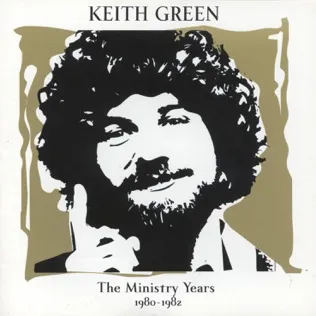
Keith Green’s "O God Our Lord," released posthumously on *The Ministry Years, Vol. 2: 1980-1982* in 1988, stands as a stark and urgent spiritual confrontation, perfectly encapsulating the artist’s unwavering commitment to biblical truth. Far from offering a comforting lullaby, this piece serves as a direct inquiry into the eternal destiny of souls, prompting a profound self-examination rather than a casual listen. Green, known for his prophetic voice, masterfully distills complex theological concepts into accessible, repetitive questions that resonate with universal human anxieties regarding judgment and salvation.
The song immediately dives into the somber reality of eternal judgment with its opening question, querying who will be cast into the "lake of fire." The response provided – "The Devil and the man with the dark desire" – directly echoes scriptural pronouncements concerning ultimate condemnation. Revelation 20:10 clearly states that the devil will be thrown into the lake of burning sulfur, and later in Revelation 20:14-15, it is revealed that "anyone whose name was not found written in the book of life was thrown into the lake of fire." This passage firmly establishes the biblical context for eternal separation from God for those who reject His light and embrace darkness, embodying a life of unrepentant, "dark desire." Green’s portrayal is not merely an abstract threat but a vivid reminder of the eternal consequences for those who persist in rebellion against divine righteousness.
The second crucial question posed by the song confronts the individual directly: "Will my name be there when the books are opened?" This line instantly brings to mind the celestial records described in Revelation 20:12, where "the dead were judged according to what they had done as recorded in the books. And another book was opened, which is the book of life." Green powerfully emphasizes the urgency of this query by declaring, "You better know now, don't just be hoping." This isn't a call for speculative optimism but for an assured faith rooted in genuine commitment. Scripture frequently encourages believers to examine their faith, as seen in 2 Corinthians 13:5, which urges, "Examine yourselves to see whether you are in the faith; test yourselves." This introspection isn't meant to foster doubt but to confirm a living relationship with Christ, whose atoning work provides the only true hope for one’s name to be inscribed in the Book of Life (Philippians 4:3, Luke 10:20).
Further pressing the point of eternal separation, Green asks, "Who's outside of the Holy City?" The "Holy City," or New Jerusalem, is depicted in Revelation 21:27 as a place where "nothing impure will ever enter it, nor will anyone who does what is shameful or deceitful, but only those whose names are written in the Lamb’s book of life." The song’s answer – "The liar and the thief and the ones half ready" – directly aligns with biblical warnings against specific sins and, notably, against a lukewarm or incomplete faith. Revelation 22:15 lists those excluded, including "the dogs, those who practice magic arts, the sexually immoral, the murderers, the idolaters and everyone who loves and practices falsehood." The inclusion of "the ones half ready" is particularly poignant, drawing parallels to Jesus' parable of the ten virgins in Matthew 25:1-13, where five were wise and prepared with oil, and five were foolish and unprepared, ultimately shut out from the wedding feast. This serves as a stark warning against spiritual complacency and the danger of an uncommitted faith that fails to genuinely seek and follow Christ.
The song culminates in a raw, vulnerable plea for mercy: "My, My, My Lord. I'm crying out to you master, oh Lord, Don't you know I need you, oh Lord. Have mercy on a poor sinner like me, Oh Jesus." This shift from challenging questions to personal supplication is the profound turning point, revealing Green's own humble posture before God. It mirrors the prayer of the tax collector in Luke 18:13, who, acknowledging his unworthiness, cried out, "God, have mercy on me, a sinner." This heartfelt confession underscores the universal human condition of sinfulness (Romans 3:23) and the absolute necessity of God's grace and mercy for salvation (Ephesians 2:8-9). It is a powerful reminder that while judgment is real, so too is the boundless compassion of Christ for all who humbly call upon His name. "O God Our Lord" is, therefore, not just a song about eternal judgment but ultimately a passionate, clarion call to repentance, an urgent invitation to secure one's standing with God, and a profound declaration of complete dependence on Jesus Christ for salvation and mercy.