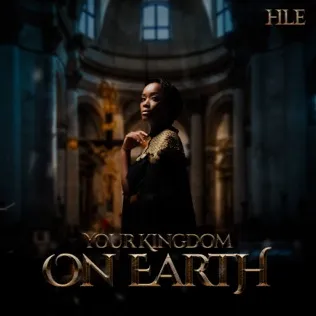
HLE - Where You Are Lyrics
Lyrics
Great power You have, it has no end
Dominion is yours above all things
Authority is in your name
Mighty You are
You always win
Undefeated You are
You never fail
Age to age You will always stand
Where You are
There is life
Where You are
There is truth
Lame will walk, blind will see
Rise up fill this room
Where You are
There is life
Where You are
There is truth
Lame will walk, blind will see
Rise up fill this room
Video
HLE - You Are (Official Live Video)
Meaning & Inspiration
"You always win."
It’s a phrase that sits heavy on the tongue, isn't it? When HLE sings this in Your Kingdom on Earth, it lands with the force of a tectonic plate shifting. But I find myself obsessing over the sheer, brutal simplicity of those three words.
In the grocery store checkout line or staring at a mounting stack of bills, "You always win" feels like either a cold, distant fact or a radical, defiant promise. Literally, we are talking about a scoreboard. We are talking about victory in the way a king claims territory after a siege. It implies a zero-sum game where God stands on one side and everything else—every failure, every grief, every systemic brokenness—is relegated to the losing column.
But look at the tension. If He always wins, why does the room sometimes feel so empty of that "life" and "truth" she mentions in the next stanza?
This is where the poetry shifts from a cliché to a gut check. If I take the claim at face value, I have to reconcile it with the reality of a world that feels very much like it’s losing. We read in 1 Corinthians 15:57 that God gives us the victory through Christ, but that victory often arrives looking like a funeral or a surrender. It’s the paradox of the cross: the ultimate "win" looked like the ultimate defeat.
HLE isn't singing about a comfortable, domestic kind of success. She is singing about an "undefeated" nature that defies the logic of our daily losses. There’s a friction there that I haven't quite resolved. Is she describing a divine fact, or is she shouting it as a desperate plea to force reality to align with her theology?
When she pivots to "Rise up, fill this room," the prayer changes. It moves from a static observation of God’s nature—"You are mighty"—to a dynamic expectation. It’s the difference between looking at a blueprint and living in the house. You can say "You always win" while you’re shaking with fear, and perhaps that is exactly the point.
There is an unfinished quality to these lyrics that I appreciate. She doesn't explain how He wins, or why it takes so long for the "blind to see" in our own streets. She just asserts the nature of the One who walks into the room. It’s not a tidy theological conclusion. It’s an invitation to stop looking at the scoreboard of my own life and start looking at the One who holds the pen.
Maybe the win isn't about God conquering my problems; maybe it's about Him conquering the space I’ve been trying to control all by myself. It leaves me sitting in the silence of the room, wondering if I’m ready for the "fill" part of that request. If He wins, I lose my right to lead. That is a terrifying and necessary trade.