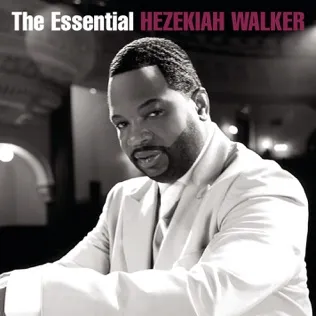
Hezekiah Walker - Grateful Lyrics

Album: 20/85 The Experience
Released: 01 Jan 2001
iTunes Amazon Music

Lyrics

I am

Grateful for the things

That you have done

Yes, I'm grateful for the vic-tories we've won

I could go on and on and on

About your works

Because I'm grateful, grateful, so grateful

Just to praise you lord

Flowing from my heart

Are the issues of my heart

It's Gratefulness

[x2]


Grateful, Grateful, Grateful, Grateful, Grateful, Grateful, Grateful, Grateful, Grateful, Grateful, Grateful, Gratefulness

It's flowing from my heart

[x8]


Flowing from my heart

Are the issues of my heart

It's Gratefulness


Video

Grateful - Hezekiah Walker

Thumbnail for Grateful video

Meaning & Inspiration

Hezekiah Walker’s "Grateful" sits in a peculiar place within our modern liturgy. It is repetitive, bordering on obsessive, yet there is a sharp doctrinal edge to be found if one resists the urge to treat the song as mere atmospheric mood music.

The lyric that catches me—the one that requires a bit of theological friction—is this: "Flowing from my heart are the issues of my heart."

On the surface, this feels like an expression of emotive sincerity. But the theologian is forced to pause at the word "issues." In the biblical canon, particularly in Proverbs 4:23, the "issues" (or outgoings) of the heart are usually viewed with profound suspicion. We are told the heart is deceitful above all things, wicked, and prone to idolatry. To suggest that the contents of our natural heart are the raw material for our worship is a dangerous premise. If the heart is a factory of idols, as John Calvin famously argued, then the "issues" flowing from it are often pride, self-interest, and confusion.

Yet, when we sing this, we are participating in a process of sanctification. We are placing those very "issues"—our anxieties, our misplaced affections, our broken history—under the light of the character of God. The act of labeling that flow as "Gratefulness" acts as a form of repentance. We are taking the internal mess, the raw, unrefined output of our fallen humanity, and dragging it toward the throne of grace. We are demanding that our hearts stop producing bitterness and start producing adoration. It is a violent pivot of the will.

I struggle with the weightiness of this. Is it a confession of what is, or a command of what must be?

There is also the matter of the constant repetition of the word "Grateful." In many settings, this is treated as a light, breezy sentiment. However, if we anchor this to the concept of Propitiation—the reality that our standing before a Holy God was bought at a staggering price—the repetition changes character. It ceases to be a catchy refrain and becomes a stuttering attempt to acknowledge an infinite debt.

When you listen to the way Walker leads this, you hear a demand for persistence. It refuses to let the listener remain in a state of passive appreciation. By looping the word, the song forces us to examine whether our gratitude is tied to "the victories we’ve won"—our circumstantial successes—or if it exists independently of our current comfort.

If our gratitude is tethered only to the "things You have done," it is fragile. It is a transaction. But if the gratitude is "flowing from the heart" as an internal transformation—a reordering of our internal loves—then it becomes something much harder to kill. I find myself unsure if we are actually capable of sustaining this. Our hearts are fickle. We oscillate. But perhaps that is exactly why the song forces the repetition: we have to keep saying it, over and over, until the heart finally catches up to the truth of the Gospel. We are trying to talk our souls into a reality that we are often too dull to perceive on our own.

Loading...
In Queue
View Lyrics