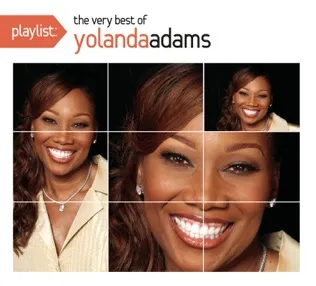
Donnie McClurkin + Yolanda Adams - The Prayer Lyrics
Lyrics
I pray you'll be our eyes
And watch us where we go,
And help us to be wise
In times when we don't know.
Let this be our prayer
When we lose our way.
Lead us to a place,
Guide us with your grace
To a place where we'll be safe.
I pray we'll find your light,
And hold it in our hearts,
And hold it in our hearts.
When stars go out each night,
Stars go out each night,
Remind us where you are,
Remind us where you are.
Let this be our prayer,
When shadows fill our day,
When shadows fill our day.
Oh, oh, Lord, lead us to a place up there,
Guide us with your grace,
Give us faith so we'll be safe.
A world where pain and sorrow will be ended,
And every heart, that's broken, will be mended.
And we'll remember we are all God's children
Reaching out to touch you,
Reaching to the sky.
We ask that life be kind,
And watch us from above,
And watch us from above.
We hope each soul will find,
Another soul to love,
Another soul to love.
Let this be our prayer,
Let this be our prayer.
Just like every child,
Just like every child
Needs to find a place,
Guide us with your grace,
Give us faith so we'll be safe.
Needs to find a place.
Guide us with your grace,
Give us faith so we'll be safe.
Video
Donnie McClurkin & Yolanda Adams - The Prayer
Meaning & Inspiration
There is a specific kind of gravity that happens when Donnie McClurkin and Yolanda Adams step into a ballad like "The Prayer." If you grew up in the Black Church tradition, you recognize the DNA here—it’s not a choir-led shout, but a slow, calculated buildup that relies on vocal texture rather than percussion. By 2003, the lines between Contemporary Christian Music (CCM) and gospel were softening, and this choice of song acts as a bridge. It’s written in that universal, almost secular-adjacent language that feels comfortable on a pop radio station, yet, when delivered with the grit of McClurkin and the acrobatic precision of Adams, it’s pulled squarely back into the pews.
When they sing, "I pray you'll be our eyes," the choice of words is curious. It isn’t the typical high-theology language you might expect from two gospel heavyweights. It’s vulnerable, leaning into a deficit. It suggests that our own sight—our discernment, our political maneuvering, our daily decision-making—is insufficient. Psalm 121:1–2 comes to mind, where the Psalmist looks to the hills, not because the hills are the source of power, but because he is acknowledging a need for help from outside of himself. There is a quiet desperation in the melody that captures the exhausted feeling of the early 2000s, a time when the world felt like it was shifting under our feet.
The real tension, though, lies in the line: "We ask that life be kind." From a strictly orthodox perspective, this almost borders on a subversion of traditional prayer. We are usually taught to ask for strength in suffering, not necessarily for the removal of suffering or for life to simply be "kind." Yet, hearing it sung by two people who have walked through public fire and private heartache, it stops feeling like a shallow wish for comfort. It feels like the prayer of someone who is tired of being hit by the wreckage of a broken world. It’s honest. It isn’t trying to sound like a Sunday School lesson; it’s the sound of a human reaching for the hem of a garment, hoping for a bit of mercy.
Does the message get lost in the "vibe"? Maybe. It’s easy to let the lush, orchestral arrangement wash over you, turning the request for grace into mere background noise. But when you lock in on their phrasing, the song refuses to be just a lullaby. It forces a pause. It asks the listener to sit in the space between "I’m hurting" and "God, please intervene."
I find myself wondering if we’ve become too accustomed to singing for effect. When they reach that climax about mending broken hearts, is it a declaration of truth or just a beautiful set of notes? I’m not sure. But there is something unsettlingly right about admitting that we are all just children looking for a place to be safe. It’s a modest, unpretentious request, and perhaps that’s why it hits harder than the loudest anthem.