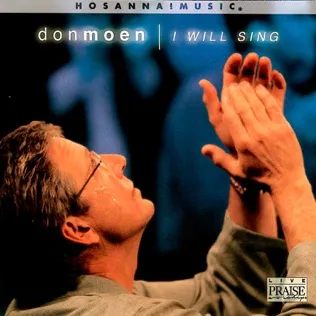
Don Moen - Lord We've Come to Worship Lyrics

Album: I Will Sing (Live)
Released: 14 Feb 2001
iTunes Amazon Music

Lyrics

Lord we've come to worship
And we have come to pray
Lord we've come to listen
And hear what You would say
Lord our hearts are longing
To meet with You today
For we have come to seek You
And we have come to say

Worthy You are worthy
King of kings Lord of lords
You are worthy
All blessing and power
All riches and wisdom
All glory and honor and praise
To the Lmab

Lord we need forgiveness
We've wandered far away
Look down in tender mercy
Forgive our sinds we pray
O Lord we need revival
All across this land
Come move among Your people
With Your mighty hand

To the Lamb that was slain
To redeem us back to God again
To the Lamb
Who will reign
Forever and ever amen

Forever and ever amen
Forever and ever
Forever and ever
Forever and ever
Amen Amen Amen

Video

Lord We've Come To Worship

Thumbnail for Lord We've Come to Worship video

Meaning & Inspiration

Don Moen's "Lord We've Come to Worship," released on February 14, 2001, as part of his live album *I Will Sing*, stands as a powerful testament to the essence of Christian gathering and adoration. From its opening strains, the song establishes itself not merely as a piece of music, but as a corporate prayer, a heartfelt declaration setting the agenda for anyone approaching God's presence. It captures the very spirit of communal faith, articulating the yearning that draws believers together: to connect with the divine, to offer praise, to seek guidance, and to experience spiritual renewal. The song immediately anchors itself in the biblical call to assemble, reminding us of Hebrews 10:25, which encourages us not to give up meeting together, but to spur one another on toward love and good deeds, all centered around a shared hunger for the Lord.

The lyrical journey begins with an intentional statement of purpose: a coming to worship, to pray, and crucially, to listen and hear what God might communicate. This emphasis on listening reflects a mature faith, recognizing that true communion is a two-way street, aligning with James 1:19-22, which calls us to be quick to hear and slow to speak, and to be doers of the word, not just hearers. The longing expressed, "Our hearts are longing to meet with You today, for we have come to seek You," resonates deeply with the psalmist’s cry in Psalm 42:1-2, "As the deer pants for streams of water, so my soul pants for you, my God. My soul thirsts for God, for the living God." It underscores a deliberate pursuit of God's presence, not just a casual attendance, highlighting the active engagement expected in worship.

The song then transitions into an unequivocal declaration of God's supreme worthiness, proclaiming, "Worthy You are worthy, King of kings, Lord of lords, You are worthy." This refrain is not just a catchy chorus; it is a direct echo of the throne room scenes in Revelation, particularly Revelation 4:11 and 5:12, where heavenly beings declare God's inherent right to receive glory, honor, and power because of His creation and redemption. The subsequent lines, "All blessing and power, all riches and wisdom, all glory and honor and praise to the Lamb," are a direct, powerful quotation from Revelation 5:12, attributing the sevenfold praises to Christ, the Lamb who was slain. This segment serves as a theological anchor, grounding the worship in the revealed truth of God's attributes and Christ's sacrificial work, acknowledging His absolute sovereignty and the profound reasons for humanity’s adoration.

The narrative shifts to a profound moment of confession and intercession, moving from praise to repentance: "Lord we need forgiveness, we've wandered far away. Look down in tender mercy, forgive our sins we pray." This candid admission reflects the universal human condition and the constant need for divine grace, aligning with 1 John 1:9, which promises forgiveness for those who confess their sins. It's a humble acknowledgment of humanity's fallenness and a plea for God’s compassion, as seen in passages like Psalm 51, where David pours out his heart for mercy. This segues seamlessly into a fervent cry for national spiritual renewal: "O Lord we need revival all across this land. Come move among Your people with Your mighty hand." This is a prophetic utterance, a prayer echoing 2 Chronicles 7:14, where God promises healing for a land if His people humble themselves, pray, seek His face, and turn from their wicked ways. The invocation for God's "mighty hand" references numerous Old Testament accounts of divine intervention and power, such as Exodus 3:19-20 and Exodus 15:6, illustrating a profound desire for God to act decisively in the present.

The song culminates in a majestic affirmation of the Lamb’s redemptive work and eternal reign. "To the Lamb that was slain to redeem us back to God again" precisely captures the essence of the Gospel message. It recalls Isaiah 53:7, portraying Christ as the sacrificial Lamb, and John 1:29, identifying Him as the "Lamb of God who takes away the sin of the world." His death on the cross serves as the ultimate act of redemption, reconciling humanity to God, as articulated in Colossians 1:13-14 and 1 Peter 1:18-19. The declaration "To the Lamb Who will reign forever and ever amen" solidifies the eternal hope of believers, drawing again from Revelation 11:15, where the kingdoms of this world become the kingdoms of our Lord and His Christ, and He reigns forever. The repeated, resounding "Forever and ever amen" serves as a powerful, unwavering declaration of faith in Christ’s everlasting dominion, solidifying the song's ultimate message of eternal worship and hope. Don Moen’s "Lord We've Come to Worship" thus stands as a timeless worship anthem, meticulously weaving together core theological truths, biblical promises, and the profound longing of human hearts for divine connection, offering a powerful guide for any gathering seeking to honor and encounter the living God.

Loading...
In Queue
View Lyrics