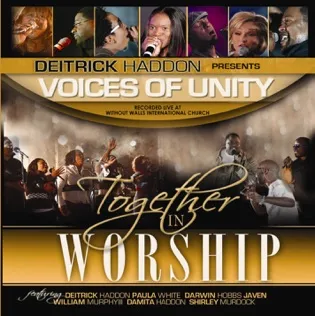
Deitrick Haddon - You Are God Lyrics
Lyrics
Lead
I never seen the righteous forsaken
Nor the source of every breathe I've taken
I am persuaded
There is none like you from the world
Righteous redeemer
You are my healer
Alpha Omega
That's why I praise you
I am persuaded
There is none like you in the world
You are God
O-O-O-O
You are God
O-O-O-O
Alone
O-O-O-O
You are God
O-O-O-O
There's none like you
No one else
O-O-O-O
Can take your place
O-O-O-O
How I long
O-O-O-O
To seek your face
O-O-O-O
There's none like you
You are God
You are God
You are God
You are God
You alone
You are God
You are God
There's none like you
No one else
No one else
Take your place
Take your place
O How I love
Seek your face
Seek your face
There's none like you
Vamp
Soprano:
You are r-r-r
You are
You are-r-r
You are God
Alto
You are God
You are God
You are God
You are God
I am persuaded
There is none like you in the world
You are God
Video
you are God/ we cry holy deitrick haddon
Meaning & Inspiration
Deitrick Haddon’s You Are God lands in that familiar territory of the gospel choir arrangement—the kind of structure that asks for everything a congregation has in terms of breath and volume. From the stool where I plan the flow of a service, I’m always looking for that point where the music stops being a task to perform and starts being an architecture for the room to inhabit.
The phrase "I am persuaded" anchors this track. It’s a direct reach into Romans 8:38, where Paul is sorting through the wreckage of his own struggle to find an absolute truth that won't budge. When a room sings "I am persuaded," there’s an inherent tension. We aren’t singing about a feeling that comes and goes with the morning; we’re singing about a conviction that has survived the night. In the context of the song, the melody isn’t trying to be subtle. It’s trying to hold onto that conviction while the world is busy offering other alternatives to deity.
But then, the song shifts into the repetitive declaration: "You are God."
This is where the singing becomes tricky. When we move away from complex lyrical sentences and into simple, repeated statements, the congregation stops thinking and starts doing. It’s an act of stripping away. We stop describing God and start pointing at Him. From a liturgical standpoint, it’s effective because it denies the ego a place to hide. You can’t make "You are God" about yourself. You can’t make it about your needs or your current state of being. It’s a flat, immovable reality.
I do wonder about the "O-O-O-O" sections, though. Are they just filler, a way to keep the energy up when the words run thin? Or is it a way of acknowledging that there are moments in worship where the language fails? When the vocabulary runs out, the sound becomes the offering. It’s the kind of melody that fills the space so completely that it’s hard for anyone to stand on the sidelines and just observe.
The danger, of course, is that the repetition can become mechanical if the heart isn't there to back it up. If we aren't careful, "You are God" can slide into a chant rather than a creed. But when it works, it leaves the people standing in a very specific place: the realization that the throne is occupied and it isn't us. That’s a bracing realization to walk out the doors with. You don't leave this song feeling emboldened to go conquer the world; you leave feeling small, in the best way possible. It’s not a map for the week ahead; it’s a anchor for the moment we are in. That’s a good place to finish.