David Phelps - Something's Gotta Change Lyrics
Lyrics
I used to ride my bike down the street three miles
And my mama never thought about it twice
Cause everybody looked out for everybody else.
I was never ever, ever by myself.
Now it's slippin' away and
I need You to save me right now, right now.
Chorus
Something's gotta change.
The beauty of the pain
Is that we do not stay the same
But we grow and we show
We are stronger than before.
When we reach for something more
And in the face of hate
Pour out love like rain.
Something's gotta change.
I don't wanna be just another put-on.
Yeah, tell me where has my heart gone.
I need to believe faith isn't just a word
That I stutter to the hurt inside
I need to see it and be it
The realness of Jesus right now, right now.
Something's gotta change.
The beauty of the pain
Is that we do not stay the same
But we grow and we show
We are stronger than before.
When we reach for something more
And in the face of hate
Pour out love like rain.
Something's gotta change.
It could be beautiful and brand new
But only if it's me hand in hand with You.
Something's gotta change.
The beauty of the pain
Is that we do not stay the same
But we grow and we show
We are stronger than before.
When we reach for something more
And in the face of hate
Pour out love like rain.
Something's gotta change.
Video
David Phelps - Something's Gotta Change from No More Night (Official Music Video)
Meaning & Inspiration
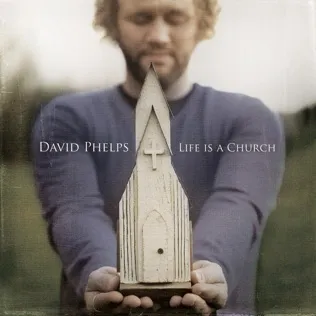
David Phelps' "Something's Gotta Change," released on September 27, 2005, from his album *Life Is a Church*, emerges as a powerful anthem of spiritual yearning and the profound call for divine transformation in a world longing for restoration. The song immediately captures a pervasive sentiment of disillusionment, opening with a nostalgic reflection on a bygone era where community felt safer and more connected. The initial lines paint a picture of innocence and mutual care, a stark contrast to a perceived present where such virtues are "slippin' away." This lament speaks to a collective human experience, recognizing a societal drift from foundational values and prompting a desperate cry for God's intervention, a plea for salvation "right now." It echoes the ache for a world closer to its intended design, a lament found throughout Scripture for a return to covenant and grace, like the Psalmist's longing for revival or Isaiah's prayer for God to rend the heavens and come down.
The core message powerfully articulated in the chorus is that true change is not just possible but imperative, and surprisingly, it often blossoms from difficulty. Phelps declares, "The beauty of the pain / Is that we do not stay the same," revealing a profound spiritual truth rooted in countless biblical passages. This isn't a passive acceptance of suffering, but an understanding that trials are often the crucible in which faith is refined and character forged. As Romans 5:3-4 teaches, "suffering produces perseverance; perseverance, character; and character, hope." Similarly, James 1:2-4 encourages us to "consider it pure joy... whenever you face trials of many kinds, because you know that the testing of your faith produces perseverance." The song asserts that through these challenging experiences, we "grow and we show / We are stronger than before," reaching for a higher purpose and a deeper walk with God. This growth culminates in a radical response to a broken world: "in the face of hate / Pour out love like rain." This directive is a direct echo of Christ's command to "love your enemies and pray for those who persecute you" (Matthew 5:44) and Paul's exhortation to "overcome evil with good" (Romans 12:21). It calls for an active, overflowing, and counter-cultural outpouring of divine love, a tangible manifestation of God's grace in a world often consumed by division.
Further into the song, Phelps delves into the intensely personal struggle for genuine faith and authenticity. He confesses a desire to be more than "just another put-on," confronting the unsettling question, "where has my heart gone." This introspection speaks to the universal human battle against spiritual lukewarmness and hypocrisy, a concern frequently addressed in Scripture, particularly in Jesus' critiques of the Pharisees or the urgent call to the church in Laodicea in Revelation 3. The yearning for faith to be more than "just a word" but a visible, lived reality resonates deeply with James 2:17, which declares that "faith by itself, if it is not accompanied by action, is dead." The song expresses an intense longing to "see it and be it / The realness of Jesus right now." This is not merely an intellectual assent to doctrine but an impassioned plea for an experiential, transformative encounter with the living Christ, a desire to embody the very presence and character of Jesus in one's own life, as Paul described, "I no longer live, but Christ lives in me" (Galatians 2:20).
The bridge offers a hopeful vision, affirming that a "beautiful and brand new" future is within reach, but crucially, it is "only if it's me hand in hand with You." This declaration underscores the fundamental truth that true and lasting transformation—personal, societal, or spiritual—is ultimately a collaborative work with the Divine. It’s a recognition of our dependence on God, acknowledging that apart from Him, genuine renewal is impossible (John 15:5). This aligns perfectly with the promise of a new creation found in 2 Corinthians 5:17, "Therefore, if anyone is in Christ, the new creation has come: The old has gone, the new is here!" "Something's Gotta Change" is not merely a complaint about the current state of affairs; it is a fervent prayer and a powerful call to action for individuals and communities to embrace the refining process of faith, to seek authentic encounters with Jesus, and to actively participate in God’s redemptive work by pouring out love in the face of hate. It serves as an enduring reminder that while the world may falter, God’s transformative power remains ever-present, ready to make all things new for those willing to walk hand in hand with Him.