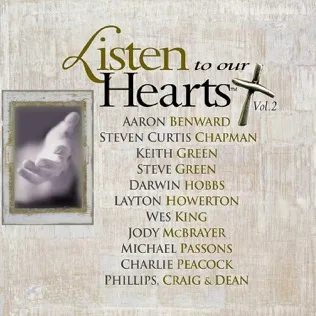
Darwin Hobbs - Come Worship The Lord Lyrics

Album: Listen to Our Hearts, Vol. 2
Released: 01 Jan 1999
iTunes Amazon Music

Lyrics

Come, worship the Lord
For we are His people
The flock that He shepherds
Alleluia

Come, worship the Lord
For we are His people
The flock that He shepherds
Alleluia

Come, let us sing to the Lord
And shout with joy to the Rock who saves us
Let us come with thanksgiving
And sing joyful songs to the Lord, ooh...

Come, worship the Lord
For we are His people
The flock that He shepherds, ooh...
Alleluia

The Lord is God, the mighty God
The great King o'er all other gods
He holds in His hands the depths of the earth
And the highest mountains as well
He made the sea, it belongs to Him
The dry land too, was formed by His hand
By His hand

Come, worship the Lord
For we are His people
The flock that He shepherds, oh...
Alleluia

Oh, come, worship the Lord
For we are His people
The flock that He shepherds, ooh...
Alleluia

Oh, come, worship the Lord
For we are His people
The flock that He shepherds, oh...
Alleluia
Alleluia
Alleluia

Alleluia
Come worship the Lord

Video

Come Worship The Lord

Thumbnail for Come Worship The Lord video

Meaning & Inspiration

Released on January 1, 1999, as part of the album *Listen to Our Hearts, Vol. 2*, Darwin Hobbs' "Come Worship The Lord" emerges as a foundational call to devotion, drawing profoundly from the wellspring of ancient Scripture. This composition is not merely a song; it is an exhortation, a communal summons to recognize and respond to the divine, crafted to focus the heart and mind on the ultimate object of adoration. Its message is timeless, rooted in the very essence of biblical worship, inviting all who engage with it to partake in a joyful, reverent acknowledgment of God's supremacy.

The song immediately establishes its core message with the repeated invitation: "Come, worship the Lord / For we are His people / The flock that He shepherds." This opening mirrors the urgency and warmth found in Psalm 95:6, "Oh come, let us worship and bow down; let us kneel before the Lord our Maker." It grounds our identity in God, asserting that our belonging is defined by His proprietorship and care, much like Psalm 100:3 declares, "Know that the Lord, He is God! It is He who made us, and we are His; we are His people, and the sheep of His pasture." The imagery of the flock and shepherd is deeply resonant, evoking the comforting guidance and protection promised in passages like John 10:11, where Jesus identifies himself as the Good Shepherd who lays down His life for His sheep. This initial stanza sets a deeply relational tone, reminding us that worship is not just an act, but a response from those who are known and cared for by their divine guardian.

Building upon this personal invitation, the song transitions into a more active call for joyful participation: "Come, let us sing to the Lord / And shout with joy to the Rock who saves us / Let us come with thanksgiving / And sing joyful songs to the Lord." This section is almost a direct echo of Psalm 95:1-2, "Oh come, let us sing to the Lord; let us make a joyful noise to the rock of our salvation! Let us come into his presence with thanksgiving; let us make a joyful noise to him with songs of praise!" It emphasizes the expression of gratitude and the celebration of salvation as integral components of true worship. The "Rock who saves us" is a powerful biblical metaphor for God's unchanging strength and His role as deliverer, a concept found throughout the Old Testament, from Deuteronomy 32 to Isaiah 26:4, solidifying His steadfastness amidst life’s uncertainties.

The lyrical journey then moves into a profound declaration of God's unrivaled power and creative majesty, providing the foundational *why* for our worship: "The Lord is God, the mighty God / The great King o'er all other gods / He holds in His hands the depths of the earth / And the highest mountains as well / He made the sea, it belongs to Him / The dry land too, was formed by His hand." This entire segment is a breathtaking recitation of Psalm 95:3-5, which states, "For the Lord is a great God, and a great King above all gods. In his hand are the depths of the earth; the heights of the mountains are his also. The sea is his, for he made it, and his hands formed the dry land." This powerful assertion of God's dominion is not simply poetic; it is a theological statement of His unique sovereignty. He is not merely *a* god, but "the great King o'er all other gods," challenging any rival claims to ultimate authority. The verses detailing His creation of the earth's depths, its highest peaks, and the vast expanse of the sea and dry land, reinforce His omnipotence and omnicompetence. Passages like Isaiah 40:12, "Who has measured the waters in the hollow of his hand and marked off the heavens with a span, enclosed the dust of the earth in a measure and weighed the mountains in scales and the hills in a balance?", underscore this immense creative power. It invites contemplation on the sheer scale of divine workmanship, from the smallest atom to the grandest galaxy, all testifying to His handiwork as described in Genesis 1 and Psalm 19:1.

Throughout the song, the repeated exclamation of "Alleluia" acts as a powerful refrain, a universal declaration of "Praise the Lord." This word, transliterated from Hebrew, serves as both a joyous acclamation and a solemn acknowledgment of God's worthiness. Its repetition, especially towards the song's conclusion, creates an atmosphere of sustained adoration, cementing the central theme that worship is a continuous posture, not a fleeting moment. Darwin Hobbs' "Come Worship The Lord" ultimately serves as more than just a musical piece; it’s a living testament to ancient truths, a rallying cry for faith communities to gather, reflect, and declare the glory of the God who shepherds His people and reigns supreme over all creation. It encourages a collective focus on the character of God, inspiring a deeper personal and communal expression of reverence and joy.

Loading...
In Queue
View Lyrics