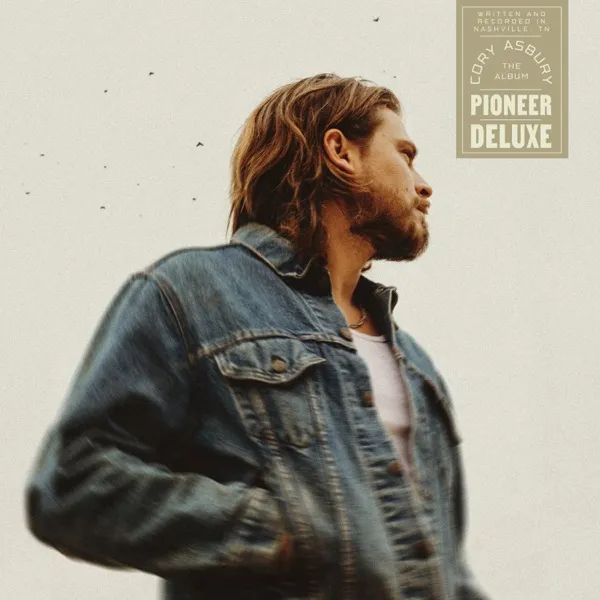
Cory Asbury - How Could I Not Believe Lyrics

Album: Pioneer (Deluxe Edition)
Released: 15 Sep 2023
iTunes Amazon Music

Lyrics


I've been a doubter
I've been a saint
Let my heart grow tough as leather
So I don't have to feel the pain

I suffered the silence
Whenever I prayed
And I wondered if He's even there some days
'Til He shows up in these ordinary ways

A lazy morning lying next to you
The sound of the rain on a farmhouse roof
The second verse of a song that cuts you deep
The kind of laugh that makes you cry
A kiss so good don't wanna say "Good night"
The stars up there in the sky reminding me
How could I not believe?

I thought I'd find it
Inside of a church
But I swear I hear "I love you"
In the singing of the birds
I wrestled with questions
Down on my knees
But every answer I could want
Is staring right back at me

A lazy morning lying next to you
The sound of the rain on a farmhouse roof
The second verse of a song that cuts you deep
The kind of laugh that makes you cry
A kiss so good don't wanna say "Good night"
The stars up there in the sky reminding me
How could I not believe?

How could I not believe?

Ain't on the horizon
It ain't in the past
'Cause everything I need
Is what I already have

A lazy morning lying next to you
The sound of the rain on a farmhouse roof
The second verse of a song that cuts you deep
The kind of laugh that makes you cry
A kiss so good don't wanna say "Good night"
The stars up there in the sky reminding me
How could I not believe?

How could I not believe?

Video

How Could I Not Believe

Thumbnail for How Could I Not Believe video

Meaning & Inspiration

Cory Asbury's "How Could I Not Believe," released as part of the *Pioneer (Deluxe Edition)* on September 15, 2023, offers a profound exploration of faith found not in grand pronouncements, but in the quiet, everyday moments of life. The song delves into the universal struggle with doubt, acknowledging the times when the silence of prayer can feel overwhelming and the presence of the divine seems distant. Asbury opens by admitting his past as a "doubter" and someone who perhaps guarded his heart too fiercely, a sentiment that resonates with the biblical narrative of wrestling with belief, akin to Jacob's struggle at Peniel (Genesis 32:24-30). He articulates the human tendency to seek God in monumental experiences or institutional settings, suggesting a prior expectation of finding faith "inside of a church." However, the song pivots beautifully to reveal how God's love and presence are not confined to sacred spaces but are woven into the very fabric of existence. This echoes the wisdom found in Psalm 19:1, which declares, "The heavens declare the glory of God; the skies proclaim the work of his hands."

The core of Asbury's message lies in the powerful assertion that divine affirmation is found in the ordinary. He paints vivid, relatable images: the simple intimacy of "a lazy morning lying next to you," the soothing rhythm of "the sound of the rain on a farmhouse roof," the emotional resonance of "the second verse of a song that cuts you deep," the joy of "a kind of laugh that makes you cry," the tenderness of "a kiss so good don't wanna say 'Good night'," and the awe inspired by "the stars up there in the sky." These are not abstract theological concepts, but sensory experiences that serve as tangible proofs of a loving Creator. This perspective aligns with the biblical principle of God revealing Himself through creation and our daily interactions. Romans 1:20 speaks to this, stating, "For since the creation of the world God’s invisible qualities—his eternal power and divine nature—have been clearly perceived, understood through what he has made." Asbury’s lyrics suggest that even after wrestling with unanswered questions "down on my knees," the answers are not found in further struggle, but in a reorientation to appreciate what is already present. The realization that "everything I need / Is what I already have" is a profound re-framing of divine provision, moving from an external pursuit to an internal recognition of abundant grace. This is reminiscent of Jesus' teaching to not worry about tomorrow, for "each day has enough trouble of its own" (Matthew 6:34), suggesting a trust in God’s provision for the present moment. The song ultimately serves as an anthem of rediscovery, urging listeners to see the sacred in the mundane and to embrace the persistent, tangible expressions of divine love that surround us, prompting the undeniable question, "How could I not believe?"

Loading...
In Queue
View Lyrics