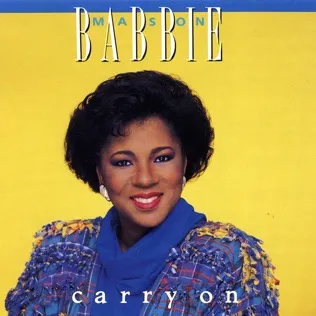
Babbie Mason - Jesus The One And Only Lyrics
Lyrics
Who was born Son of God yet Son of Man
And who laid down His life and rose to live again
Who rides the clouds of glory
Whose kingdom never ends
There is no other name
Jesus, the one and only
Faithful, true and holy
He's the Son of righteousness
Worthy of the glory
Jesus Christ, the one and only
Let every voice in earth
And heaven all sing praise
And every heart to be a holy hiding place
Let every knee bow down
And every tongue confess the name
Of Jehovah's only Son
The risen One
Jesus, the one and only
Faithful, true and holy
He's the Son of righteousness
Worthy of the glory
Jesus Christ, the one and only
All hail the power of Jesus' name
(Jesus, the one and only)
Let angels prostrate fall
(Faithful, true and holy)
Bring forth the royal diadem
(He's the Son of righteousness
(Worthy of the glory)
And crowd Him Lord of all
Crown Him Jesus, the one and only
Faithful, true and holy
He's the Son of righteousness
Worthy of the glory
Jesus Christ, the one and only
Video
Babbie Mason (Jesus: The One and Only)
Meaning & Inspiration
Babbie Mason's powerful declaration, "Jesus The One And Only," emerged as a cornerstone track from her 1988 album, *Carry On*, released on October 25th of that year. From its inception, the song establishes itself not merely as a musical composition, but as a profound theological statement, centering entirely on the unmatched person and work of Jesus Christ. Its message is a resounding affirmation of Christian doctrine, celebrating His divinity, humanity, sacrificial death, glorious resurrection, and ultimate, eternal sovereignty. It calls every heart and voice to acknowledge the singular truth that salvation and worship belong uniquely to Him.
The lyrical narrative commences by posing foundational questions that immediately direct focus to Christ's unique identity: "Who was born Son of God yet Son of Man?" This opening line encapsulates the profound mystery of the incarnation—Jesus' dual nature as fully divine and fully human, a truth central to Christian faith as articulated in John 1:1, which states "In the beginning was the Word, and the Word was with God, and the Word was God," and verse 14, where "the Word became flesh and made his dwelling among us." The song continues, highlighting His voluntary sacrifice and triumph over death: "And who laid down His life and rose to live again?" This refers directly to His atonement on the cross and His resurrection, which Romans 6:9 affirms, "For we know that since Christ was raised from the dead, he cannot die again; death no longer has mastery over him." The imagery of Him riding "the clouds of glory" anticipates His promised return, a vision echoed in Revelation 1:7. The subsequent assertion that "His kingdom never ends" aligns with biblical prophecy in Daniel 7:14 and Luke 1:33, cementing His eternal reign. The definitive declaration, "There is no other name," powerfully reinforces the exclusivity of Christ, echoing Acts 4:12, which states, "Salvation is found in no one else, for there is no other name under heaven given to mankind by which we must be saved."
The chorus serves as the song’s anchor, a concentrated hymn of praise: "Jesus, the one and only / Faithful, true and holy / He's the Son of righteousness / Worthy of the glory." Each descriptor is rich with biblical meaning. "Faithful, true and holy" resonates with attributes of God found throughout Scripture, reflecting the perfect character of Christ as seen in Revelation 3:14 and 1 Peter 1:15-16. The title "Son of righteousness" draws from prophetic imagery, such as Malachi 4:2, which speaks of the "sun of righteousness" rising with healing in its rays, a clear Messianic reference. To proclaim Him "Worthy of the glory" is to join the heavenly chorus described in Revelation 5:12, where angels and elders declare His worthiness to receive power, wealth, wisdom, strength, honor, glory, and praise. This chorus is not just a catchy refrain but a deeply theological confession of faith.
The second verse expands this call to worship, envisioning a universal chorus: "Let every voice in earth / And heaven all sing praise." This echoes Philippians 2:10, which prophesies a day "that at the name of Jesus every knee should bow, in heaven and on earth and under the earth, and every tongue acknowledge that Jesus Christ is Lord, to the glory of God the Father." The invitation for "every heart to be a holy hiding place" suggests a consecrated space for God’s Spirit and presence, a dwelling place for truth and devotion. The repeated call for "every knee bow down / And every tongue confess the name / Of Jehovah's only Son / The risen One" directly references Philippians 2:10-11, making the song an active participation in that prophetic worship. It underscores the ultimate sovereignty and divine authority of Jesus, the very Son of God mentioned in John 3:16.
Perhaps one of the most poignant elements of the song is its seamless integration of lines from the beloved hymn, "All Hail the Power of Jesus' Name." This bridge section, where Mason blends traditional hymnody with her contemporary declaration, creates a profound intergenerational connection in worship. Phrases like "Let angels prostrate fall" and "Bring forth the royal diadem / And crown Him Lord of all" serve to elevate Christ to His supreme, undisputed position as King of Kings and Lord of Lords, a depiction found in Revelation 19:16. This inclusion not only pays homage to the rich heritage of Christian worship but also reinforces the song's central theme that Jesus is indeed the "one and only" deserving of ultimate adoration and dominion. The final repeated chorus serves as an emphatic conclusion, cementing the worshiper's focus on Christ's unique identity and unmatched glory. "Jesus The One And Only" is a powerful anthem, inviting all to join in a unified declaration of His absolute authority and worthiness, inspiring a deeper understanding and worship of the Christ it so passionately exalts.