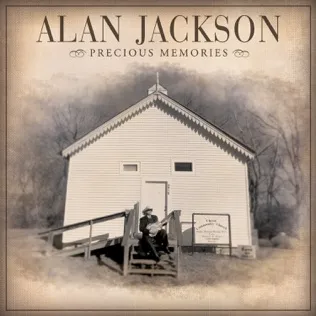
Alan Jackson - The Old Rugged Cross Lyrics

Album: Precious Memories
Released: 28 Feb 2006
iTunes Amazon Music

Lyrics

On a hill far away stood an old rugged cross

The emblem of suffering and shame

And I love that old cross where the dearest and best

For a world of lost sinners was slain


So I'll cherish the old rugged cross

Till my trophies at last I lay down

And I will cling to the old rugged cross

And exchange it some day for a crown


To the old rugged cross I will ever be true

It's shame and reproach gladly bear

Then he'll call me someday to my home far away

Where his glory forever I'll share


And I'll cherish the old rugged cross

Till my trophies at last I lay down

And I will cling to the old rugged cross

And exchange it some day for a crown


I will cling to the old rugged cross

And exchange it some day for a crown

Video

Alan Jackson - The Old Rugged Cross (Live)

Thumbnail for The Old Rugged Cross video

Meaning & Inspiration

Alan Jackson’s rendition of "The Old Rugged Cross" is etched into the floorboards of Sunday morning memory. But looking at the text as a static poem, one phrase jumps out and refuses to sit still: "my trophies at last I lay down."

Think about that for a second. In the context of the song, "trophies" are meant to represent the things we’ve gathered—our achievements, our accolades, the stuff we’ve spent our lives building to prove we matter. We usually think of a trophy as a definitive marker of success, a shiny validation that we’ve won at something. Yet here, the lyric suggests that the only way to finally "cling" to the cross is to discard those very things.

There’s a jarring friction there. Why would the singer describe their life's work as a pile of trophies just waiting to be dumped?

It brings to mind Philippians 3:7-8, where Paul talks about counting his own pedigree as "rubbish." Paul wasn't just being modest; he was actively re-evaluating the value of his own identity. When Jackson sings about laying down his trophies, he’s acknowledging that our human efforts—the things we want to be remembered for—become dead weight when standing next to the "shame and reproach" of the cross.

But here’s where I get stuck: do we actually know how to do that? Most of us spend our entire existence curating our personal trophies, whether they’re professional titles, social media metrics, or the pride we take in being "good people." To "lay them down" isn't a one-time gesture; it feels like an act of amputation. It’s messy. It’s an uncomfortable admission that the things we hold up as proof of our worth are, in the face of eternity, just distractions.

The word "trophy" implies a game, a competition. But the cross—the "emblem of suffering and shame"—isn't a competition. It’s the end of all of that. If you win a trophy, you’re looking at yourself. If you’re at the cross, your eyes are fixed on someone else’s humiliation. You cannot look at both simultaneously.

There’s a strange irony in the way we sing this. We treat "The Old Rugged Cross" as a comfort, a hymn about peace. But the text itself is violent and sacrificial. It demands an exchange: my pride for His agony. I’m not sure I’ve ever truly laid down my own trophies. I usually just set them on a side table, making sure they’re still within arm's reach, just in case I need to prove who I am later.

Maybe the song isn't a promise that we will let go, but a confession of what we must do if we want to get to the crown. It leaves me wondering if the "home far away" is even possible for those of us still clutching our medals so tightly. Maybe the "exchanging" happens the moment we realize the trophies weren't worth the weight in the first place.

Loading...
In Queue
View Lyrics