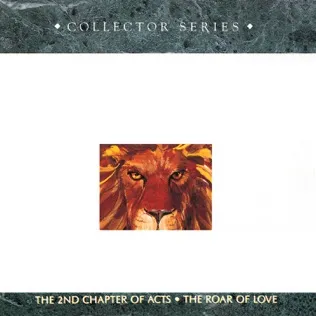
2nd Chapter of Acts - Witch's Demise Lyrics
Lyrics
Look at the children run
They're having so much fun
I've never heard so much laughter
Crying out that they've won
Saying the Lion's undone the witch
And then He unmasked her
Then He cast her to disaster
What a Master!
She never stood a chance
Why did she stay?
Get it into your head
Now that the snow has fled
Now that the witch is dead
The danger is gone
Aslan has set us free
Oh what a mystery
Lies in the history
Here in Narnia
No tears of sorrow to shed
Now that the snow has fled
Now that the witch is dead
There's peace in our hearts
It's not an if or a maybe
Oh what a mystery
Aslan has set us free
Here in Narnia
Video
Witch's Demise / Get It into Your Head
Meaning & Inspiration
Released in 1991 as part of the profound album *The Roar of Love*, "Witch's Demise" by 2nd Chapter of Acts stands as a compelling lyrical journey, drawing its narrative from C.S. Lewis’s beloved allegorical tale, *The Lion, the Witch and the Wardrobe*. This song doesn't merely retell a children's story; it masterfully translates the Narnian triumph into a vibrant celebration of spiritual victory, offering a potent reminder of the hope and freedom found through divine intervention. From the very first lines, we are transported into a scene of jubilant liberation, where the once-oppressed children now run with unbridled joy, their laughter echoing the definitive end of a long, dark reign.
The song paints a vivid picture of the sheer elation following the White Witch's downfall, focusing on the immediate and palpable relief felt by all. The lyrics encapsulate the pure, unadulterated happiness of a people freed from tyranny, attributing this profound deliverance to "the Lion." In the context of Lewis's Narnia, this Lion, Aslan, is a direct and powerful allegory for Jesus Christ. The imagery of the "Lion's undone the witch" speaks volumes about Christ's decisive victory over sin, death, and the devil. Just as Aslan conquered the Witch, Jesus, "the Lion of the tribe of Judah" (Revelation 5:5), definitively triumphed over the forces of evil through His sacrifice on the cross and glorious resurrection. The song celebrates this victory, noting that the Witch "never stood a chance," highlighting God's ultimate sovereignty and the inevitable defeat of darkness, echoing the Scripture that assures us, "Greater is He who is in you than he who is in the world" (1 John 4:4). The declaration that Aslan "cast her to disaster" powerfully reflects the ultimate fate of Satan, who will be thrown into the lake of fire, a final and complete vanquishing as described in Revelation 20:10.
As the narrative progresses, the song shifts its focus to the new reality established by this monumental victory. The line, "Now that the snow has fled, now that the witch is dead, the danger is gone," symbolically represents the coming of new life and the breaking of winter's curse. Biblically, this mirrors the transformation that occurs when one embraces Christ. The "snow" can be seen as the cold grip of sin and the barrenness it brings, while its departure signifies the warmth and new growth of redemption. Just as Christ's resurrection brought forth an "everlasting spring," breaking the power of death and sin, the song rejoices in the end of spiritual oppression. "Aslan has set us free" resonates with profound truth, aligning with Jesus' declaration, "So if the Son sets you free, you are truly free" (John 8:36). This freedom is not merely the absence of danger, but the presence of peace and restoration, a foretaste of the new heavens and new earth where "He will wipe every tear from their eyes. There will be no more death’ or mourning or crying or pain, for the old order of things has passed away" (Revelation 21:4).
The recurring phrase, "Oh what a mystery lies in the history," speaks to the profound, sometimes incomprehensible, nature of God’s redemptive plan. It acknowledges the wonder of salvation, how a loving God would orchestrate such a powerful deliverance, often beyond human understanding, yet perfectly executed. This aligns with Paul's writings about the "mystery of Christ" (Ephesians 3:3-6) – the incredible wisdom and grace displayed in God's plan to reconcile humanity to Himself. The song's assertion that "there’s peace in our hearts" is a direct spiritual consequence of this victory. The peace offered by Christ transcends earthly understanding, guarding our hearts and minds (Philippians 4:7). It is a peace that comes from knowing that "it's not an if or a maybe" but a certain, accomplished fact that evil has been overthrown and a new era of grace has begun. "Witch's Demise" serves as a powerful anthem of liberation, inspiring us to remember the unwavering truth of Christ's victory over darkness, inviting us to live in the joy, peace, and freedom that His ultimate triumph secured for all who believe.