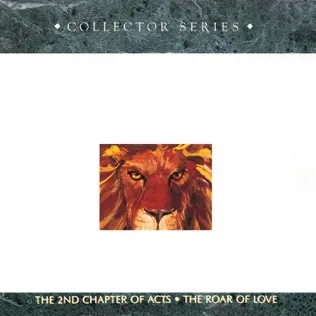
2nd Chapter of Acts - White Stag Lyrics

Album: The Roar of Love
Released: 01 Jan 1991
iTunes Amazon Music

Lyrics

Saw him runnin' thru the Western Wood
A very rare sight to see
He can make your wishes good
If brought into captivity

So hi-ho away we go
Off to capture our wish
Hi low the white stag goes
Slippery as a fish

Dismount your horse and off to where
We lost him thru the thicket
We lost our hope and our wish lies bare
And now we'll never find it

I feel like I've been here before
This feeling, I can't shake it
A tree of iron from the world before
With a lantern on it

Oh lamp post

Narnia, Narnia

Something is happening in me...

Video

White Stag

Thumbnail for White Stag video

Meaning & Inspiration

Released on January 1, 1991, as part of the album *The Roar of Love*, 2nd Chapter of Acts' "White Stag" offers a profound allegorical journey, drawing deeply from C.S. Lewis's Narnian chronicles to explore the human quest for satisfaction and the divine invitation to something far greater. The song opens with an immediate sense of intrigue, describing a rare white stag in the "Western Wood" that, if captured, is rumored to fulfill wishes. This initial scene sets the stage for a universally relatable human experience: the tireless pursuit of fleeting desires, happiness, or success, believing that if only we could grasp that one elusive thing, our deepest longings would be met. The swift declaration, "So hi-ho away we go, Off to capture our wish," speaks to our often-eager, self-reliant attempts to secure our own destinies, chasing after what seems to promise ultimate contentment, only to find it "slippery as a fish."

This pursuit, however, invariably leads to disappointment. The imagery of losing the stag "thru the thicket," and the subsequent lament that "We lost our hope and our wish lies bare, And now we'll never find it," powerfully articulates the futility of seeking ultimate fulfillment in earthly endeavors or personal achievements alone. This mirrors the wisdom found in Ecclesiastes, where King Solomon, having pursued every worldly pleasure and wisdom, concluded that all was "meaningless, a chasing after the wind" (Ecclesiastes 1:14). Our own efforts, however well-intentioned, often fall short of delivering the lasting peace and purpose our souls crave, leaving us with a sense of emptiness when the "wish lies bare." The Bible consistently reminds us that true satisfaction cannot be manufactured or captured by human hands; as Jesus declared, "Apart from me you can do nothing" (John 15:5), highlighting our inherent inability to secure lasting spiritual good through our own striving.

Yet, just when hope is lost in the thicket of worldly striving, the song introduces a startling shift: "I feel like I've been here before, This feeling, I can't shake it, A tree of iron from the world before, With a lantern on it." This sudden recognition of the "lamppost," a pivotal symbol from Narnia marking the entrance from our world into a magical realm, represents a moment of divine revelation or spiritual awakening. It's a realization that the true path was never about capturing a wish, but about discovering a different reality altogether—a reality God has always made available. The lamppost, standing as a beacon in the wilderness, echoes Jesus’ declaration, "I am the light of the world. Whoever follows me will never walk in darkness, but will have the light of life" (John 8:12). It signifies a divine invitation, a sudden illumination that redirects our gaze from the elusive stag to an enduring truth, a light piercing through the darkness of our lost pursuits.

The crescendo of the song—"Oh lamp post, Narnia, Narnia, Something is happening in me..."—captures the profound transformative experience of encountering God's kingdom. "Narnia" here becomes a powerful metaphor for the Kingdom of God, a realm not to be captured by human effort but entered through recognition and surrender. This entry is not just an external change of scenery but an internal, life-altering event. The phrase, "Something is happening in me," articulates the inner work of the Holy Spirit, the spiritual rebirth spoken of by Jesus: "Very truly I tell you, no one can see the kingdom of God unless they are born again" (John 3:3). It's the moment when the heart of stone is replaced with a heart of flesh, and a new spirit is put within (Ezekiel 36:26). The relentless pursuit of fleeting wishes gives way to a profound, Spirit-led transformation, where one's identity and purpose are reoriented. Instead of striving to earn wishes, we are drawn into a kingdom where grace reigns, and our deepest longings are met not by what we can capture, but by what God freely gives, allowing us to truly "seek first his kingdom and his righteousness" (Matthew 6:33) and find that all else is added. "White Stag" therefore stands as an inspiring reminder that while we may chase after the elusive wishes of this world, the true adventure, the genuine fulfillment, lies in responding to the divine light that calls us into the transformative reality of God's Kingdom.

Loading...
In Queue
View Lyrics