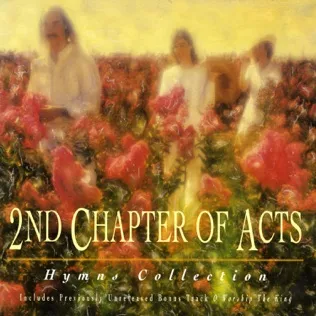
2nd Chapter of Acts - A Mighty Fortress Is Our God Lyrics
Lyrics
A mighty fortress is our God, a bulwark never failing;
Our helper He, amid the flood of mortal ills prevailing:
For still our ancient foe doth seek to work us woe;
His craft and power are great, and, armed with cruel hate,
On earth is not his equal.
Did we in our own strength confide, our striving would be losing;
Were not the right Man on our side, the Man of God's own choosing:
Dost ask who that may be? Christ Jesus, it is He;
Lord Sabaoth, His Name, from age to age the same,
And He must win the battle.
And though this world, with devils filled, should threaten to undo us,
We will not fear, for God hath willed His truth to triumph through us:
The Prince of Darkness grim, we tremble not for him;
His rage we can endure, for lo, his doom is sure,
One little word shall fell him.
That word above all earthly powers, no thanks to them, abideth;
The Spirit and the gifts are ours through Him Who with us sideth:
Let goods and kindred go, this mortal life also;
The body they may kill: God's truth abideth still,
His kingdom is forever.
Video
A Mighty Fortress Is Our God
Meaning & Inspiration
The timeless hymn, "A Mighty Fortress Is Our God," finds renewed spiritual power in the rendition by 2nd Chapter of Acts, released on January 1, 2003, as part of their *Hymns Collection* album. This particular recording transcends mere musical interpretation, serving as a profound theological statement that resonates deeply with enduring Christian belief. At its heart, the song is a declarative anthem of unshakeable faith, rooted in the foundational truth that God alone is our ultimate refuge and strength in a world fraught with spiritual conflict.
The hymn's enduring message, penned by Martin Luther, is one of steadfast reliance on divine protection amidst overwhelming challenges. 2nd Chapter of Acts reverently conveys this core conviction, emphasizing that God is an impregnable bulwark, unfailing in His support against the myriad "mortal ills" that prevail in life. The lyrics starkly acknowledge the presence of an "ancient foe" – Satan – whose craft and power are indeed great, fueled by "cruel hate." This candid recognition of evil’s reality is not meant to instill fear, but rather to underscore the absolute necessity of God's intervention, setting the stage for the dramatic rescue only He can provide. It beautifully mirrors scriptural warnings about spiritual warfare, reminding us that "our struggle is not against flesh and blood, but against the rulers, against the authorities, against the powers of this dark world and against the spiritual forces of evil in the heavenly realms" (Ephesians 6:12).
The song powerfully asserts that any reliance on our own limited strength is destined for failure. It makes clear that victory belongs to "the right Man on our side, the Man of God's own choosing," unequivocally identifying Him as Christ Jesus, "Lord Sabaoth, His Name, from age to age the same." This declaration affirms Jesus' eternal nature and His preeminence as the victorious warrior, a truth echoed in passages like John 16:33 where Jesus declares, "In this world you will have trouble. But take heart! I have overcome the world." The hymn reminds us that the battle is not ours to win, but His, and He "must win the battle," a confident assurance in His ultimate triumph over sin and death, as depicted in Revelation's vision of the Rider on the white horse (Revelation 19:11-16).
Even when "this world, with devils filled, should threaten to undo us," the song inspires a fearless resolve. This courage stems not from personal bravery, but from the divine decree that "God hath willed His truth to triumph through us." The lyrics confront "The Prince of Darkness grim" without trembling, recognizing that his rage is temporary and his "doom is sure." The astounding claim that "One little word shall fell him" powerfully alludes to the authority of God's Word, the very weapon Jesus wielded against temptation in the wilderness (Matthew 4:1-11) and the means by which He will ultimately destroy His enemies (2 Thessalonians 2:8). This concept reinforces the profound power and efficacy of divine truth.
The final stanza elevates God's Word "above all earthly powers," emphasizing its eternal abiding nature, independent of human approval. It declares that "The Spirit and the gifts are ours through Him Who with us sideth," pointing to the indwelling Holy Spirit and the spiritual endowments bestowed upon believers (1 Corinthians 12:4-11). The ultimate call to discipleship is presented: a willingness to relinquish "goods and kindred," even "this mortal life also," because "The body they may kill: God's truth abideth still, His kingdom is forever." This profound statement encapsulates the New Testament's call to prioritize Christ above all else, aligning with Jesus' teaching in Matthew 10:28 to "not be afraid of those who kill the body but cannot kill the soul." It underscores the eternal security found in God's unchangeable truth and the everlasting nature of His kingdom, a kingdom that far outlasts any earthly dominion or personal possession, giving those who embrace its message an unwavering hope and purpose. 2nd Chapter of Acts, through their reverent and powerful interpretation, provides a timely and enduring reminder of these bedrock truths, encouraging all who encounter their rendition to place their faith firmly in "A Mighty Fortress" that truly is our God.