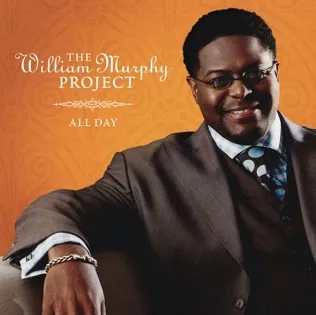
William Murphy - Praise is What I Do Lyrics
Lyrics
Praise is what I do
When I want to be close to You
I lift my hands in praise
Praise is who I am
I will praise Him while I can
I'll bless Him at all times
Chorus:
I vow to praise You
Through the good and the bad
I'll praise You
Whether happy or sad
I'll praise You
(This is my testimony)
In all that I go through
(Somebody said why)
Because praise is what I do
Cause I owe it all to You
(Come on church)
Praise is what I do
(Come on church)
When I want to be close to You
(I lift my hands-somebody lift Him)
I lift my hands in praise
(Somebody say it so the devil will hear you)
Praise is who I am
(Come on praise the Lord)
I will praise Him while I can
I'll bless Him at all times
And I vow to praise You
Through the good and the bad
I'll praise You
Whether happy or sad
I'll praise You
(Somebody lift your voice and say)
Praise is what I do
Even when I am going through
(See I've learned...)
I've learned to worship You
(See I want to let the devil know tonight, even though...)
No, my circumstance doesn't even stand a chance
My praise out weighs the bad
(So I vow to praise)
I vow to praise You
Through the good and the bad
I'll praise You
Whether happy or sad
I'll praise You
Now somebody lift your voice
And just go to praising him right now
Somebody lift your voice in this place
Lift up your voice in this place
Video
Praise Is What I Do - William Murphy
Meaning & Inspiration
"Praise is What I Do," a foundational declaration from William Murphy, powerfully resonated with audiences upon its release on August 16, 2005, as a key track on his album *All Day*. More than just a song, it serves as a profound statement of faith and a testament to the transformative power of worship, articulating a core tenet of Christian belief: that praise is not merely an option, but an essential, intentional act, a lifestyle, and a spiritual conduit.
The essence of "Praise is What I Do" is rooted in the biblical mandate and experience of worship. The opening lines establish praise as a deliberate act of drawing near to God, echoing passages like James 4:8, which instructs believers to "Draw near to God, and he will draw near to you." The lifting of hands, described as a natural expression, is a timeless posture of surrender and adoration found throughout Scripture, from Psalm 63:4, where the psalmist declares, "I will lift up my hands in your name," to 1 Timothy 2:8, which encourages men to "lift holy hands in prayer." This is not just an activity but a profound connection, where praise becomes the vehicle for intimacy with the Divine. Furthermore, the song quickly elevates praise from an action to an identity, asserting "Praise is who I am." This commitment signifies a constant, unwavering devotion, aligning with Psalm 34:1, "I will bless the Lord at all times; his praise shall continually be in my mouth," and Psalm 146:2, "I will praise the Lord as long as I live; I will sing praises to my God while I have my being." It’s a complete immersion, a spiritual respiration.
The song's core vow, articulated in its impactful chorus, solidifies this commitment: "I vow to praise You / Through the good and the bad / I'll praise You / Whether happy or sad." This declaration of steadfast worship transcends fleeting emotions or changing circumstances, embodying the profound faith demonstrated by figures like Job, who, even amidst unimaginable loss, declared, "The Lord gave, and the Lord has taken away; blessed be the name of the Lord" (Job 1:21). It is a choice to engage in worship not because of what one feels, but because of who God is. This unwavering gratitude is further explained by the powerful realization, "I owe it all to You," acknowledging God's sovereignty and grace as the ultimate reason for continuous praise, mirroring Romans 11:36, "For from him and through him and to him are all things. To him be glory forever. Amen."
Perhaps the most potent message within "Praise is What I Do" emerges when the narrative confronts adversity directly: "Even when I am going through... No, my circumstance doesn't even stand a chance / My praise out weighs the bad." This segment is a testament to spiritual maturity and resilience, transforming praise into a formidable spiritual weapon. It resonates deeply with stories like Paul and Silas in Acts 16:25, who, despite being imprisoned and chained, chose to pray and sing hymns, leading to a miraculous deliverance. Murphy’s words emphasize that worship in the midst of trials is not a denial of pain, but a declaration of God's greater power and faithfulness. It teaches that our expressed praise actively shifts our perspective and the spiritual atmosphere, rendering negative circumstances powerless when confronted with a defiant faith rooted in God. This isn't merely positive thinking; it's a strategic act of spiritual warfare, a testament to God's unwavering presence and ability to intervene, asserting that our worship can indeed outweigh and overcome the heaviest burdens. "Praise is What I Do" stands as an inspiring anthem for anyone navigating life's complexities, serving as a powerful reminder to prioritize worship as both an act of intimacy and an instrument of victory.