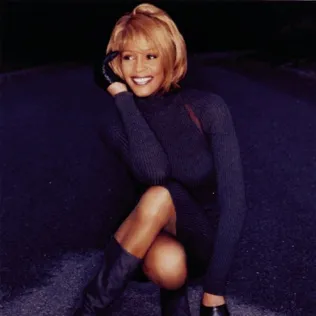
Whitney Houston + Aaron Thomas - When You Believe Lyrics
Lyrics
Many nights we prayed
With no proof, anyone could hear
In our hearts a hopeful song
We barely understood
Now, we are not afraid
Although we know there's much to fear
We were moving mountains
Long before we knew we could, ooh-oh, yes
There can be miracles
When you believe
Though hope is frail, it's hard to kill
Who knows what miracles you can achieve?
When you believe, somehow you will
You will when you believe
Oh-oh-oh
Mmm, yeah
In this time of fear
When prayer so often proves in vain
Hope seems like the summer bird
Too swiftly flown away
Yet now I'm standing here
My hearts so full, I can't explain
Seeking faith and speakin' words
I never thought I'd say
There can be miracles
When you believe (When you believe)
Though hope is frail, it's hard to kill (Mmm)
Who knows what miracles you can achieve? (You can achieve)
When you believe, somehow you will
You will when you believe
They don't always happen when you ask
And it's easy to give in to your fears
But when you're blinded by your pain
Can't see your way clear through the rain
A small but still, resilient voice
Says, "Help is very near", oh (Oh)
There can be miracles (Miracles)
When you believe (Boy, when you believe, yeah)
Though hope is frail
It's hard to kill (Hard to kill, oh, yeah)
Who knows what miracles
You can achieve (You can achieve, oh)
When you believe somehow you will (Somehow, somehow, somehow)
Now, you will (I know, I know, know)
You will when you (When you)
Believe
You will when you (You will when you)
Believe
Just believe (Believe)
Just believe
You will when you
Believe
Video
Whitney Houston, Mariah Carey - When You Believe (Official HD Video)
Meaning & Inspiration
When you crank the gain on the faders for Whitney Houston and Mariah Carey (who famously partnered on this track from The Prince of Egypt soundtrack, though Aaron Thomas often gets the nod for his work on the production side), you’re hearing a masterclass in tension. There’s a specific grit in Whitney’s lower register during the first verse that doesn't get enough credit. It’s not just "vocal performance"; it’s a physical weight. That low, breathy tone feels like it’s scraping against the bottom of the mix, fighting for space before the orchestral swell hits.
"Though hope is frail, it’s hard to kill."
That line hits me every time. From a production standpoint, it’s the pivot point of the whole track. You have these massive, cinematic strings sweeping in—the kind that feel like they’re trying to lift the roof off the room—but then there’s that line. It’s almost fragile. It’s the sound of a human heartbeat trying to sync with a wall of sound.
It makes me think of the persistent widow in Luke 18. There’s this desperate, repetitive quality to the lyrics, a sense of praying into a void where you’re not even sure the signal is being received. "Many nights we prayed with no proof, anyone could hear." Most people want a clean, compressed sound where everything is perfectly audible, but faith, in reality, is often closer to those early, quiet takes where the room noise is still leaking into the mic. It’s messy. It’s full of doubt. But it’s there.
Then there’s the line, "A small but still, resilient voice says, 'Help is very near'."
In the mix, that’s the subtle synth pad or the faint shimmer on the cymbal decay. It’s not the hook that grabs you, but it’s the thing holding the whole thing together. It’s the "still, small voice" of 1 Kings 19:12. We spend so much time looking for the earthquake, the wind, or the fire—the high-budget production of our lives—but God usually hides in the track that barely registers on the meter.
I don’t know if I fully buy the "miracles" narrative in the way pop radio sells it. Sometimes I listen to this and feel the victory, and other times I feel the ache of the unanswered. Maybe that’s the point. The production doesn't resolve in a way that feels finished—it just gets bigger and bigger, stacking layers until it’s almost overwhelming. It reminds me that belief isn’t a final mix, exported and mastered. It’s a work in progress. It’s the constant, grinding process of choosing to keep the fader up even when the signal looks like it’s dropping to zero. You just keep listening for the next beat.