Tommy Walker - The Lord's Prayer Lyrics
Lyrics
Father in heaven
Hallowed be thy name
Thy kingdom come, Thy will be done
On earth as it is in heaven
Father in heaven
Honored and praised be thy name
Thy kingdom come, thy will be done
On earth as it is in heaven
Bridge
Give us this day our daily bread
Forgive us our debts as
We forgive our debtors
And lead us not into temptation
But deliver us from evil
Chorus
For Thine is the kingdom
And the power and the glory
Forever and ever amen
Honored and praised, lifted and raised
Honored and praised be Thy name
Video
Jackie Evancho - The Lord's Prayer (from Dream With Me In Concert)
Meaning & Inspiration
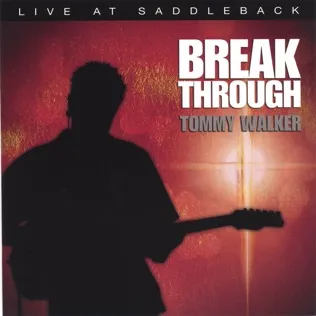
Tommy Walker’s 2006 live recording at Saddleback captures a very specific moment in the evolution of American evangelical worship. You hear it in the way the arrangement leans into that mid-2000s CCM mid-tempo groove—steady, reliable, and designed to move a room of a few thousand people toward a unified vocal focus. It isn’t trying to reinvent the wheel; it’s trying to provide a familiar space for a community to breathe together.
There’s a fascinating tension in taking the Lord’s Prayer—the most intimate, subversive manifesto in human history—and setting it to a beat that feels meant for a Saturday night church service. When Walker sings, "Give us this day our daily bread," the language itself is jarringly simple. It’s not poetic ornamentation. It’s a gut-level demand for survival. In a modern context, that phrase often gets washed out in the "vibe" of the worship set. We treat it like a rhythmic chant rather than a desperate plea for manna in a wilderness where we’re usually too distracted by our own abundance to notice we’re starving.
It lands differently when you strip away the lights and the crowd noise. By the time he hits "Forgive us our debts as we forgive our debtors," the musical momentum is still climbing, but the lyric asks for something that actually breaks the rhythm of our lives. It’s an impossible arithmetic. Scripture, specifically Matthew 6:12, doesn't offer a suggestion here; it offers a condition.
Does the weight of that transaction get lost in the smooth, live-album delivery? Probably. It’s hard to sit with the sting of "forgive our debtors" when the melody is encouraging you to sway and raise your hands in a state of high-ceilinged catharsis. Yet, there is a strange honesty in the attempt. Walker is forcing a dialogue between ancient, hard-hitting truth and the glossy, accessible pop-rock vernacular that dominated that era of the American church.
It feels unresolved because it is. You finish the song, the crowd cheers, and the "amen" echoes off the rafters, but the reality of the words—the actual, terrifying act of forgiving someone who owes you—doesn't end with the final chord. It’s a strange thing to sing about the kingdom coming on earth while standing in a room that feels so curated, so managed, and so controlled.
Perhaps that’s the point. We sing these ancient, heavy, demanding things because we aren’t living them. We use the melody to carry us across the gap between the kingdom we pray for and the reality we actually inhabit. It’s not a perfect bridge, and sometimes the music makes the struggle feel easier than it is, but for those few minutes, you’re at least admitting that you’re hungry for something more than what you can provide for yourself. You’re asking for bread you haven’t earned and mercy you’ve likely been withholding from someone else. It’s a complicated prayer to hold in your throat while keeping time with a drummer.