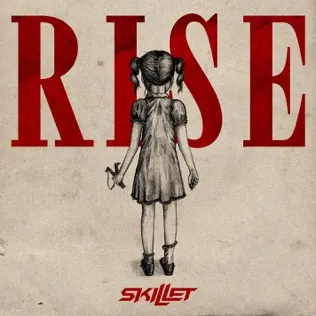
Skillet - Salvation Lyrics
Lyrics
All Alone, lost in this abyss
Crawling in the dark
Nothing to wipe my longing clips
And I wonder where you are (Where you are)
Are you far? (Are you far)
Will you come to my rescue?
Am I left to die
But I can't give up on you
I feel you keeping me alive
You are my salvation
Touch you, taste you, feel you here
(Oh oh yeah yeah)
I feel you keeping me alive
You are my salvation
Hold me, heal me, keap me near
(Oh oh yeah yeah)
My heart will burn for you,
it's all I can do.
Salvation (Salvation)
Salvation
Keeping me alive
Salvation
Keeping me
Salvation
Keeping me alive
Been out from under who I am
and who I wanna be
Held you tightly in my hand
While we ungraveling
Was it me?
Will you come to my rescue?
Or did I push too far,
When I turned my back on you
I feel you keeping me alive
You are my salvation
Touch you, taste you, feel you here
(Oh oh yeah yeah)
I feel you keeping me alive
You are my salvation
Hold me, heal me, keep me near
(Oh oh yeah yeah)
My heart will burn for you,
it's all I can do.
Salvation (Salvation)
Salvation
Keeping me alive
Salvation
Touch you, taste you
feel you, need you
Give it all just to find you
Hold me, heal me
I will find you
Keeping me alive
You are my salvation
Touch you, taste you, feel you here
(Oh oh yeah yeah)
Our love will never die
You are my salvation
Hold me, heal me, keap me near
(Oh oh yeah yeah)
My heart will burn for you,
it's all I can do.
Salvation (Salvation)
Touch you, taste you
feel you, need you
Salvation (Salvation)
Video
Salvation
Meaning & Inspiration
Skillet’s "Salvation" pulls at a thread that many of us hold with white-knuckled desperation: the feeling of abandonment versus the theological reality of God’s presence. The lyrics oscillate between the terrifying silence of an "abyss" and the frantic assertion that God is "keeping me alive." It is a raw, jagged way to approach the Doctrine of Preservation.
There is a specific line that stops me cold: "Am I left to die / But I can't give up on you."
This is the tension of the fallen creature. We often speak of salvation as a static event—a transaction completed at a specific point in time—but here, the singer frames it as a vital, daily pulse. If salvation is merely a historical fact, why does the soul feel like it is "ungraveling"? The lyrics suggest a person who knows the nomenclature of faith but is currently staring into the void, questioning whether their own moral failure ("Did I push too far / When I turned my back on you") has severed the cord.
Theologically, this is where we need to be careful. We are prone to confuse our subjective perception of distance with the objective reality of the Atonement. The song asks, "Will you come to my rescue?" It’s a human plea, echoing the Psalms, but it borders on forgetting that the Rescue was already executed at Golgotha. If the doctrine of Propitiation holds, the debt is settled; the "abyss" is a location where we find ourselves, but not one where God has ceased to be sovereign. Yet, the song captures the visceral reality of that struggle—the feeling that we are clinging to the edges of existence, needing to "touch, taste, and feel" a God who is often hidden in the dark.
"My heart will burn for you, it's all I can do."
There is a strange, messy honesty in that line. It acknowledges that when our theology feels thin or when the abyss feels wider than our faith, the only thing left is a residual, stubborn inclination toward the Creator. It isn't a sophisticated, polished argument for God's existence; it is an instinctual reaching out. It echoes the Imago Dei—that internal spark that cannot fully extinguish itself, even when we are "out from under who I am."
Is this song doctrinally robust? Not entirely. It leans heavily on the felt experience of the singer, which creates a slight imbalance by centering the human crisis over the finished work of Christ. However, it functions as a necessary cry of lament. It reminds me that faith often looks like "ungraveling"—a desperate, clumsy reaching for a hand we cannot see. We want the certainty of a systematic explanation for our pain, but sometimes all we have is the frantic prayer that He is still keeping us alive, despite our best efforts to wander away. It leaves me wondering: if we didn't have that "burn" in our hearts, would we even realize we were lost?