Skillet - Locked in a Cage Lyrics
Lyrics
I wanna be locked in a cage
I wanna be strapped in a chair
I wanna be where you are
If my insanity comes
Wrapped up inside your...
I wanna break my legs
In case a thought to escape
Keep the hammer out of my reach0
If my pounding impulse comes
Wrapped up inside your arms
Locked up inside you
Hold me down cause I want to know you
You bring calm to my rage
You are life and I'm thirsting for you
Hold me, hold me locked in a cage
I love to be caught by you
I wanna be trapped in your arms
Your cage is rest to my bones
Your cage is peace to my soul
Wrapped up inside your arms
Locked up inside you
Hold me down cause I want to know you
You bring calm to my rage
You are life and I'm thirsting for you
Hold me, hold me locked in a cage
Wrapped up inside your arms
I'm inside your arms
Hold me down cause I want to know you
You bring calm to my rage
You are life and I'm thirsting for you
Hold me, hold me locked in a cage
Hold me down cause I want to know you
You bring calm to my rage
You are life and I'm thirsting for you
Hold me, hold me locked in a cage
Video
Locked in a Cage
Meaning & Inspiration
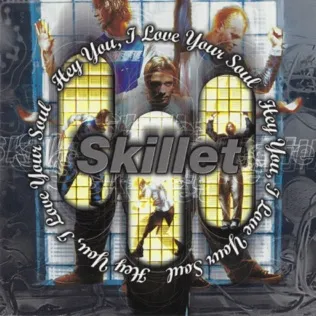
Skillet’s profound anthem, "Locked in a Cage," emerged on April 21, 1998, as part of their album, *Hey You, I Love Your Soul*. From its very first listen, this song reveals a stark, almost startling lyrical landscape that, upon deeper reflection, unveils a powerful narrative of radical spiritual surrender and the paradoxical freedom found within divine boundaries. It dives headfirst into the human struggle with inner turmoil and the desperate yearning for an ultimate peace, framing confinement not as imprisonment, but as a sanctuary crafted by a higher power.
The song's core message revolves around an intense desire to be held, constrained, and even "caged" by a divine presence. Phrases like "I wanna be locked in a cage" and "I wanna be strapped in a chair" initially paint a picture of severe restriction. Yet, the ensuing lines immediately reframe this, revealing a longing to be "where You are" and to have one's "insanity" wrapped up inside this divine embrace. This isn't a plea for punishment, but a desperate cry for control *over* oneself *by* God. It speaks to the recognition of our own fallen nature, the "insanity" that often drives us away from what is good and true. The psalmist, in Psalm 51:10, prayed, "Create in me a clean heart, O God, and renew a right spirit within me," echoing this deep need for internal transformation that human effort alone cannot achieve. This willingness to yield self-control entirely signifies a profound trust in the benevolence of the One who holds the keys.
The lyrics take an even more intense turn with the imagery of wanting to "break my legs" to prevent any "thought to escape," and keeping "the hammer out of my reach" to quell any "pounding impulse." This vivid, almost violent language underscores an absolute commitment to severing ties with past destructive patterns and a fierce determination to remain tethered to the divine. It's a radical act of repentance, a decision to physically remove the means of straying, symbolizing a spiritual amputation of anything that would lead one away from God. Jesus Himself spoke in Matthew 5:29-30 about radical measures to avoid sin, saying, "If your right eye causes you to sin, tear it out and throw it away... And if your right hand causes you to sin, cut it off and throw it away," emphasizing the severity of our battle against our own sin nature. Here, the artist expresses a similar, uncompromising dedication to preventing self-sabotage, recognizing that the impulses to "escape" or stray are powerful and need divine intervention to be quelled.
The repeated chorus, "Hold me down cause I want to know you / You bring calm to my rage / You are life and I'm thirsting for you / Hold me, hold me locked in a cage," unveils the true heart of the song. The "rage" represents the inner turmoil, anxieties, and spiritual battles that plague the human soul. It's the restless spirit seeking something it cannot find in the world. God is presented as the ultimate source of calm, the "life" that quenches a deep spiritual "thirst." This reflects biblical truths found in John 4:13-14, where Jesus speaks of giving "living water" that satisfies forever, and Psalm 42:1, "As a deer pants for flowing streams, so pants my soul for you, O God." The "cage" transforms from a symbol of restriction into a metaphor for God's protective embrace, a place where peace, rest, and true knowledge of the divine can be found, free from the self-inflicted chaos of a life lived outside His will.
Ultimately, "Locked in a Cage" becomes a powerful declaration of finding freedom not in autonomy, but in absolute surrender. The lines, "Your cage is rest to my bones / Your cage is peace to my soul," beautifully articulate that what the world might perceive as confinement is, in fact, the deepest form of spiritual solace and liberation. It speaks to the promise of Matthew 11:28-30, "Come to me, all who labor and are heavy laden, and I will give you rest... For my yoke is easy, and my burden is light." Skillet, through this compelling track, invites us to reconsider our understanding of freedom, suggesting that true peace lies in willingly submitting our restless spirits, our destructive impulses, and our very lives to the loving, sovereign hand of God. It's an inspiring call to embrace the divine "cage" as the truest sanctuary for the soul.