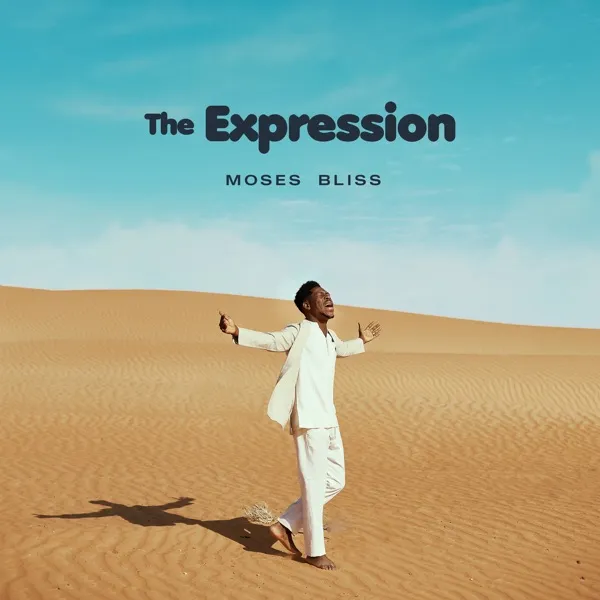
Moses Bliss - By Your Mercy Lyrics
Lyrics
When I look at my life When I think of how I got here I've come to one conclusion This is the mercy of the Lord
How I'm living today It's mercy How I'm standing today It's mercy It's all by your mercy It's all by your mercy
It's mercy It's mercy It's all by your mercy It's all by your mercy
Mercy, oh It's mercy Mercy, oh It's mercy It's all by your mercy It's all by your mercy
Mercy, oh It's mercy Mercy, oh It's mercy It's all by your mercy It's all by your mercy ...
I'm the one that God has helped I'm the one that God has blessed I'm a product of your mercy Product of your grace Product of your mercy ...
It's mercy It's mercy It's all by your mercy It's all by your mercy
When I look at my life When I think of how I got here I've come to one conclusion This is the mercy of the Lord
How I'm living today It's mercy How I'm standing today It's mercy It's all by your mercy It's all by your mercy ...
Video
Moses Bliss - By Your Mercy (Live) [Official Video]
Meaning & Inspiration
Moses Bliss’s The Expression lands in a room like a sudden exhale. We spend so much time in liturgy trying to construct a ladder to God—choosing the right chords, the right build, the right theological architecture—that we often forget the floor we’re standing on.
When the congregation sings, "How I'm standing today / It's mercy," there is a distinct shift in the air. For those of us who plan these moments, there’s always a temptation to make the song about our response: our sacrifice, our dedication, our "yes." But this song strips that away. It forces a collision with reality.
I’m particularly struck by the line, "I'm the one that God has helped." It feels almost startlingly simple, bordering on unadorned. In a culture obsessed with curated identities and self-made success, standing in the middle of a church and admitting you are merely a person who has been helped by an outside force is an act of defiance. It echoes the psalmist in Psalm 121: "My help comes from the Lord, the Maker of heaven and earth." It isn't a proclamation of what I’ve achieved; it’s a confession of what I could not have done alone.
From a structural perspective, the song is a loop. It circles the word mercy until the word loses its status as a theological concept and becomes something closer to oxygen. That’s the "landing" I’m interested in. When the music stops, the people aren't left with a complex doctrine to parse. They’re left with the quiet, terrifying awareness that if the mercy were removed, the life they’ve built would fold.
There’s a tension in this for me as a leader. We like songs that move forward, that have a bridge, a climax, and a tidy resolution. The Expression refuses that. It just sits in the acknowledgement of the Lord’s intervention. It doesn’t tell the congregation to do anything; it just asks them to look back at their own history and see the thread of God’s grace where they expected to see their own grit.
Does this work for a Sunday morning? It’s repetitive, which means it can either become a trance-like state of genuine surrender or a mindless repetition if the hearts aren't engaged. But if we sing it honestly, we’re forced to confront the fact that our presence in that room is an unearned gift.
I find myself wondering: if we stripped away the rhythm and the melody, would we still have the courage to say, "I'm a product of your mercy"? It’s easy to sing when the band is pushing, but it’s harder to hold that truth on a Tuesday when the evidence of God’s help feels quiet or distant. Still, this is where the liturgy of life actually happens—outside the sanctuary, carrying the burden of that specific, unavoidable truth.