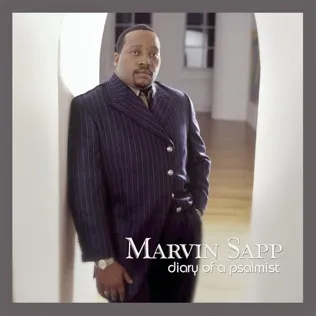
Marvin Sapp - You Are God Alone Lyrics
Lyrics
There's no question of you're greatness
No searching of your power
All the wonder of your glory
To you forty years is but one hour
Your knowledge is all encompassing
To your wisdom there is no end
Oh for you alone are God
You are God alone
Your mercy is everlasting
Your truth is here always
You are he who was and is and is to come
Who is he that can number your days
You flung the sun to burn in space and the night's moon bounce light from day
Oh you alone you're God, you're God,
Elohim, you're everything I need
You are God alone
Now unto the King eternal, immortal, invisible
The only wise God, the only wise God
The only wise god
For you alone are God
No one else compares to you Lord
For you are God alone
You alone
For you alone are God
You are everything that I needed
For you are God alone
Be all glory and honor
Dominion and power
Forever and ever
Amen
For you alone are God
You are God alone
(You're my Jehovah Jireh)
(You're my Jehovah Nissi)
(You're my Jehovah Elyon)
You alone are God
You are God alone
Video
Marvin Sapp - You Are God Alone
Meaning & Inspiration
Marvin Sapp's "You Are God Alone," released on January 1, 1990, as part of the album *Diary of a Psalmist*, stands as a timeless declaration of divine supremacy and majesty. This profound anthem isn't merely a song; it is a meticulously crafted theological statement, designed to draw believers into a deeper recognition of God's incomparable nature. Its core meaning centers on the absolute singularity and preeminence of the Almighty, inviting us to acknowledge Him as the sole possessor of ultimate power, wisdom, and glory, a truth foundational to the Christian faith.
The lyrical journey begins by dismantling any human tendency to question divine attributes, asserting, "There's no question of your greatness / No searching of your power." This opening immediately establishes God as self-evident and omnipotent, echoing Romans 1:20 which declares that God’s eternal power and divine nature are clearly seen through what has been made. The song then broadens this scope to God's transcendence over time, stating, "To you forty years is but one hour." While a poetic expression, this idea finds its scriptural root in 2 Peter 3:8, reminding us that with the Lord, "a day is like a thousand years, and a thousand years are like a day," emphasizing His existence outside human temporal constraints. The lyrics further extol His infinite intellect, proclaiming, "Your knowledge is all encompassing / To your wisdom there is no end," a truth beautifully mirrored in Psalm 147:5, which states, "Great is our Lord and mighty in power; His understanding has no limit." The recurring declaration, "Oh for you alone are God / You are God alone," serves as the anchor, a powerful affirmation directly from passages like Deuteronomy 6:4, "Hear, O Israel: The Lord our God, the Lord is one," and Isaiah 45:5, "I am the Lord, and there is no other; apart from me there is no God."
The song continues its exposition of God's character by highlighting His unwavering faithfulness. "Your mercy is everlasting / Your truth is here always" resounds with the promises found in Psalm 100:5 and Psalm 117:2, which confirm God's eternal goodness and enduring truth. A pivotal line, "You are he who was and is and is to come," directly quotes Revelation 1:8, encapsulating God's eternality and immutability—He exists beyond beginning and end. The challenge, "Who is he that can number your days," underscores the stark contrast between God's infinite existence and humanity's finite span, prompting a humble acknowledgement of His sovereignty. The grandeur of God as Creator is celebrated with the evocative imagery of Him flinging "the sun to burn in space and the night's moon bounce light from day," a vivid portrayal of His power in Genesis 1 and Psalm 19:1, where the heavens declare His glory. The intimate address, "Elohim, you're everything I need," draws upon one of the most ancient and powerful Hebrew names for God, signifying His creative might and reminding us of His all-sufficiency as our provider and sustainer, a theme echoed in Philippians 4:19, "My God will meet all your needs according to the riches of his glory in Christ Jesus."
As the song progresses, it shifts into an overt act of worship, incorporating language directly from Scripture. "Now unto the King eternal, immortal, invisible / The only wise God" is a direct quotation from 1 Timothy 1:17, elevating the song into a pure doxology. This segment serves as a powerful reminder that God is not just an abstract concept but a living, sovereign ruler worthy of all adoration. The reassertion, "No one else compares to you Lord," echoes the rhetorical questions of Isaiah 40:25, "To whom then will you compare me, that I should be his equal?" reinforcing His unparalleled uniqueness. The repeated affirmation, "You are everything that I needed," personalizes the grand theological statements, making them applicable to the individual worshiper's life experience. The concluding doxology, "Be all glory and honor / Dominion and power / Forever and ever / Amen," offers a fitting summation of worship, similar to the heavenly declarations in Revelation 5:13, directing all praise to where it rightfully belongs. Finally, the inclusion of the covenant names of God—"You're my Jehovah Jireh," "You're my Jehovah Nissi," "You're my Jehovah Elyon"—brings the abstract concept of "God alone" into personal relationship. Jehovah Jireh signifies the Lord Who Provides (Genesis 22:14), Jehovah Nissi, the Lord Our Banner (Exodus 17:15), and Jehovah Elyon, the Lord Most High (Psalm 7:17). These names transform a theological statement into a deeply personal testimony of God's active involvement, provision, protection, and supreme authority in the life of the believer, cementing the understanding that this one, incomparable God is also intimately present and powerful in every circumstance. "You Are God Alone" is thus a profound and comprehensive declaration, crafted to lead souls into a more complete and intimate worship of the Creator.