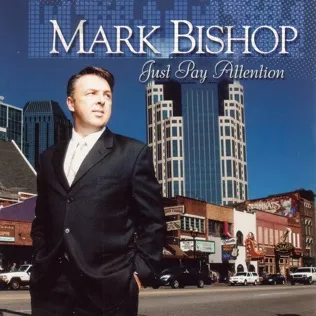
Mark Bishop - I'm Part of the In-Crowd Now Lyrics
Lyrics
Nobody talked much to Reverend Thomas,
they all thought he was square.
You couldn't ask him 'bout last night's ballgame.
He acted like he didn't care.
He doesn't know about the latest movies.
He hardly turns on his TV
or else he would know that his clothes are old-fashioned,
about out of style as he can be.
Nobody's nicer than Reverend Thomas,
He's got a heart made of gold.
But some of that music...he's still playin'
sounds like it's fifty years old.
Everyone knew that he was old-fashioned,
up till the day that he died.
And somebody said when they lowered his casket,
they heard a voice from on high...
Chorus: Hey I'm part of the "in-crowd" now.
I just couldn't fit in....the world I was in.
I might have been all alone,
but now I feel right at home,
up above these clouds.
Take a look at me now.
I'm part of the in-crowd now.
The world keeps pushing God to the background.
Everything else comes first.
It's easy to see where everything's headed.
The Bible says it's gonna get worse.
If you've ever felt like a fish out of water,
more out of the loop everyday.
One of these days, you'll see it doesn't matter.
One of these days you'll say...
Chorus repeat twice.
Nobody talked much to Reverend Thomas,
they all thought he was square.
Video
I'm Part Of The In-Crowd Now
Meaning & Inspiration
Mark Bishop's "I'm Part of the In-Crowd Now," released on December 15, 2009, as part of his album *Just Pay Attention*, offers a poignant reflection on faith, belonging, and the often-unseen value of living according to spiritual conviction. The song doesn't focus on melody or catchy hooks, but instead zeroes in on a powerful, relatable message that resonates deeply with anyone who has ever felt out of step with the prevailing culture. The narrative centers on Reverend Thomas, a man perceived by his community as "square" and out of touch. He’s not interested in the transient trends of popular culture, the latest movies, or contemporary music, preferring instead the timeless truths that inform his faith. This depiction immediately calls to mind the disciples of Jesus, who, though initially bewildered by His teachings, ultimately chose to follow Him even when His message was challenging and unpopular, as seen in John 6:66: "From this time many of his disciples turned back and no longer followed him." Reverend Thomas, in his quiet adherence to a different standard, embodies a steadfastness that is often misunderstood by the world. His unwavering kindness and "heart made of gold" are highlighted, underscoring that true worth isn't measured by outward conformity but by inner character, a concept echoed in 1 Samuel 16:7: "The Lord does not look at the things people look at. People look at the outward appearance, but the Lord looks at the heart."
The song’s central message emerges with the poignant revelation of Reverend Thomas's passing and his posthumous declaration, "Hey I'm part of the 'in-crowd' now." This chorus is a powerful redefinition of what it means to truly belong. It speaks to the spiritual "in-crowd" – those who have found their place in God's eternal kingdom. The lyrics articulate the feeling of being an outsider in the world, a sentiment that can lead to isolation, as referenced in verses like Psalm 142:4, where David cries out, "Look to my right and see, there is no one who will acknowledge me; no refuge here; no one cares for my life." Yet, the song offers profound hope, suggesting that this feeling of being "out of the loop" in earthly terms is temporary. The assurance that "now I feel right at home, up above these clouds" paints a vivid picture of eternal peace and belonging, a fulfillment promised in Revelation 21:4: "He will wipe every tear from their eyes. There will be no more death or mourning or crying or pain, for the old order of things has passed away."
Bishop expertly weaves in a broader observation about the world's trajectory, noting how "the world keeps pushing God to the background" and that "everything else comes first." This aligns with biblical warnings about the dangers of prioritizing worldly pursuits over spiritual ones. The sentiment that "the Bible says it's gonna get worse" can be seen as a reflection of passages like 2 Timothy 3:1-5, which describes the difficulties and ungodliness that will characterize the last days. However, the song’s ultimate purpose is not to instill despair but to encourage perseverance. For those who have "ever felt like a fish out of water," alienated by the secular culture, the song offers a powerful testament to a future where their current struggles will be seen as insignificant. The repeated refrain, "One of these days you'll see it doesn't matter. One of these days you'll say..." is a direct invitation to embrace a faith that offers lasting value and belonging, a perspective that transcends the fleeting popularity of the world and finds its ultimate, glorious acceptance in God's presence.