
Phil Wickham - Grace Lyrics
Lyrics
The sky is grey and the light is far The sea is a rage within my heart I turn my sight to the crashing waves I cry in the night just to be saved
I need eyes to be my guide I need a voice that’s louder than mine I need hope I need You Cause I can’t do this alone
Grace I call Your name Oh won’t Your smile fall over me I’m cracked and dry on hands and knees Oh sweet grace rain down on me I need You grace
I pray for dawn a new day to live I pray for mercy only Jesus gives Though darkness falls and a million cry I believe over all there’s a greater light shining for us
Come down and save me
Video
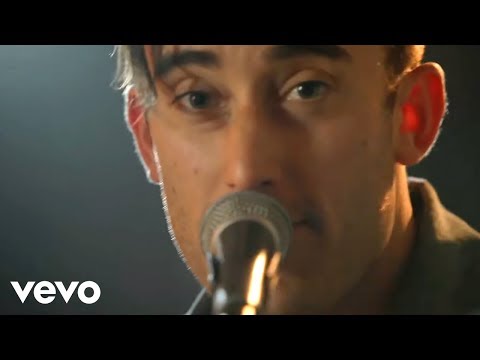
Phil Wickham - This Is Amazing Grace (Official Music Video)
Meaning & Inspiration
Phil Wickham’s "Grace" arrives with a desperate, unvarnished honesty that is rarely found in the sanitized playlists of modern radio. When he sings, "I’m cracked and dry on hands and knees," he is doing more than setting a scene of personal struggle; he is tapping into the ancient, weary posture of the Psalms. It is the language of a soul that has exhausted its own resources, acknowledging that the reservoir of human effort has run dry.
We often try to manufacture our own restoration, treating peace as something we can build if we just follow the right steps. But Wickham’s admission—"I can’t do this alone"—is a necessary death to self-sufficiency. It anchors the listener in the reality of human limitation. If we are truly made in the Imago Dei, we must also accept that we are creatures, not the Creator. We are not designed to hold up the sky or calm our own internal storms. To admit we are "cracked and dry" is to stop pretending that our brokenness is something we can patch with our own willpower.
Then there is the line: "I pray for mercy only Jesus gives." In a theological sense, this is a vital distinction. It moves us away from vague notions of "grace" as some kind of nebulous cosmic favor and attaches it firmly to the person and work of Christ. Mercy is not a sentiment; it is the active intervention of God in the life of the condemned. It is propitiation—the turning away of wrath—that makes the "greater light" he sings about possible. Without the objective fact of the Cross, that light is just a poetic platitude. With it, the light is a promise of sustained existence in a dark world.
What strikes me, though, is the slight tension between his cry for grace to "fall over me" and the reality of the "crashing waves." Wickham doesn't resolve the grey skies or the raging heart by the end of the song. He leaves us in the middle of the storm, still looking up, still waiting for the dawn.
Does this satisfy the hunger of the soul? Perhaps not immediately. We want the rescue, but we are given the sustenance of grace instead. There is a profound discomfort in that—to be told that the answer to our "cracked and dry" state is not an immediate escape from the storm, but an infusion of grace while we are still kneeling in the dirt. It forces us to ask: Is the grace enough even if the waves don’t stop? That is a hard question. It’s a question that keeps me awake and keeps me returning to the text of Scripture, where mercy is often found not in the absence of suffering, but in the presence of the Savior amidst it. Wickham isn’t offering a solution to the mess of life; he is pointing toward the only One who survives it.