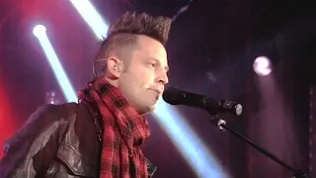
Lincoln Brewster - Little Drummer Boy Lyrics
Lyrics
Come they told me, pa rum pum pum pum
A new born King to see, pa rum pum pum pum
Our finest gifts we bring, pa rum pum pum pum
To lay before the King, pa rum pum pum pum,
rum pum pum pum, rum pum pum pum,
So to honor Him, pa rum pum pum pum,
When we come.
Little Baby, pa rum pum pum pum
I am a poor boy too, pa rum pum pum pum
I have no gift to bring, pa rum pum pum pum
That's fit to give the King, pa rum pum pum pum,
rum pum pum pum, rum pum pum pum,
Shall I play for you, pa rum pum pum pum,
On my drum?
Mary nodded, pa rum pum pum pum
The ox and lamb kept time, pa rum pum pum pum
I played my drum for Him, pa rum pum pum pum
I played my best for Him, pa rum pum pum pum,
rum pum pum pum, rum pum pum pum,
Then He smiled at me, pa rum pum pum pum
Me and my drum.
Video
Lincoln Brewster - Little Drummer Boy (Live) ft. KJ52
Meaning & Inspiration
Lincoln Brewster’s rendition of "Little Drummer Boy," released on October 9, 2012, as part of his album *Joy To the World*, presents a timeless narrative that resonates deeply with the essence of Christian worship and personal devotion. The song is a beloved Christmas carol that tells the story of a humble, impoverished boy summoned to meet the newborn King. While others bring "finest gifts," the boy recognizes he has nothing material fit for royalty. Instead, he offers the only gift he possesses: his talent and passion for playing his drum. This simple act of offering his "best" through his music ultimately brings a smile from the Christ child, signifying divine acceptance and affirmation.
The profound message embedded within "Little Drummer Boy," particularly as interpreted through Brewster's reverent approach, speaks to the heart of what God truly desires from us. The boy's initial lament, "I have no gift to bring that's fit to give the King," reflects a common human struggle where we often feel inadequate or believe our offerings are too small or insignificant in the grand scheme of God's majesty. Yet, Scripture consistently reminds us that God looks at the heart, not the outward appearance or the monetary value of a gift. As 1 Samuel 16:7 teaches, "The Lord sees not as man sees: man looks on the outward appearance, but the Lord looks on the heart." The drummer boy, stripped of worldly possessions, offers himself and his unique skill, symbolizing the call for each of us to present our lives, our abilities, and our passions as living sacrifices to God, as Romans 12:1 implores: "I appeal to you therefore, brothers, by the mercies of God, to present your bodies as a living sacrifice, holy and acceptable to God, which is your spiritual worship."
Brewster’s handling of the piece emphasizes the sincerity and purity of this offering. The boy’s question, "Shall I play for you, on my drum?" is not merely a request but an act of vulnerably laying bare his truest self. This resonates with the biblical principle found in 1 Peter 4:10, which encourages us to "As each has received a gift, use it to serve one another, as good stewards of God's varied grace." The boy isn't comparing his drum to gold, frankincense, or myrrh; he is simply offering what is uniquely his. The narrative then moves to a powerful moment of divine approval: "Mary nodded, the ox and lamb kept time, I played my drum for Him, I played my best for Him." Mary's nod serves as an earthly affirmation, a confirmation that his humble offering is indeed welcome. The rhythm kept by the animals further underscores a sense of creation harmonizing with this act of sincere worship. This scene beautifully illustrates that worship is not confined to formal settings or elaborate gestures; it is a spontaneous, heartfelt response to God's presence, capable of touching and being affirmed by both heaven and earth.
The culmination of the story—"Then He smiled at me, me and my drum"—is the most impactful revelation. This smile from the Christ child isn't just a polite acknowledgment; it represents God's deep delight in a genuine, unreserved offering. It’s a divine affirmation that echoes the joy spoken of in Zephaniah 3:17, where "The Lord your God is in your midst, a mighty one who will save; he will rejoice over you with gladness; he will quiet you by his love; he will exult over you with loud singing." The smile signifies that the boy's devotion, simple as it was, was perfectly "fit to give the King." It reminds us that our worth to God is not determined by the grandeur of our gifts but by the sincerity of our hearts. God cherishes our yieldedness, our willingness to bring our authentic selves—our talents, our struggles, our very being—and lay them at His feet. Lincoln Brewster’s interpretation truly magnifies this enduring truth, inspiring us all to discover our own unique "drum" and play our "best" for the King, knowing that such a humble offering will always be met with His loving smile.