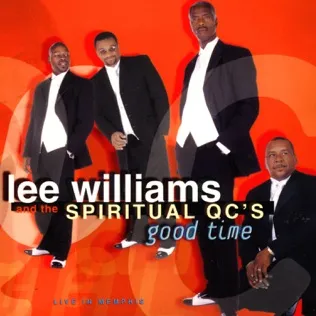
Lee Williams & The Spiritual QC's - No Fault Lyrics

Album: Good Time
Released: 24 Oct 2000
iTunes Amazon Music

Lyrics

Chorus
I find no fault in God.
I find no fault in Him.

Verse
Took my blessed Savior,
led Him to a place they called the judgement hall;
then Pilate said, 'now in this man I can't find one fault'.
Then He told them 'bring me some water,
let me wash my hands, I don't want to be guilty
of killing this innocent man.
Then He told them

Chorus

Vamp
No fault in Him

Video

No Fault Lee Williams

Thumbnail for No Fault video

Meaning & Inspiration

Lee Williams and the Spiritual QC’s aren’t giving us a pop-glossed aesthetic here. They’re giving us a declaration that hits differently when the world has already proven itself to be a mess.

"I find no fault in God."

It sounds clean. It sounds like a bumper sticker. But let’s look at the context they’re tethering it to: the judgment hall. They’re dragging us straight to the scene where the guy in charge—the one with the actual political power to stop an execution—literally washes his hands of the mess. Pilate looks at the situation, shrugs, and decides that justice is too much trouble to maintain.

That hits hard when you’re staring at an eviction notice or a pile of hospital bills. We’re used to people in power—bosses, judges, even the church—washing their hands of our problems when things get inconvenient. We’re used to the "fault" being shifted onto us, the ones who didn't plan well enough or pray hard enough.

But Williams is pointing to a different kind of innocence. He’s insisting that even when the system is rigged and the people who are supposed to protect you are the ones handing you over to the crowd, the nature of God remains untouched by the corruption.

It’s easy to say "no fault in Him" when your life is running smoothly. But can you say it when you’re standing over a casket? Can you say it when you’ve done everything "right" and the outcome is still a train wreck? That’s where the "Cheap Grace" argument creeps in. Is this lyric just a religious reflex to avoid the pain of a broken world, or is it a stubborn refusal to let the chaos define the Creator?

Hebrews 4:15 tells us we have a high priest who is able to sympathize with our weaknesses, one who has been tempted in every way just as we are, yet did not sin. That’s the "no fault" part. He didn’t just watch from the sidelines; He entered the judgment hall. He walked into the exact place where humanity is at its most cowardly and cruel.

I’m standing in the back of the room while this track plays, and I’m looking for the catch. If I’m honest, there are days when I look at a silent house and I want to find fault. I want to point a finger at the ceiling and ask why the math of faith doesn’t add up.

Maybe the strength of this song isn't that it solves the problem of suffering. Maybe it’s that it draws a line in the sand. It acknowledges that the world is a judgment hall, a place where hands are constantly being washed and accountability is treated like a burden. In that atmosphere, claiming "no fault" isn't a platitude; it’s an act of defiance against a reality that demands we blame God for the wreckage human beings leave behind.

It feels unresolved. It feels like a jagged edge. But maybe that’s the only way to hold onto anything real.

Loading...
In Queue
View Lyrics