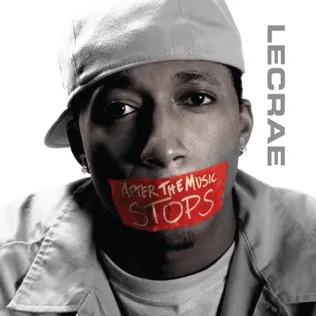
Lecrae - El Shaddai Lyrics

Album: After the Music Stops
Released: 23 Oct 2006
iTunes Amazon Music

Lyrics

Here we are the last song and uh, I pray that after the music stops that the focus will be on you Lord people will see you for who you are and worhsip you with there lives, Cam share your heart with us

El Shaddai God you're almighty
god you're almighty
and father I worship you

El Shaddai God you're almighty
and father I worship you
I worship you

I worship you ooh yeah
Father I worship you
Lord I worship you
I worship you

Jehovah nissi
Lord you're my banner
and father I worship you

Jehovah nissi
Lord you're my banner
and father I worship you

I worship you oh
Father I worship you
Jesus I worship you
I worship you

Jehovah Jirah
you're my provider
you're my provider
and father i worship you

Jehovah Jirah
Lord you're my provider
and Father worship you
Jesus I worship you
Jesus I worship you
Lord I worship you
Jesus I worship you
father I worship you
oh Jesus I worship you
my provider I worship you
ooh father I worship you

El shalom
God of peace
God of peace
and father I worship you
I worship you

Video

Lecrae - El Shaddai ft. Cam

Thumbnail for El Shaddai video

Meaning & Inspiration

Lecrae’s "El Shaddai," the deeply reflective closing track from his impactful 2006 album *After the Music Stops*, emerged on October 23, 2006, as a profound call to worship and an invitation to meditate on the very character of God. The song immediately sets its spiritual intent with a poignant opening prayer from Lecrae himself, expressing the desire that once the music fades, all attention would shift squarely to the Lord, prompting people to truly see Him and respond with a life of worship. This preamble establishes the core purpose of the entire piece, directing the heart and mind toward a singular focus on divine reverence.

The track then transitions into a powerful, mantra-like exploration of several foundational names of God, each revealing a distinct facet of His limitless nature and our corresponding posture of adoration. The first name invoked is "El Shaddai," translated as "God Almighty." This ancient Hebrew name, first revealed to Abraham in Genesis 17:1, emphasizes God's omnipotence, His absolute power and sufficiency. When God declared, "I am El Shaddai; walk before me, and be blameless," He was revealing Himself as the all-powerful One capable of fulfilling His promises, even when human circumstances seemed utterly impossible, as with Abraham and Sarah's barrenness (Genesis 18:14). To worship El Shaddai is to acknowledge a God whose strength knows no bounds, whose purposes cannot be thwarted, and who holds all creation in His mighty hand.

Following this declaration, the song moves to "Jehovah Nissi," articulating God as "my Banner." This name originates from Exodus 17:15, where Moses built an altar after a decisive victory over the Amalekites, proclaiming, "The Lord is my Banner." A banner historically served as a rallying point in battle, a symbol of identification, and a promise of victory. In a spiritual sense, Jehovah Nissi signifies that God Himself is our standard, our defense, and the source of our triumph in every spiritual struggle. He is the one we look to for direction and protection, under whose authority we find courage and assurance, knowing that He fights on our behalf and leads us to victory, just as Psalm 20:5 affirms: "May we shout for joy over your victory and lift up our banners in the name of our God."

Next, the track reverently calls upon "Jehovah Jireh," declaring God as "my Provider." This name resonates from one of the most poignant narratives in Scripture, found in Genesis 22:14, where Abraham, obedient to God's command, was prepared to sacrifice his son Isaac on Mount Moriah. At the last moment, God intervened, providing a ram as a substitute sacrifice, prompting Abraham to name that place "The Lord Will Provide." This encapsulates God's unwavering faithfulness to meet every need, both physical and spiritual. It’s a powerful reminder that our God sees our needs before we even articulate them and makes provision in ways far beyond our understanding, fulfilling promises like those in Philippians 4:19, which assures us that "my God will meet all your needs according to the riches of his glory in Christ Jesus."

Finally, the song introduces "El Shalom," acknowledging God as the "God of peace." This profound attribute echoes Judges 6:24, where Gideon built an altar and named it "Jehovah Shalom" after experiencing God's direct intervention and assurance in a time of great fear and uncertainty. El Shalom speaks to the profound, inner peace that only God can offer—a peace that transcends worldly understanding and external circumstances (John 14:27). It is the tranquility that comes from trusting in His sovereign plan and resting in His presence, as Philippians 4:6-7 encourages: "Do not be anxious about anything, but in every situation, by prayer and petition, with thanksgiving, present your requests to God. And the peace of God, which transcends all understanding, will guard your hearts and your minds in Christ Jesus."

Throughout "El Shaddai," the musical arrangement remains intentionally sparse, with a simple, repetitive melody and gentle vocal delivery from Lecrae and featured vocalist Cam. This stripped-down approach is not a lack of musicality but a deliberate artistic choice designed to prevent any instrumental complexity from distracting from the profound theological statements being made. The focus is entirely on the names of God and the worshipful response they evoke, allowing the truths of His character to penetrate deeply. The repeated phrase "and Father I worship you" serves as a consistent, unadorned declaration, binding each divine attribute to a personal, heartfelt act of adoration. This final track on *After the Music Stops* perfectly encapsulates the album's overarching theme, ensuring that even as the music fades, the ultimate focus remains fixed on the God who is Almighty, our Banner, our Provider, and our Peace. It stands as an enduring invitation for all who encounter it to engage in a similar posture of surrender and worship, recognizing God for who He truly is and living lives that reflect that reverence.

Loading...
In Queue
View Lyrics