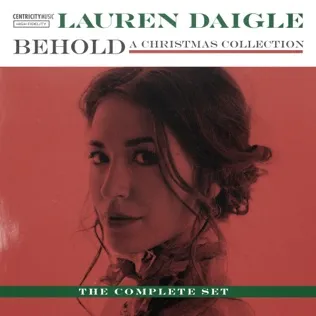
Lauren Daigle - What Child Is This Lyrics
Lyrics
What Child is this who laid to rest
On Mary's lap is sleeping
Whom angels greet with anthems sweet
While shepherds watch are keeping
This, this is Christ the King
Whom shepherds guard and angels sing
Haste, haste to bring Him laud
The Babe, the Son of Mary
So bring Him incense, gold and myrrh
Come peasant king to own Him
The King of Kings salvation brings
Let loving hearts enthrone Him
This, this is Christ the King
Whom shepherds guard and angels sing
Haste, haste to bring Him laud
The Babe, the Son of Mary
This, this is Christ the King
Whom shepherds guard and angels sing
Haste, haste to bring Him laud
The Babe, the Son of Mary, Mary
This, this is Christ the King
Whom shepherds guard and angels sing
Haste, haste to bring Him laud
The Babe, the Son of Mary
Video
Lauren Daigle - What Child Is This (Audio)
Meaning & Inspiration
Lauren Daigle's rendition of the timeless Christmas carol, "What Child Is This," released on October 21, 2016, as part of her *Behold* collection, offers a profound moment of reflection on the miracle of Christ's birth. While the original carol, set to the tune of "Greensleeves," has long resonated in various forms, Daigle’s interpretation elevates its message, inviting believers to rediscover the awe and wonder central to the Incarnation. Her delivery brings a fresh, reverent energy to the ancient lyrics, drawing the worshiper into the sacred narrative with a palpable sense of devotion.
The song immediately draws us into a scene of humble majesty, posing the fundamental question: "What Child is this who laid to rest on Mary's lap is sleeping?" This opening line sets a contemplative tone, inviting us to ponder the identity of the infant born in Bethlehem. The lyrics paint a vivid picture: a tender Babe, cradled by His mother, while angels fill the air with "anthems sweet" and humble shepherds keep watch. This imagery directly echoes the Gospel accounts, where the angel declared "good news of great joy for all the people" to the shepherds (Luke 2:10) and a "multitude of the heavenly host" praised God (Luke 2:13). The profound mystery lies in the chorus’s immediate declaration: "This, this is Christ the King." Here, the contrast is stark and powerful—the vulnerability of an infant juxtaposed with the divine authority of the Messiah. It confronts us with the astonishing truth of John 1:14, where "the Word became flesh and dwelt among us," a God who willingly emptied Himself to take on human form, as described in Philippians 2:7.
As the narrative unfolds, the song moves beyond mere observation to a heartfelt call for worship. "So bring Him incense, gold and myrrh," the lyrics implore, referencing the gifts brought by the wise men, symbolic not only of earthly treasures but of Christ's identity as King (gold), God (incense), and sacrifice (myrrh) (Matthew 2:11). The invitation extends to "peasant king to own Him," emphasizing that Christ's sovereignty transcends social status and worldly power; His kingdom is open to all who recognize Him. He is "The King of Kings" who "salvation brings," a clear articulation of His divine purpose. This resonates deeply with Matthew 1:21, where the angel instructs Joseph, "You shall call His name Jesus, for He will save His people from their sins." The ultimate call is to "Let loving hearts enthrone Him," an active invitation for each person to surrender their will and affections to this divine Babe, recognizing Him not just as a historical figure, but as the reigning Lord worthy of all adoration.
Through its powerful, repeated chorus, "This, this is Christ the King, Whom shepherds guard and angels sing, Haste, haste to bring Him laud, The Babe, the Son of Mary," the song reinforces the central tenet of Christian faith: the Lordship of Jesus Christ. It is a declaration that the baby in the manger is none other than the promised Messiah, the Son of God, the One through whom all creation was made (Colossians 1:16). Daigle’s vocal strength and earnest delivery emphasize the urgency and joy in this call to worship. The song serves as a beautiful theological reflection, bridging the quiet nativity scene with the cosmic significance of redemption. It encourages us to look past the simplicity of a stable birth and see the eternal King who humbled Himself to dwell among us, offering the ultimate gift of grace and hope. "What Child Is This" stands as a timeless reminder that the birth of Jesus is not merely a seasonal celebration, but the pivotal moment in history that forever altered the human condition, inviting all to acknowledge and "enthrone" the Savior in their hearts.