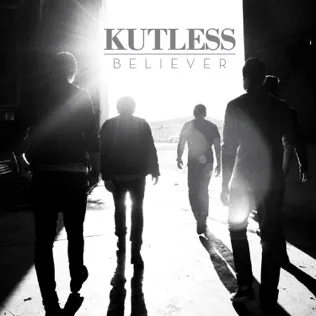
Kutless - Gravity Lyrics

Album: Believer (Deluxe Edition)
Released: 24 Feb 2012
iTunes Amazon Music

Lyrics

You've dealt me every card I have played,
But I know I'm guilty of choices I've made

This is not the mystery that's constantly consuming me
It's How a God so Holy could love someone like me

No matter where I go Your mercy follows
And I come running back to You

Your Gravity keeps pulling me to You
I must have been destined for You

You knew this human heart would be lost
So You planned a ransom and You paid the cost

There's more beyond my mind that I can't see but I believe,
Because You are the only God who died for me

No matter where I go Your mercy follows
And I come running back to You

Video

Kutless - "Gravity" (Official Lyric Video)

Thumbnail for Gravity video

Meaning & Inspiration

Released on February 24, 2012, as part of Kutless' "Believer (Deluxe Edition)," the song "Gravity" stands as a profound declaration of divine sovereignty, human fragility, and God's relentless love. It immediately draws the listener into a deeply personal spiritual journey, moving beyond superficial reflections to tackle the intricate dance between personal responsibility and the overarching hand of God. The narrative unfolds with the speaker's honest admission: "You've dealt me every card I have played, But I know I'm guilty of choices I've made." This opening sets a crucial theological foundation, acknowledging that while God orchestrates circumstances in our lives, as seen in passages like Romans 8:28, humanity remains accountable for its own decisions and the reality of sin (Romans 3:23). It's a poignant recognition of both divine providence and individual moral agency, laying bare the human condition before a holy God.

The true heart of "Gravity" emerges as the song pivots from the mystery of human sin to the far greater wonder of divine love. The speaker articulates, "This is not the mystery that's constantly consuming me It's How a God so Holy could love someone like me." This line encapsulates the staggering truth at the core of the Christian faith. It is not our fallen nature that remains an enigma, but rather the boundless, unconditional affection of a perfect God for imperfect people. Such love is eloquently proclaimed in Romans 5:8, where we are reminded that God demonstrated His own love for us in that while we were still sinners, Christ died for us, and in 1 John 4:10, stating that love consists not in our loving God, but in Him loving us and sending His Son. This profound, undeserved love from a Holy God is the true marvel that captivates and transforms.

This divine love manifests as an unceasing pursuit, captured powerfully by the imagery of God's mercy. "No matter where I go Your mercy follows And I come running back to You" speaks to the pervasive nature of God's grace. Just as Psalm 23:6 assures us that goodness and mercy shall follow us all the days of our lives, the song emphasizes a divine chase that never ceases. This relentless mercy is what beckons the human spirit back to its Creator, inspiring a willing and often desperate return. It mirrors the parables of lost things, like the prodigal son in Luke 15, whose father’s eager welcome illustrates God's readiness to embrace those who turn back to Him, irrespective of how far they have strayed.

The central metaphor of "Gravity" beautifully describes God's drawing power in our lives. "Your Gravity keeps pulling me to You I must have been destined for You" articulates a sense of divine pull, an inescapable spiritual force that aligns with the Holy Spirit's work. John 6:44 declares that no one can come to Jesus unless the Father who sent Him draws them, underscoring this invisible, yet powerful, spiritual attraction. This isn't a coercive force, but a loving draw that reveals a deep, pre-ordained purpose. Ephesians 1:4-5 speaks of being chosen in Him before the foundation of the world, predestined for adoption through Christ. The song suggests that this divine "gravity" is not merely coincidental but an intrinsic part of our spiritual design, a testament to God's eternal plan for humanity.

Central to this divine plan is the sacrifice made for our redemption. The song acknowledges the human predicament with clarity: "You knew this human heart would be lost So You planned a ransom and You paid the cost." This passage directly references the Fall of humanity described in Genesis 3 and the subsequent need for atonement. God, in His infinite wisdom and love, foresaw our brokenness and orchestrated the perfect rescue plan. Mark 10:45 reveals Jesus' purpose: "For even the Son of Man came not to be served but to serve, and to give his life as a ransom for many." The payment of this cost, through Christ's death on the cross, is the ultimate expression of God's commitment to reconciling humanity to Himself, offering forgiveness and new life.

Finally, "Gravity" calls for a faith that transcends human understanding, anchored in the unique act of divine love. "There's more beyond my mind that I can't see but I believe, Because You are the only God who died for me" articulates the essence of biblical faith, which is often a conviction in things unseen and a trust in truths that defy full comprehension (Hebrews 11:1). The song highlights the unparalleled nature of Christ's sacrifice—a God who stepped into humanity and willingly laid down His life. John 15:13 states, "Greater love has no one than this, that someone lay down his life for his friends." This singular, historical event sets Christianity apart, providing an irrefutable foundation for belief and a powerful reason for devotion. "Gravity" is more than just a song; it's a worshipful meditation on the incredible, incomprehensible, and utterly compelling "gravity" of God's grace that continually draws us home.

Loading...
In Queue
View Lyrics