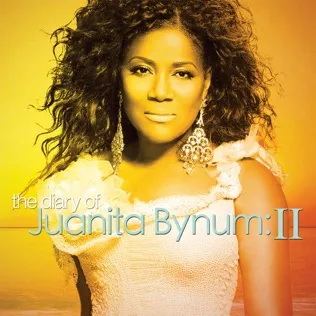
Juanita Bynum - I Can Hear Your Voice Lyrics

Album: The Diary of Juanita Bynum II
Released: 31 Jan 2012
iTunes Amazon Music

Lyrics

God
I don't wanna keep fighting your will
I don't wanna keep fighting your way
As more ribbon upon the clips
I don't wanna keep fighting against
What you're trying to do in it, in my life
God your way, your will, your desire
God I'm all gotta work on my emotions
Trying to get it together
But I'm like Paul today,
When I would to do good
Evil is ever present
There's a lot more going on, on the inside,
one member fighting against another.

Burn it up, burn it up
Put my Life in your Hand
Burn it up, burn it up

I say yes Lord... Yes Lord...
I feel you're burn it up
God I can feel, you're burn it up
Yes Lord...
Burn it up, burn it up, burn it up...

I can hear your voice calling me higher
I can hear your voice calling me deeper
I can hear your voice calling me higher
I can hear your voice calling me deeper
Cos deep call on the deep
I can hear your voice oh God
Calling me deeper... deeper...


Video

I Can Hear Your Voice

Thumbnail for I Can Hear Your Voice video

Meaning & Inspiration

Released on January 31, 2012, as part of her album *The Diary of Juanita Bynum II*, Juanita Bynum’s "I Can Hear Your Voice" is a profound sonic prayer, a raw and honest articulation of a soul's journey from internal conflict to complete surrender and deep communion with the divine. The track opens not with an invitation to worship, but with a deeply personal confession, laying bare the common human struggle against divine leading. The declaration, "God, I don't wanna keep fighting your will, I don't wanna keep fighting your way," immediately establishes a relatable tension. This initial lament speaks to the internal resistance many face when confronted with God’s path, often preferring comfort or familiarity over the challenging demands of faith. The subsequent lines, "God, I'm all gotta work on my emotions, trying to get it together," paint a vivid picture of the internal battle for emotional alignment with spiritual truth, a wrestle often experienced by those striving for spiritual maturity. The poignant allusion, "But I'm like Paul today, when I would to do good, evil is ever present," directly references Romans 7:19-24, where the Apostle Paul articulates the relentless struggle between the spirit and the flesh, the desire to do good clashing with an internal force that pulls towards sin. This scriptural echo transforms a personal moment into a universal truth, acknowledging that even the most devoted among us experience this internal "one member fighting against another," a profound civil war within the soul.

The song then transitions into a powerful act of consecration and purification with the repeated plea, "Burn it up, burn it up, put my life in Your hand." This imagery of fire is deeply symbolic in Scripture, often representing refinement, testing, and the consumption of impurities. Malachi 3:2-3 speaks of the Lord as a "refiner's fire," purifying the sons of Levi, and 1 Peter 1:7 describes faith being tested by fire to prove its genuineness. Bynum's cry to "burn it up" is a radical prayer for God to consume everything within her life—every resistant will, every stubborn emotion, every worldly desire—that hinders her complete surrender to His purpose. It is a bold offering, an echoing of Romans 12:1 to present one's body as a living sacrifice, holy and acceptable to God. The immediate and affirmative response, "I say yes Lord… Yes Lord… I feel You burn it up," signifies a profound moment of yielding. This isn't a reluctant submission but an active embrace of the refining process, trusting in the transformative power of God even when it feels like a consuming fire. It’s an acknowledgment that true surrender often requires a stripping away of the old to make way for the new.

The spiritual ascent culminates in the profound declaration: "I can hear Your voice calling me higher, I can hear Your voice calling me deeper." This isn't a mere auditory experience, but a deep spiritual discernment of divine invitation. The call "higher" suggests an elevation in purpose, perspective, and spiritual understanding, drawing one closer to the heavenly realms where Christ is seated (Ephesians 2:6). Simultaneously, the call "deeper" speaks to a profound intimacy and revelation, an invitation to explore the hidden truths and mysteries of God that are only unveiled to those who seek Him with all their heart (Jeremiah 29:13). The subsequent line, "Cos deep calls on the deep," is a direct and powerful allusion to Psalm 42:7. This poetic verse speaks to the profound resonance between the human spirit—created in the image of God—and the infinite depth of the Creator Himself. It suggests that within every soul lies an inherent capacity and longing for God, a spiritual depth that responds when confronted with the boundless depths of divine presence. This is where true communion happens: the spirit of God stirring the spirit of humanity, drawing it into an ever-increasing understanding and fellowship. Bynum's "I Can Hear Your Voice" is therefore a narrative of spiritual triumph, moving from the relatable human struggle against divine will to a powerful act of surrender and, finally, to an intimate and transformative encounter with the voice of God, an experience meant to inspire and encourage anyone on their own faith journey to lean into the deeper call.

Loading...
In Queue
View Lyrics